

Greek architecture in London hides in plain sight. Walk from Euston Road to Hyde Park Corner and you pass caryatids copied from the Acropolis, a gilded Athena above a gentlemen’s club, two full length copies of the Parthenon frieze and a museum front with 44 Ionic columns. None of it costs a penny to see, and this weekend there is an extra reason to go: the free exhibition marking 300 years of St Martin-in-the-Fields on Trafalgar Square closes on Sunday 15 November.
Greek List strung the best of it into one afternoon walk, with a Greek coffee or lunch stop on every leg. Everything is outdoors or free to enter.
The route runs from St Pancras New Church on Euston Road through Bloomsbury to the Athenaeum on Pall Mall, across Trafalgar Square and through Green Park to Hyde Park Corner. It takes about an hour and a half without stops; split it in two if you want to linger.
A little context helps. Between about 1800 and 1840 London had its own Greek Revival. Architects came back from Athens with measured drawings of the Parthenon and the Erechtheion, the Elgin collection arrived at the British Museum, and for a generation the fashionable way to build a church, a club or a museum was to make it look lifted from the Acropolis. That is why Greek architecture in London feels so familiar to anyone who grew up in Greece or Cyprus.
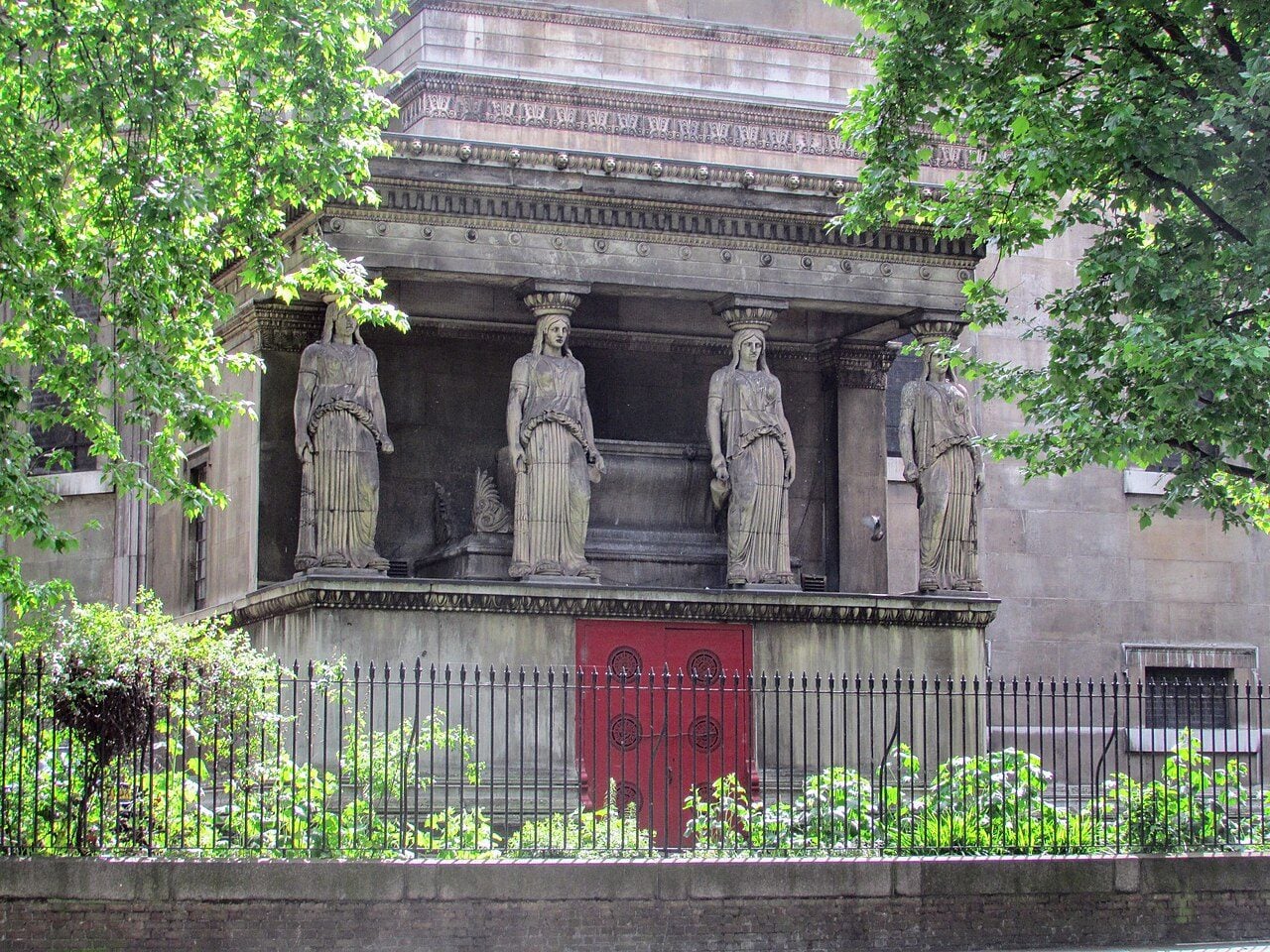
Start opposite Euston station. St Pancras New Church (1819 to 1822, William and Henry William Inwood) is the purest piece of Greek architecture in London. The Ionic portico is modelled on the Erechtheion, the octagonal tower borrows from the Tower of the Winds in Athens, and on each side of the east end a row of terracotta caryatids holds up the roof of the burial vaults, exactly as the maidens of the Erechtheion do on the Acropolis. Look at their waists: they arrived too tall and a section had to be cut out of each figure to make them fit. Henry Inwood had measured the originals in Athens himself, which is why the detail is so faithful.
Getting there: Euston Road, NW1 2BA. Euston and King’s Cross St Pancras stations are both a 3 minute walk. The church is normally open on weekdays and hosts free lunchtime recitals.
Greek stop nearby: Nostimo at 9 Brunswick Centre, a 10 minute walk south through Bloomsbury, for a Greek coffee, a bougatsa or a proper lunch before you carry on.
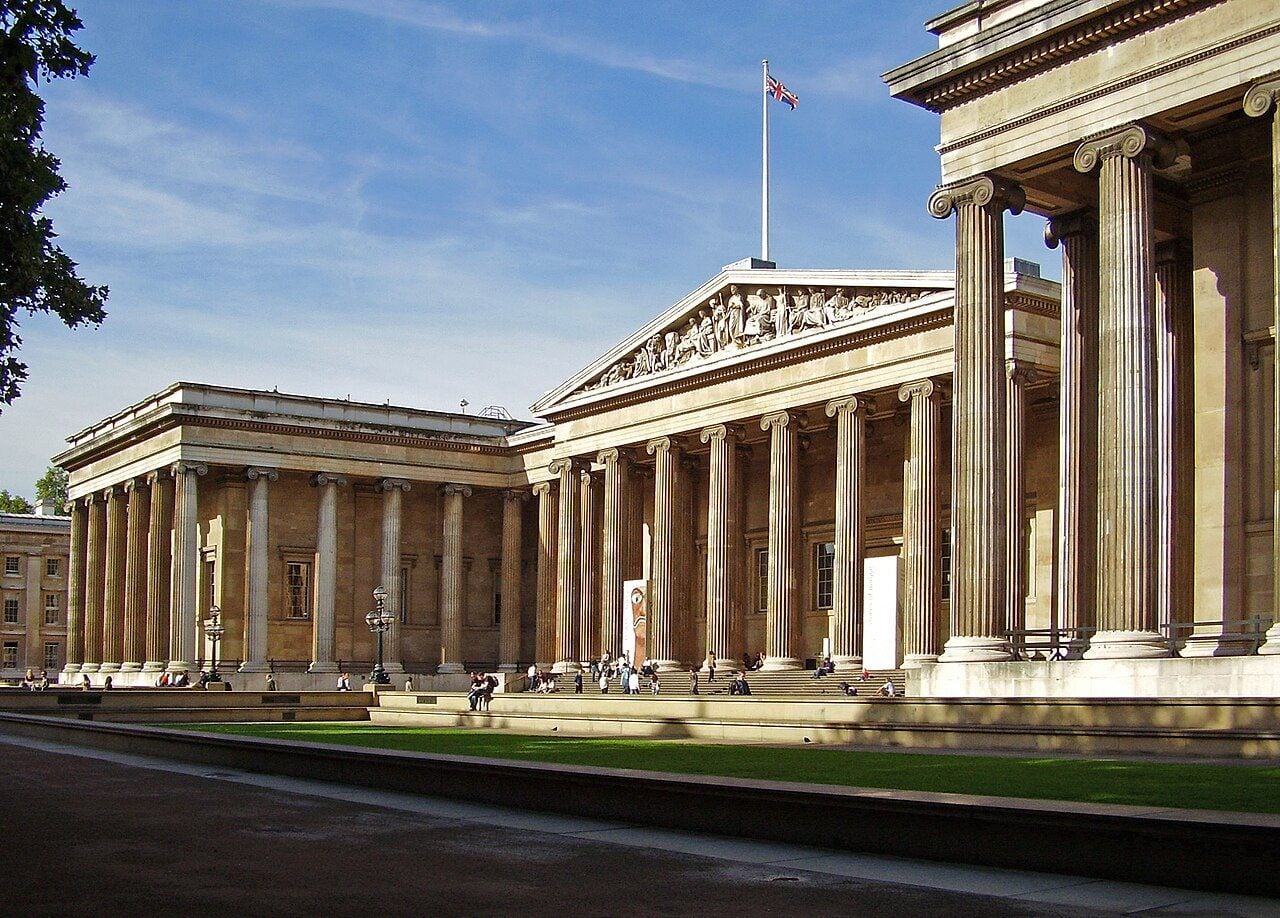
Walk down Gower Street and the quad of University College London opens on your left. The Wilkins Building (finished in 1829) has a ten column Corinthian portico under a dome, designed by William Wilkins, the same architect who went on to build the National Gallery. Five minutes further, on Great Russell Street, Robert Smirke’s British Museum (1823 to 1852) presents 44 Ionic columns based on the Temple of Athena Polias at Priene, under Richard Westmacott’s pediment, The Progress of Civilisation. Inside, in Room 18, sit the Parthenon sculptures themselves. For Greeks in London the museum is never a neutral building, and the facade and the marbles it was built to house belong to the same moment in history.
Getting there: Great Russell Street, WC1B 3DG. Tottenham Court Road, Holborn and Russell Square are all within 8 minutes. Open daily 10am to 5pm, Fridays until 8.30pm, free entry.
Greek stop nearby: The Life Goddess at 29 Store Street, 3 minutes from the museum gates, for Greek deli plates and wine, and Elysée at 13 Percy Street in Fitzrovia, the Greek restaurant that has been feeding this corner of London since 1965.
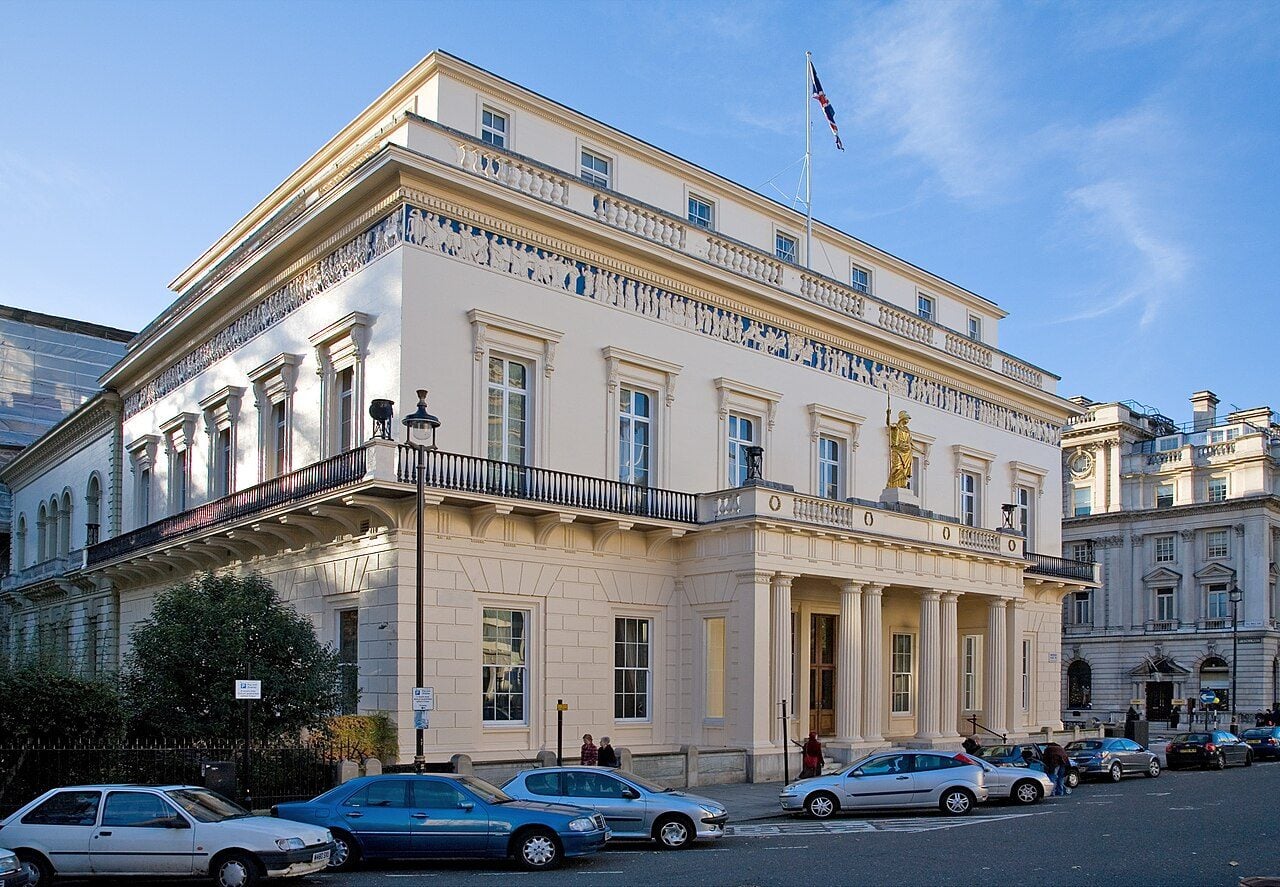
From the museum head south through Covent Garden and Trafalgar Square to Waterloo Place, and look up. The Athenaeum (1824 to 1830) was designed by Decimus Burton, who was 24 when he got the job. A gilded statue of Athena by Edward Hodges Baily stands over the entrance, and running right round the building under the cornice is a full copy of the Parthenon frieze by John Henning. The members wanted an ice house; John Wilson Croker, the club’s founder, pushed through the frieze instead, and a rhyme of the day teased him for it. For a club named after the goddess of wisdom it was the right call. The building is private, but the frieze is best seen from the pavement anyway.
Getting there: 107 Pall Mall, SW1Y 5ER, on the corner with Waterloo Place. Piccadilly Circus and Charing Cross are 5 minutes away. Two minutes west is Cyprus House on St James’s Square, where the free Rivers exhibition runs until 29 November.
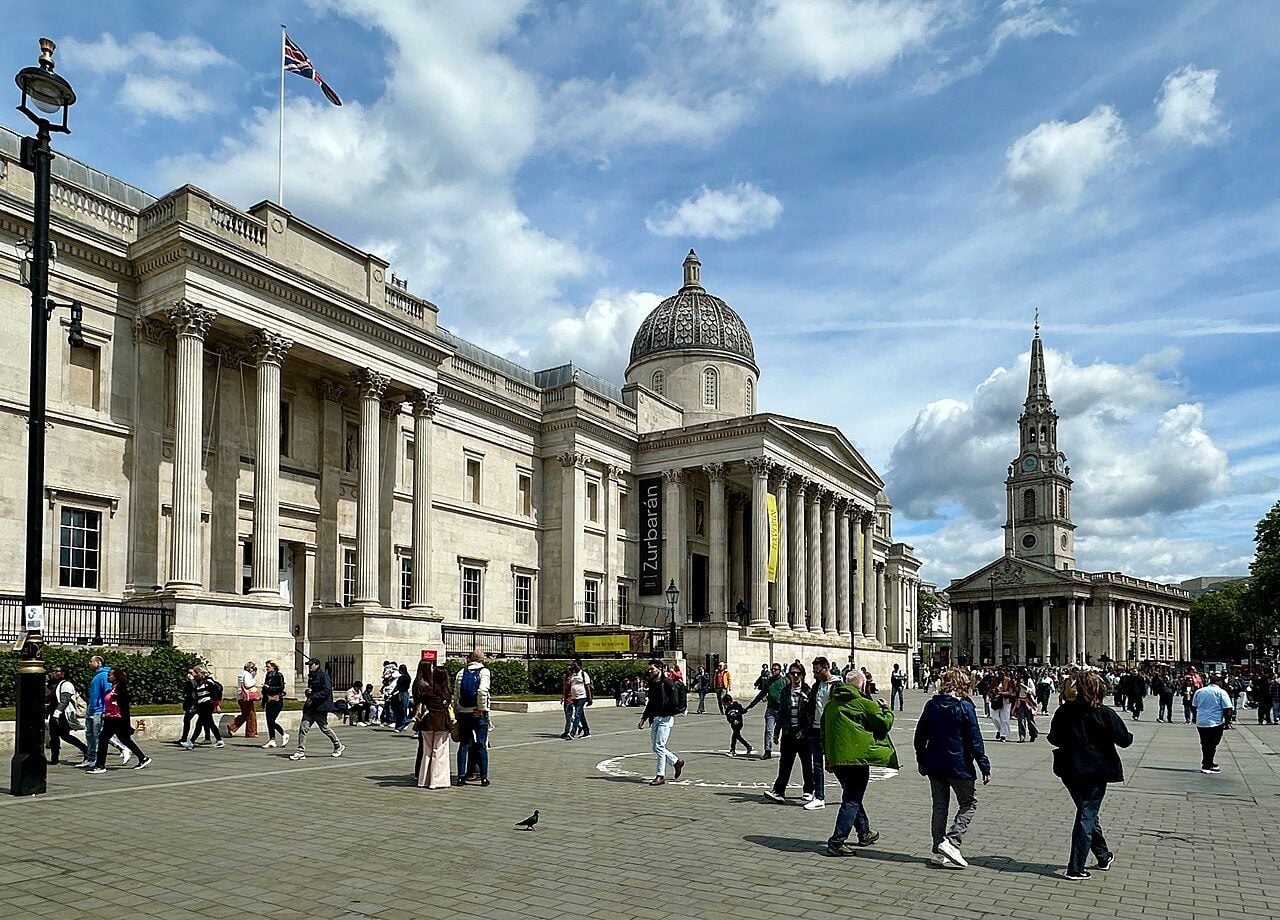
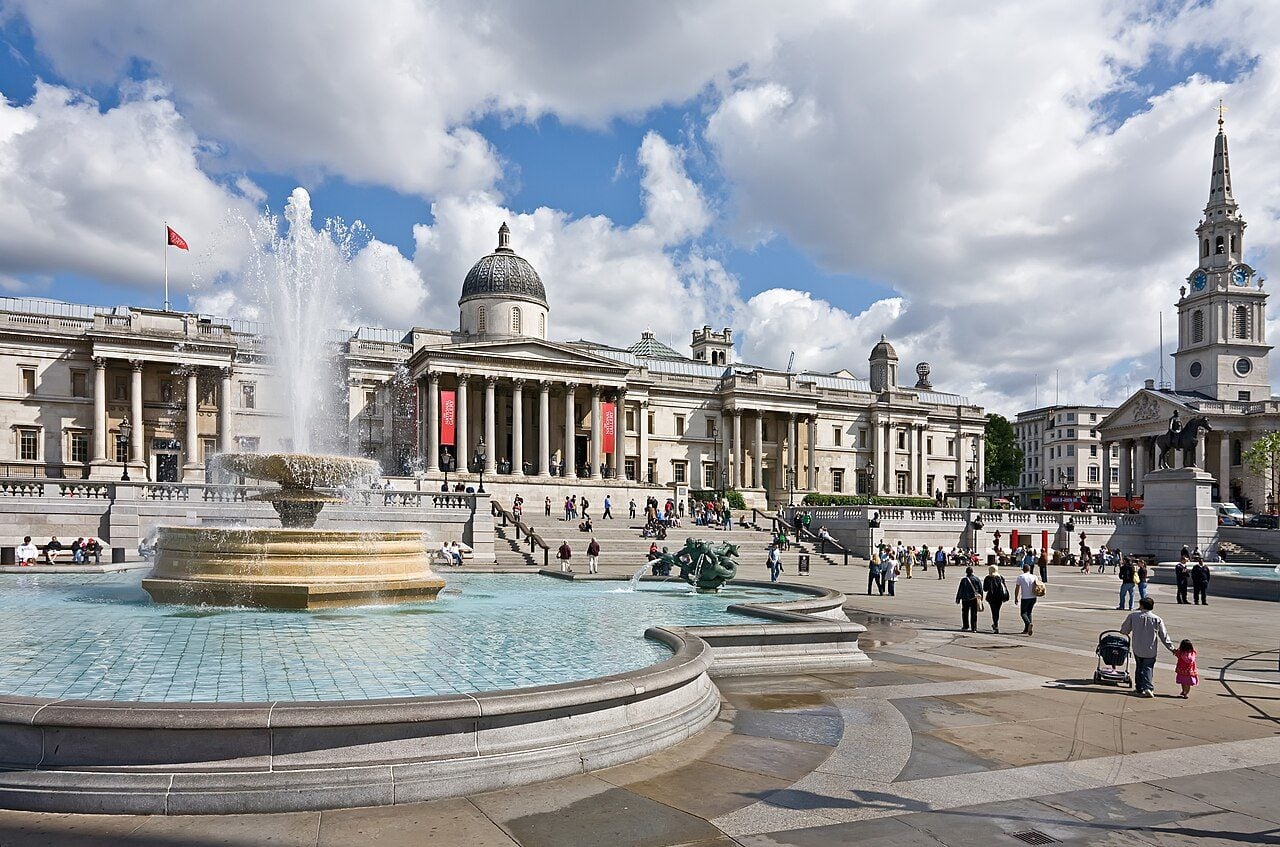
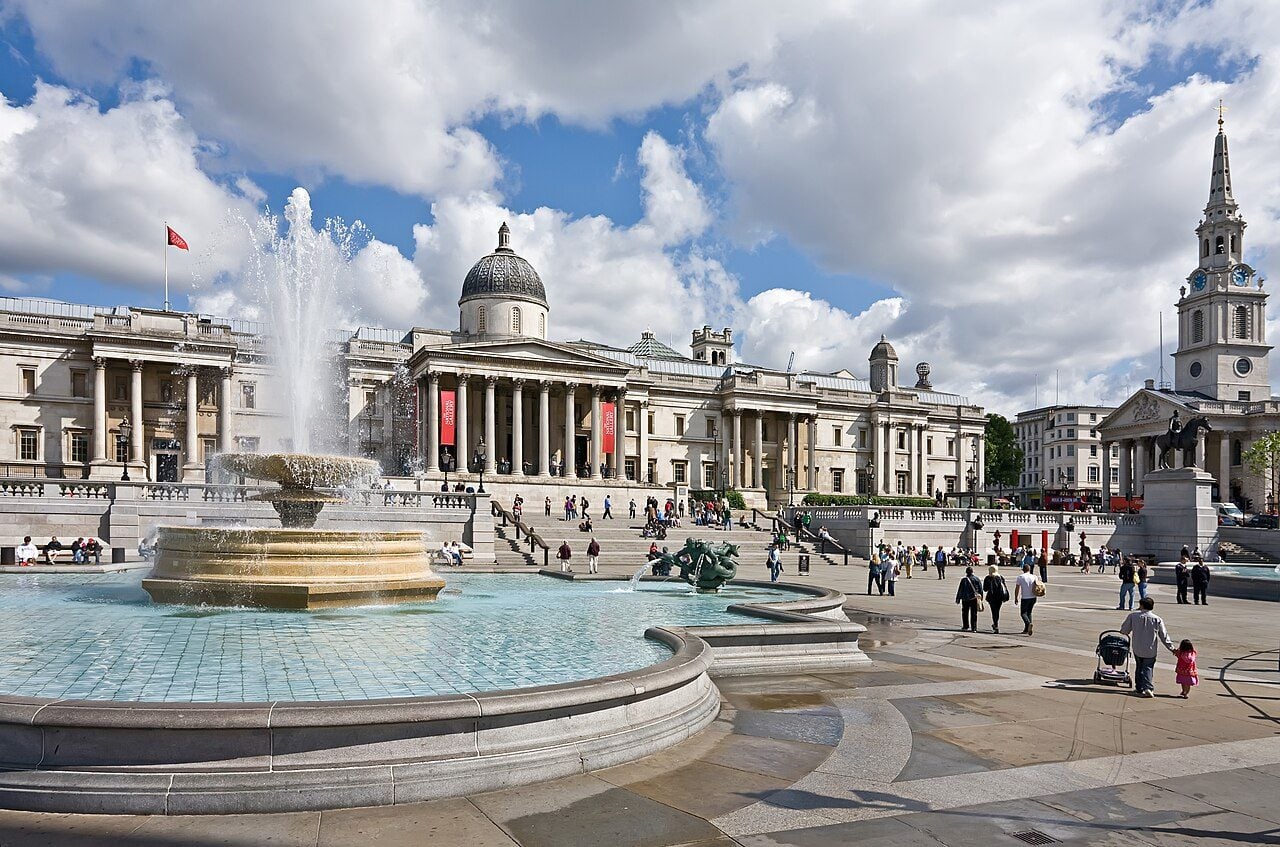
Two minutes back east and you are in Trafalgar Square, the best place in the city to see how Greek architecture in London moved from churches to public buildings. The National Gallery (1832 to 1838) is William Wilkins again, and its Corinthian columns were recycled from the demolished Carlton House, the Prince Regent’s palace on Pall Mall. Next to it, St Martin-in-the-Fields is older and not strictly Greek Revival, but James Gibbs’s temple front with a steeple behind it, finished in 1726, became one of the most copied church designs in the English speaking world. The church is marking its 300th anniversary with a free exhibition, 300 Years at the Heart and on the Edge, which closes this Sunday 15 November. Go in, then take the steps down to the crypt cafe.
Getting there: Trafalgar Square, WC2N 4JJ. Charing Cross station is next door. The National Gallery is free and open daily 10am to 6pm, Fridays until 9pm. The St Martin-in-the-Fields exhibition is free; check opening hours on the church website before you go.
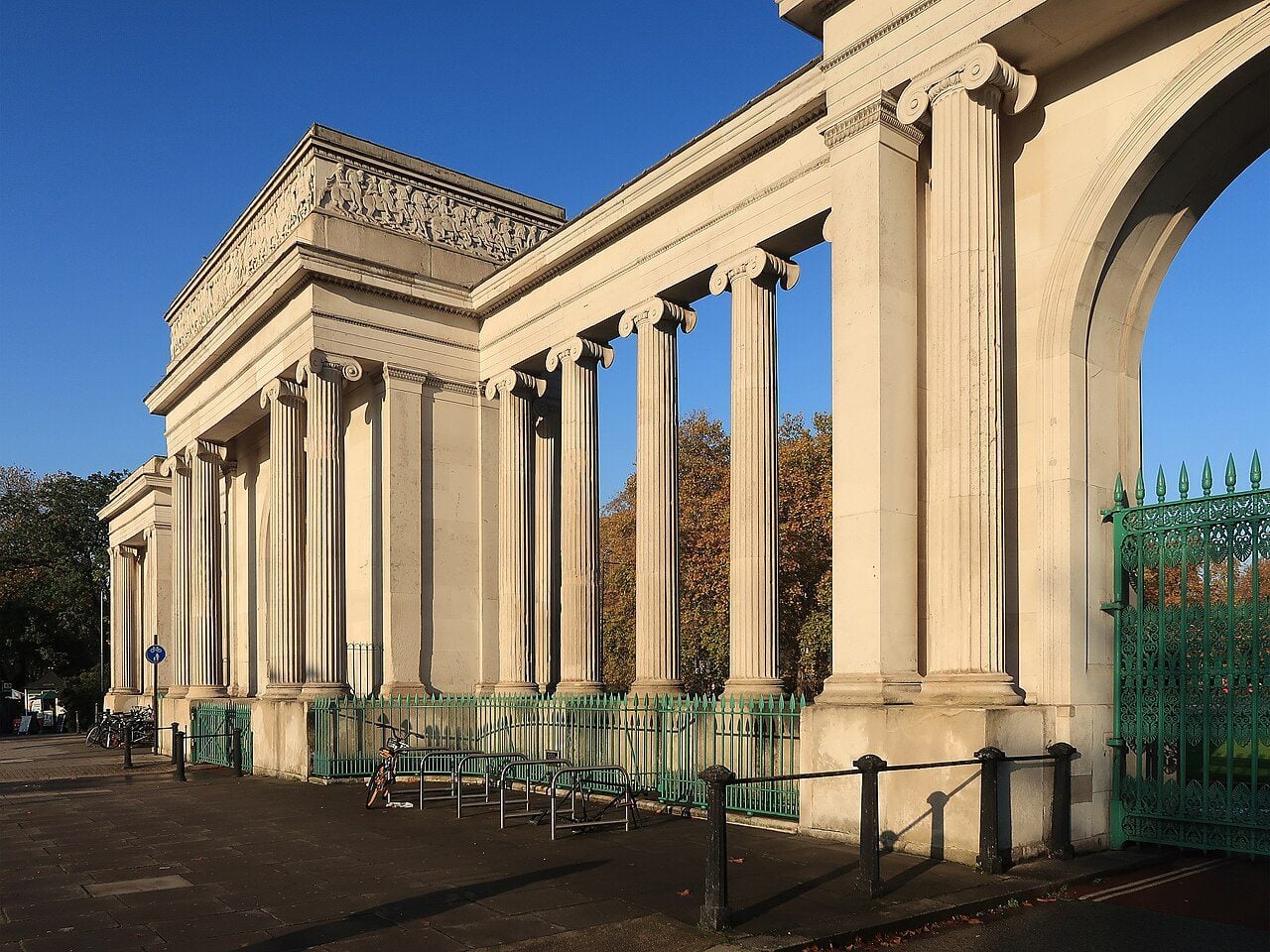
Finish with a walk along Piccadilly or through Green Park to Hyde Park Corner. The triple arched Ionic screen at the park entrance, built in the late 1820s, is Decimus Burton once more, and above the gates runs another Parthenon frieze by John Henning, this time showing the Panathenaic procession in crisp relief. Burton also designed Wellington Arch across the road, so the whole junction is one young architect’s homage to Athens. It is the quietest stop on the walk and the best place to study the frieze: horsemen, chariots and gods a few metres above the traffic. If you have queued for Room 18, this is the uncrowded version.
Getting there: Hyde Park Corner station (Piccadilly line) brings you up right by the screen. Wellington Arch itself is run by English Heritage and charges for the viewing platform; the exterior and the screen are free.
Greek stop nearby: Chill House Coffee at 10 Shepherd Street in Mayfair, a 7 minute walk through Shepherd Market, for freddo espresso and Greek pastries to end the walk.
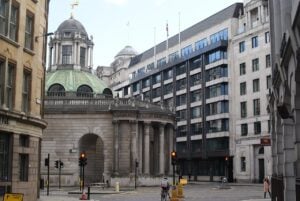
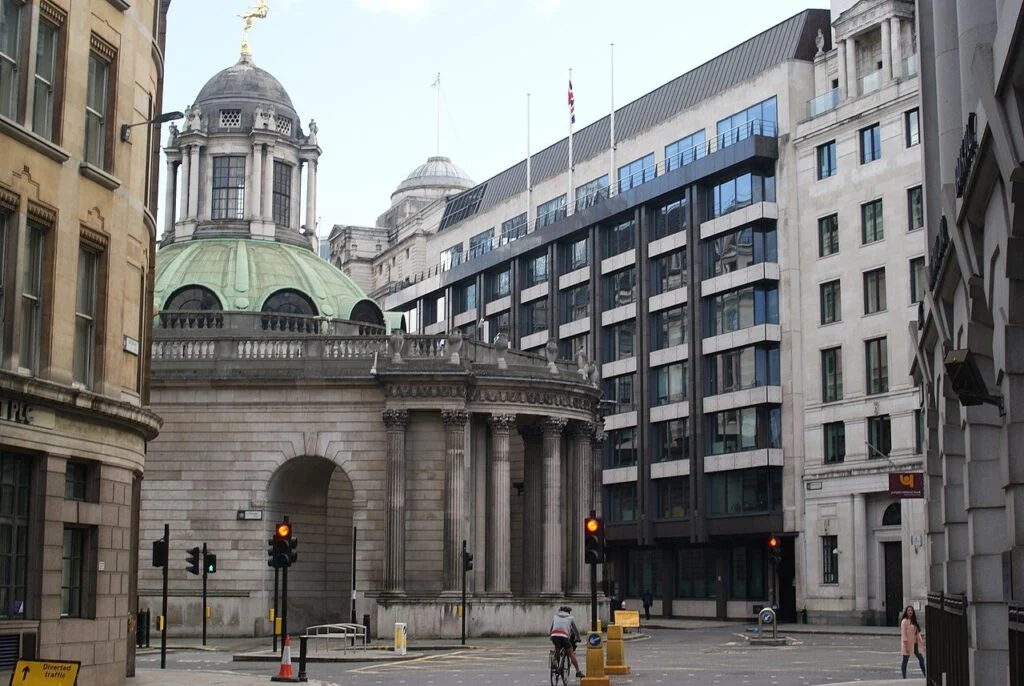
If you have energy left, three extra pieces of Greek architecture in London are worth knowing. The Euston Arch, a huge Doric gateway built in 1837 as the entrance to Euston station, was demolished in 1962 in one of the city’s most regretted planning decisions; many of its stones were later fished out of a river channel in east London and a trust still campaigns to rebuild it. In the City, the Bank of England keeps Sir John Soane’s windowless classical wall and the Royal Exchange opposite has a Corinthian portico that turns Bank junction into a small Athenian agora.
A tip for the weekend: start around midday so you reach Trafalgar Square in daylight for the St Martin’s exhibition, and leave Hyde Park Corner for last, when the low November sun catches the stone.
Pair the walk with what the community has on in the next ten days. Greek List events is the most complete list of Greek events in the UK, and listing yours is free.
The restaurants and cafes in this guide are Greek List members. More than 100,000 Greeks and Cypriots in the UK read Greek List every month on the site, in the newsletter and in the Ellines sto Londino Facebook group, and Greek List listings rank first on Google for searches like “Greek restaurant near me”. If you run a business that serves the community, a listing puts you in front of them, in articles like this one included.
Walked it, or spotted another piece of Greek architecture in London we missed? Tell us in the Facebook group Ellines sto Londino.