

Paxos Island is the smallest and quietest of the main Ionian Islands, about an hour by sea from Corfu and a world away from the big Greek resorts. This complete Paxos travel guide for 2026 covers how to get to Paxos Island, when to go, the best beaches on Paxos and Antipaxos, where to eat, what to do and where to stay.
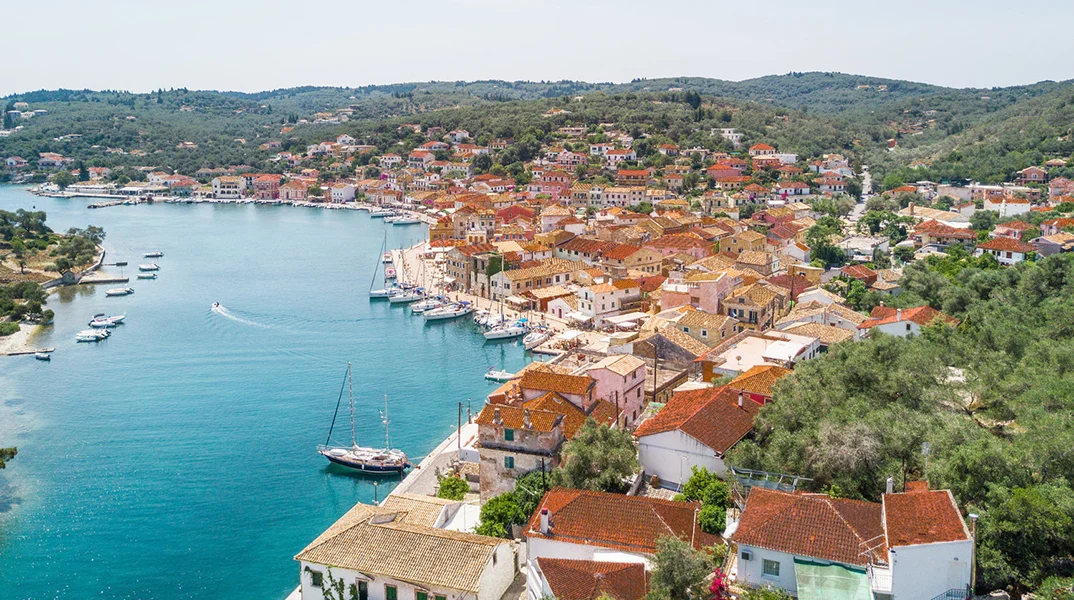
Just south of Corfu, in the blue waters of the Ionian Sea, lies Paxos, or Paxi as it is often called locally, one of the smallest inhabited Ionian Islands. With no airport or large resort developments, the island has preserved a wonderfully relaxed character, shaped by ancient olive groves, stone walls, tiny churches, hidden pebble coves and the picturesque harbour villages of Gaios, Loggos and Lakka. Its eastern coast is calm and sheltered, with olive trees reaching almost to the sea, while the western side is dramatically different, defined by towering limestone cliffs, natural arches and spectacular sea caves.
Just to the south lies Antipaxos, a tiny vineyard-covered island reached only by boat and famous for its dazzling turquoise water and pale beaches. Although Paxos is only around 10 kilometres long, it is an island best explored slowly. Swim in a quiet bay before breakfast, walk along old paths through the olive groves, hire a small boat to discover hidden coves, enjoy a long lunch in Loggos and finish the day watching the sunset turn the cliffs of Erimitis golden.
Book your Paxos holidays with Ionian & Aegean Island Holidays and discover one of the most enchanting islands in the Ionian. Their Paxos collection includes handpicked villas in beautiful locations across the island.
Paxos, he Ionian Sea in miniature.
For such a small island, Paxos carries an unusually rich history.
According to Greek mythology, Poseidon created Paxos with a strike of his trident, breaking a piece from Corfu to create a peaceful retreat for himself and Amphitrite. Beyond the legend, Paxos was shaped most significantly by more than four centuries of Venetian influence. The Venetians encouraged extensive olive cultivation, and the island gradually became the vast olive grove visitors see today, with ancient trees, dry-stone walls, churches and traditional houses woven into the landscape. After Venetian rule ended in 1797, Paxos passed through French, Russo-Ottoman and British control before becoming part of the modern Greek state.
The island also played a role in the Greek struggle for independence, most notably through Georgios Anemogiannis, the young fire-ship captain whose statue stands today in Gaios. On 21 May 1864, Paxos officially united with Greece along with the other Ionian Islands. Its history remains visible everywhere: in the Venetian-style harbour houses, old cisterns, olive presses, chapels and stone paths that cross the countryside. On Paxos Island, history is not something confined to museums — it is part of the landscape itself.
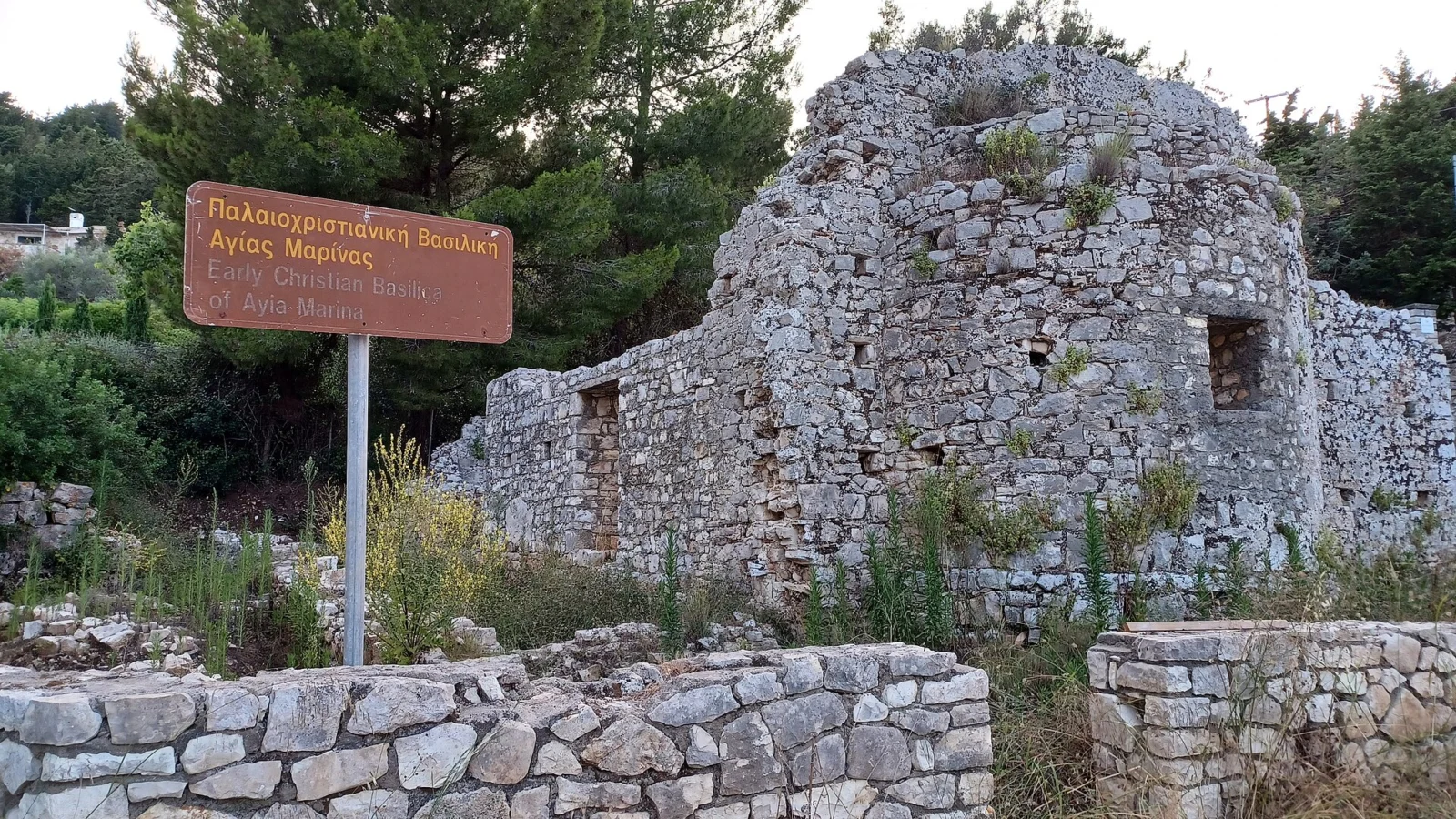
Early Christian Church of Agia Marina
Paxos has no airport, and that is part of the reason it has retained so much of its character.
For British travellers, the easiest route is usually:
United Kingdom → Corfu → Paxos.
Corfu International Airport is the nearest airport, with extensive seasonal direct services from the UK. In summer 2026, direct routes operate from London and numerous regional airports, while the London–Corfu flight itself takes roughly three hours and fifteen minutes.
Once on Corfu, continue to Paxos Island by sea.
Passenger services operate between Corfu and Paxos during the season, while Lefkimmi in southern Corfu also has connections to Paxos Island. Fast services can make the crossing in approximately an hour, although journey times vary depending on vessel and departure port. Current 2026 operators include services linking Paxos with Corfu, Lefkimmi and the mainland.
One important piece of advice: do not book your UK flight and onward boat connection too tightly together.
Summer timetables can change, and boat services remain weather-dependent. Giving yourself a comfortable connection makes the beginning of the holiday considerably more relaxing.
If your flight reaches Corfu late in the evening, spending the first night in Corfu and travelling to Paxos Island the following morning can be the sensible option.
There are several possibilities.
Via Corfu: Fly from Athens to Corfu and continue by passenger boat to Paxos Island.
Via Igoumenitsa: Drive or travel by intercity bus across mainland Greece to Igoumenitsa and then take the ferry directly to Paxos Island.
The mainland route is particularly useful if you are travelling through Greece by car. Vehicle ferries operate between Igoumenitsa and Paxos, meaning you can bring your own car onto the island rather than hiring one after arrival. The crossing is around one and a half hours on current services.
For a wider Greek road trip, Athens → Epirus → Paxos is an excellent combination.
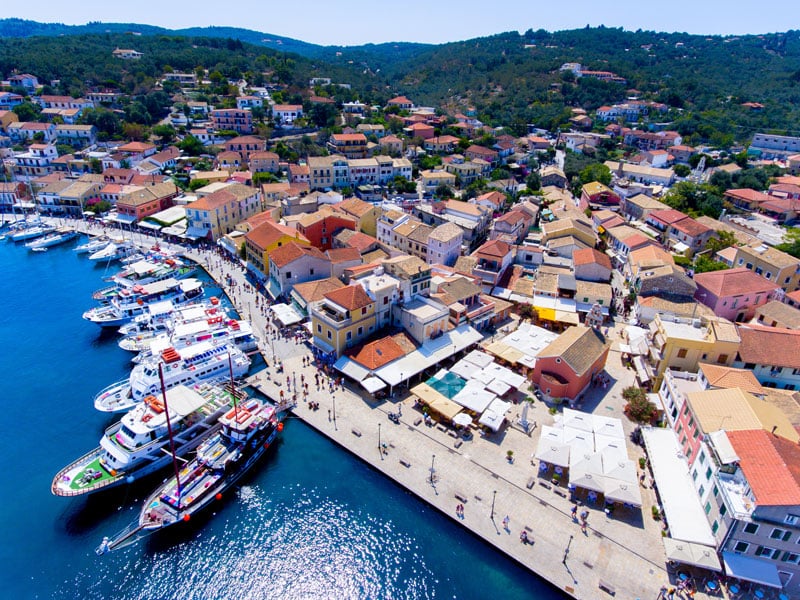
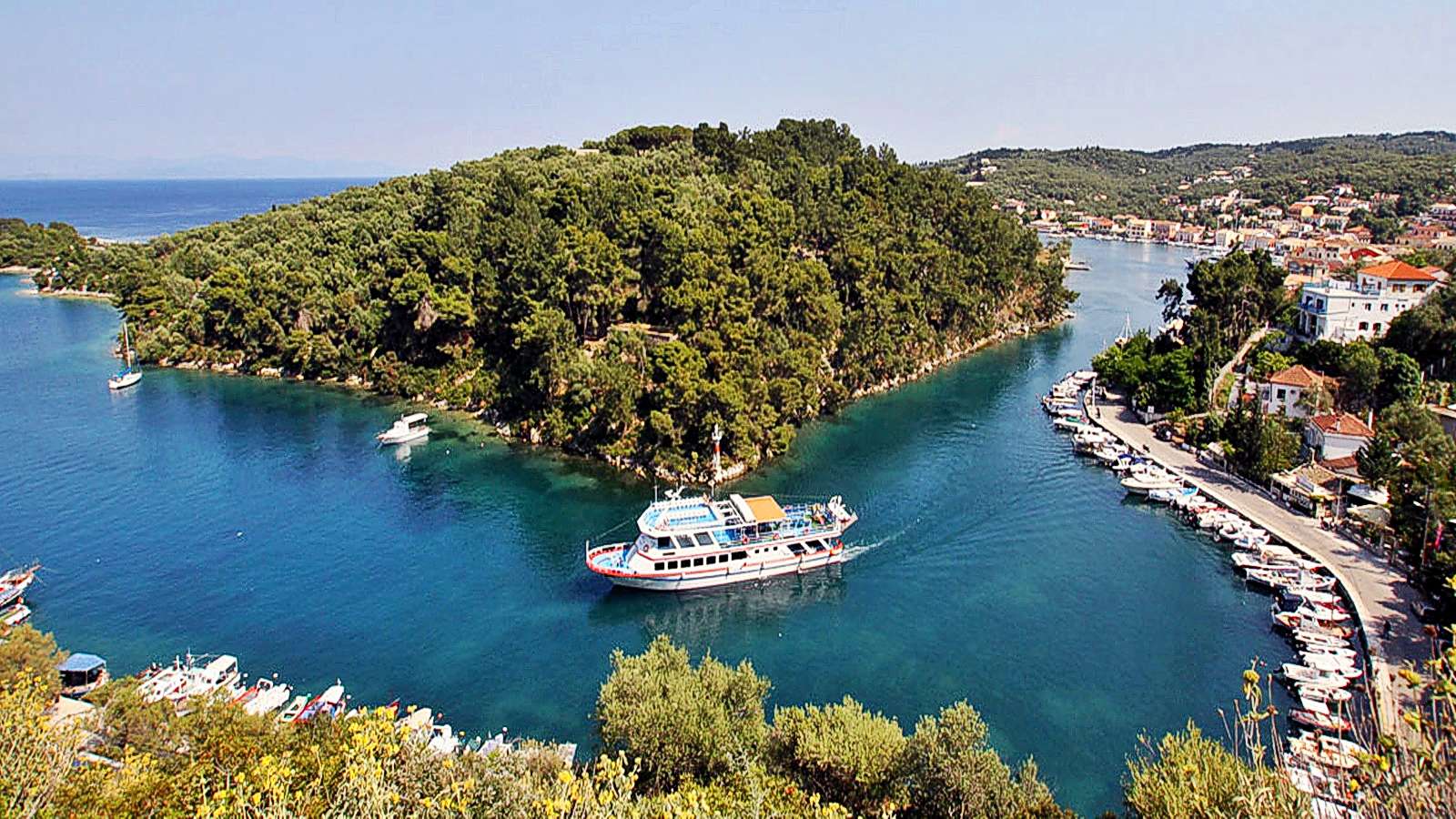
Gaios, the port of Paxos
Paxos has the classic Ionian climate: green winters followed by increasingly dry, sunny conditions through late spring and summer.
The island is at its most colourful in spring, hottest in July and August and perhaps at its most seductive in September, when the biggest crowds begin to disappear but the sea remains beautifully warm.
| Month | Typical Daytime Conditions | Sea Temperature | Sunshine | Crowd Level |
|---|---|---|---|---|
| April | Mild, around 18–21°C | ~16–17°C | Around 7 hrs | Very Low |
| May | Warm, around 23–25°C | ~19°C | Around 9 hrs | Low ✓ |
| June | Hot, around 28–30°C | ~23°C | Around 11 hrs | Low–Medium ✓ |
| July | Very warm, around 31–33°C | ~25°C | Around 12 hrs | High |
| August | Very warm, around 31–33°C | ~26°C | Around 11 hrs | Very High |
| September | Warm, around 27–29°C | ~25°C | Around 9 hrs | Medium ✓ |
Long-term sea-temperature data puts the water at approximately 23°C in June, 25°C in July, 26°C in August and still around 25°C in September.
For many travellers, June and September are the sweet spots.
June gives you long days, green landscapes and excellent swimming before peak season.
September gives you warm sea, warm evenings and a noticeably more relaxed island once the August rush begins to fade.
Check the weather in Paxos Island now, with meteo.gr.
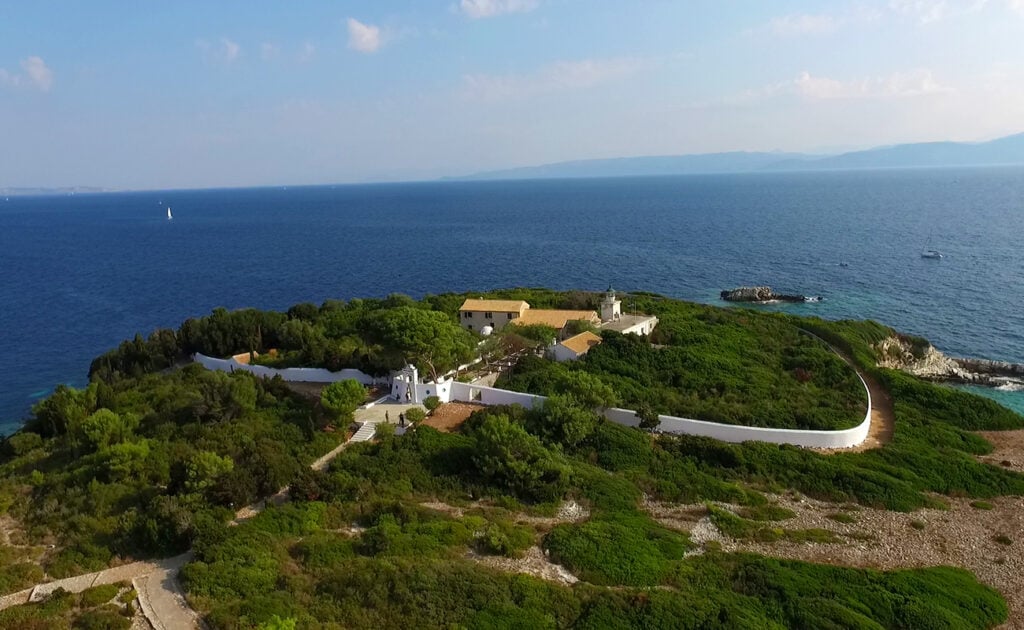
The monastery of Panagia Vellianiton (Virgin Mary)
Paxos is small enough that you can see all three principal villages during one holiday, but each deserves more than a quick photograph.
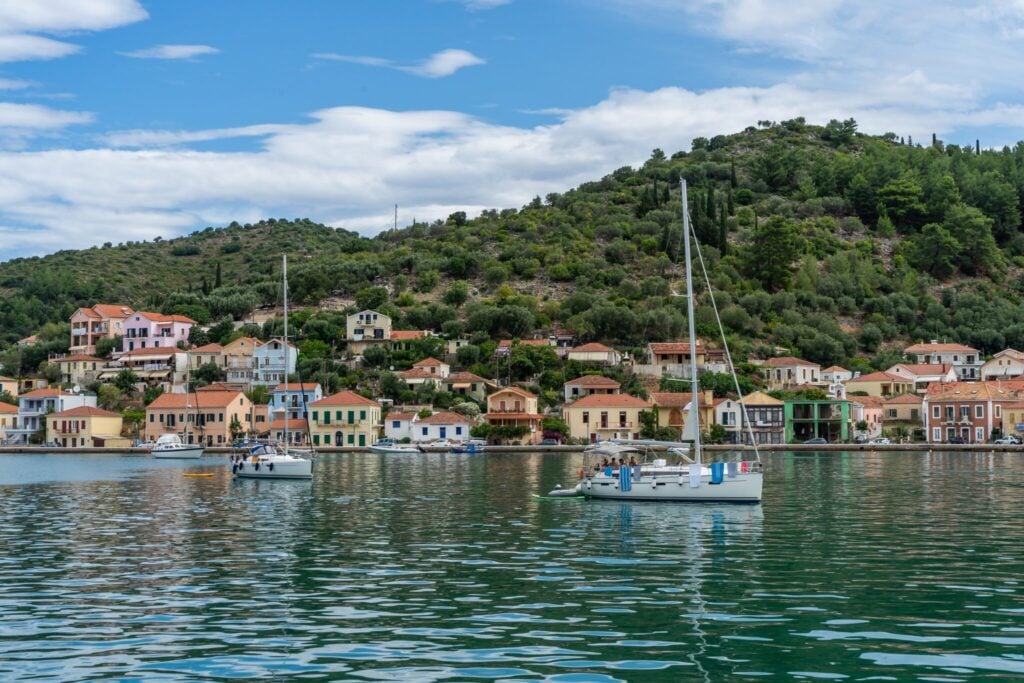
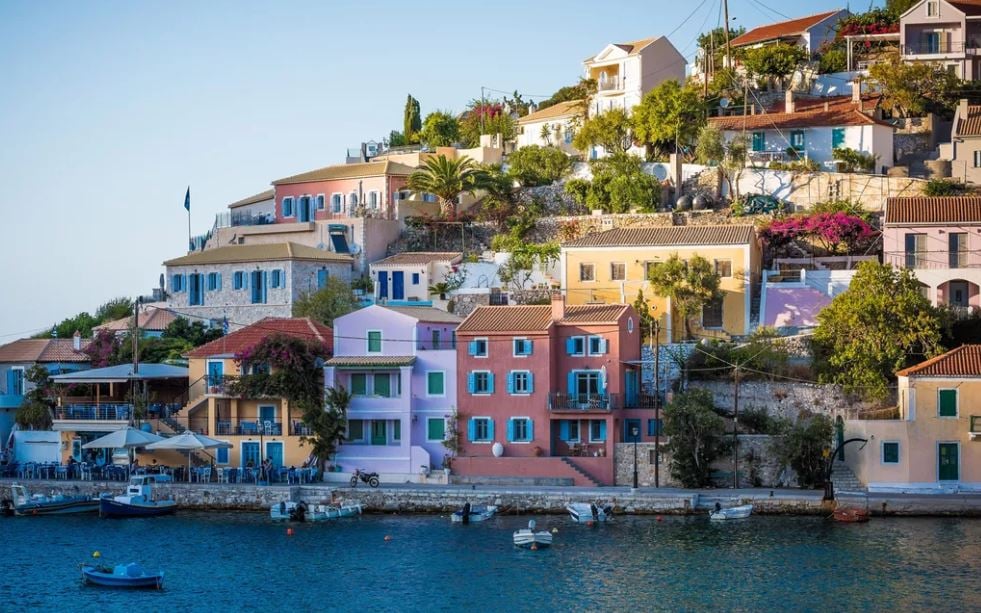
Gaios: The capital and main harbour. Approaching from the sea is part of the experience because the waterfront is partially hidden behind the wooded islets of Agios Nikolaos and Panagia. Pastel-coloured buildings, narrow streets, cafés and tavernas surround the harbour. Gaios becomes busy when excursion boats arrive but changes completely in the evening, when the day visitors leave and the town settles into a much gentler rhythm.
Loggos: Tiny, romantic and possibly the prettiest village on Paxos Island. Colourful houses cluster around a small fishing harbour where restaurant tables almost touch the water. Several excellent east-coast beaches are within walking distance, making Loggos one of the best places to base yourself if you want village atmosphere without the activity of Gaios.
Lakka: At the northern tip of Paxos Island, Lakka occupies an almost perfectly sheltered horseshoe bay. Sailing yachts anchor in extraordinary pale-blue water while the village wraps itself around the harbour. Come during the day for swimming at nearby Harami and stay into the evening for dinner when the harbour lights begin reflecting across the bay.
Magazia: Head inland and Paxos changes again. Magazia sits among the olive groves and is an excellent place to understand the agricultural heart of the island. The landscape around it is threaded with old paths, stone walls and traditional houses.
Erimitis Cliffs: One of Paxos Island’ great landscapes. The western cliffs plunge dramatically into the Ionian and become particularly beautiful late in the day. Sunset here can be unforgettable.
The Blue Caves: The west coast is perforated by enormous sea caves that are best explored by boat. Sunlight reflecting through clear water gives some of them remarkable shades of blue and turquoise.
Tripitos Arch: One of the island’s natural landmarks — a huge limestone arch on the wild south-western coast. Reaching the viewpoint requires walking, so proper footwear and water are strongly recommended.
Agios Nikolaos: The wooded island guarding Gaios contains the remains of a Venetian castle. Public access should not be assumed: the cultural authorities note that entry requires special permission, so most visitors experience it from the water.
Mongonissi: At the southern end of Paxos Island, a narrow channel and sheltered water create one of the island’s easiest places for a relaxed swimming day.
But perhaps the greatest Paxos attraction is simply the coastline itself. Hire a boat and suddenly dozens of places that appear insignificant on a road map become the highlight of the holiday!
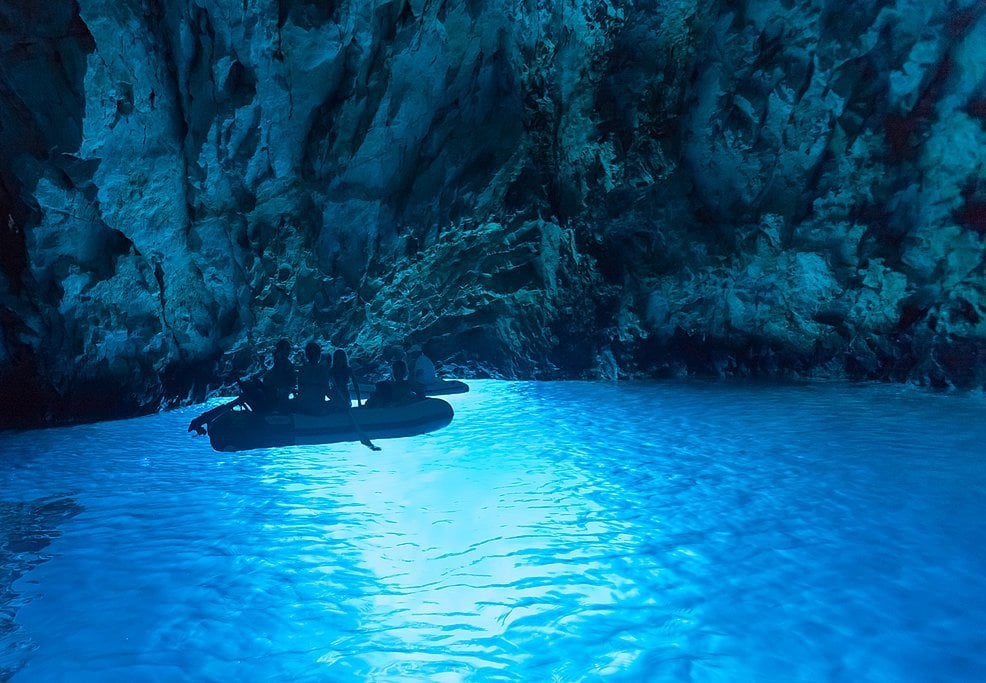
The Blue Caves of Paxos
Paxos is not an island of enormous sandy beaches. Most beaches on Paxos Island itself are small coves of smooth white pebbles surrounded by olive and cypress trees. The reward is extraordinarily transparent water. For white sand and Caribbean colour, you go to Antipaxos.
Some the best beaches are:
Voutoumi Beach – Antipaxos: The superstar. Brilliant turquoise water curves around an almost tropical-looking bay beneath thick green vegetation. It is the beach that appears on postcards, travel brochures and boat advertisements — and for once the photographs are not exaggerating very much.
Vrika Beach – Antipaxos: Smaller and generally sandier than many Paxos beaches, with shallow, luminous water. Boats from Gaios make Antipaxos extremely easy to include during a Paxos holiday.
Levrechio: Just beyond Loggos, this is one of the island’s most convenient beautiful beaches. Pale pebbles, clear water and olive trees make it ideal for a swim before or after lunch in the village.
Marmari: Continue along the coast from Levrechio and you find another wonderfully clear pebble cove shaded by greenery.
Kipiadi: One of the longer beaches on Paxos Island and a good choice when you want more space than the tiny coves closer to the villages.
Kaki Lagada: Easily reached from the Gaios side of the island and known for bright turquoise water. It is one of the more popular swimming stops during high season.
Harami: Close to Lakka and particularly attractive because the surrounding bay is so sheltered. Combine a morning swim with lunch in Lakka.
Monodendri: A popular east-coast beach with more facilities than many of the island’s smaller coves.
Erimitis Beach: Wild, spectacular and backed by dramatic cliffs. Access is considerably less straightforward than the main east-coast beaches, and conditions can change. The view from above may be every bit as impressive as the beach itself.
Mongonissi: Sheltered and easy-going, especially useful for families and travellers who prefer calmer water.
One Paxos rule is worth remembering: The best beach may be the one you reach by boat.
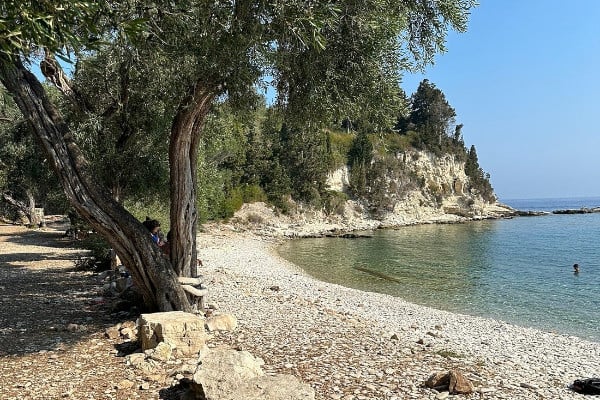
Marmari Beach
Food on Paxos Island suits the island perfectly.
You will find seafood beside the harbour, traditional Greek cooking inland, excellent olive oil almost everywhere and enough ambitious contemporary restaurants to make dinner one of the pleasures of staying for several nights rather than visiting on a day cruise.
Current 2026 TripAdvisor listings put restaurants across all three main villages among the island’s strongest choices.
The best eating strategy on Paxos Island, however, is not to chase rankings every evening. Eat once beside the yachts in Gaios. Have another dinner almost on the harbour wall in Loggos. Spend an evening in Lakka. Then drive inland, find a family taverna among the olive groves and ask what was cooked that day.
That is often the meal you remember!
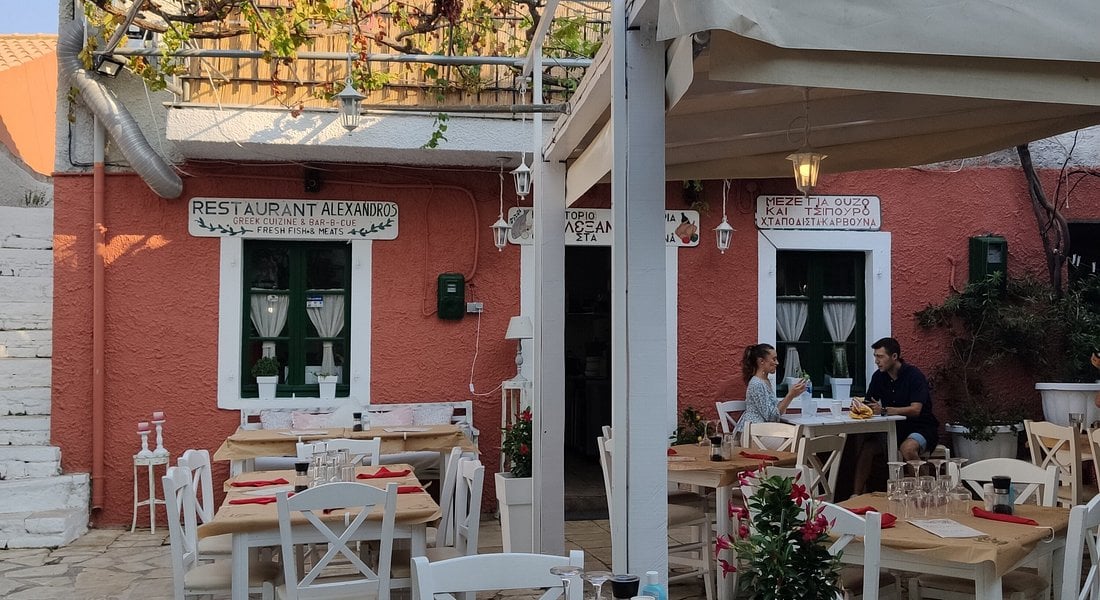
Alexandros Restaurant in Lakka
Paxos shares much of its culinary identity with neighbouring Corfu and the wider Ionian Islands, but the island’s olive culture gives the food a character of its own. Ionian & Aegean Island Holidays highlights sofrito, pastitsada, bourdeto, local olive oil and Antipaxos wine among the flavours worth looking for.
We recomend the following:
And never underestimate the simplest meal on Paxos Island: bread, tomatoes, feta, olives, local oil, grilled fish and cold wine beside the sea.
Sometimes the setting is the recipe.
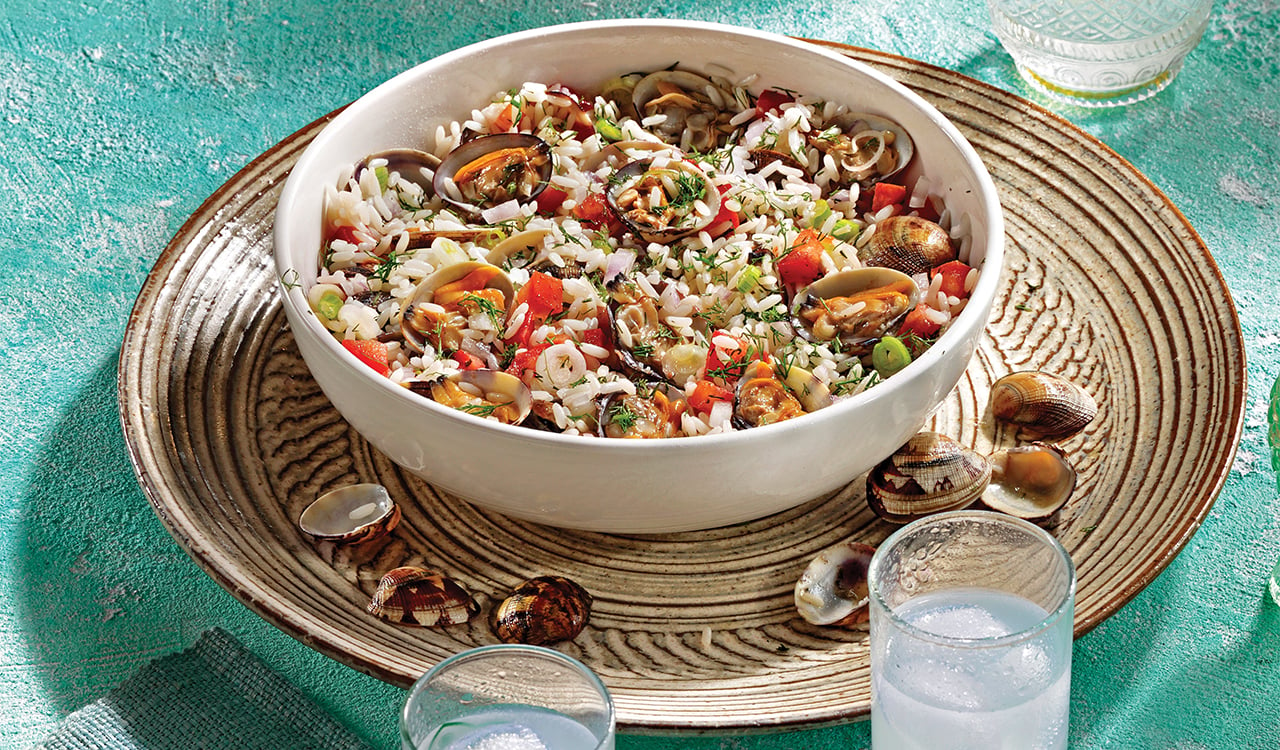
Petaloryzo
Paxos may be small, but it is one of the best Greek islands for travellers who prefer to spend their holiday outside.
Paxos is an island where the most expensive activity is not necessarily the best one. Sometimes all you need is a pair of walking shoes and somewhere to swim at the end!
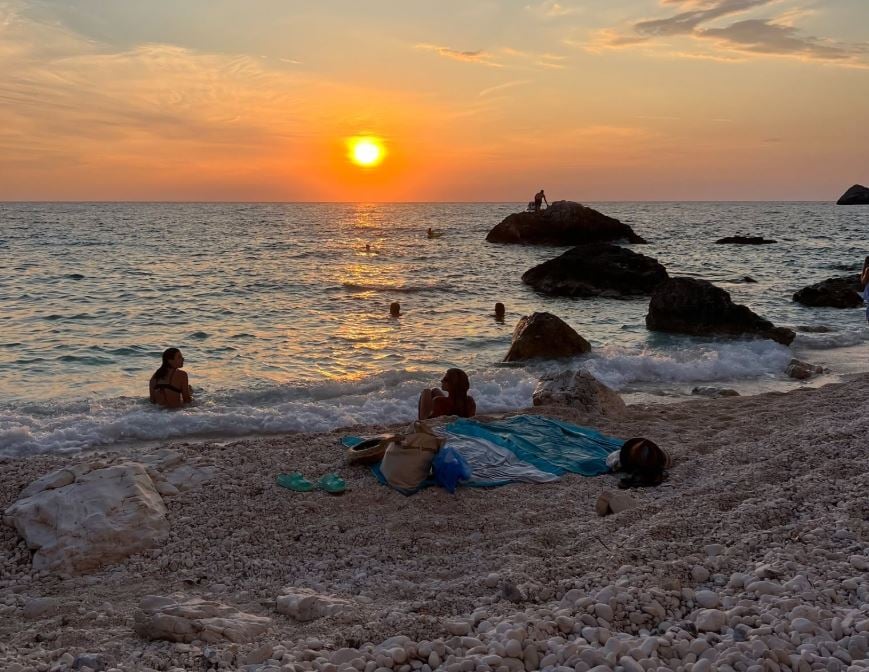
Sunset at Erimitis Beach
Paxos itself may be tiny, but its position opens up several possibilities!
The temptation is to fit too much into a small island holiday.
Resist it. Antipaxos deserves a day.
The west coast deserves a day.
And Paxos itself deserves several days when nothing has been planned at all.
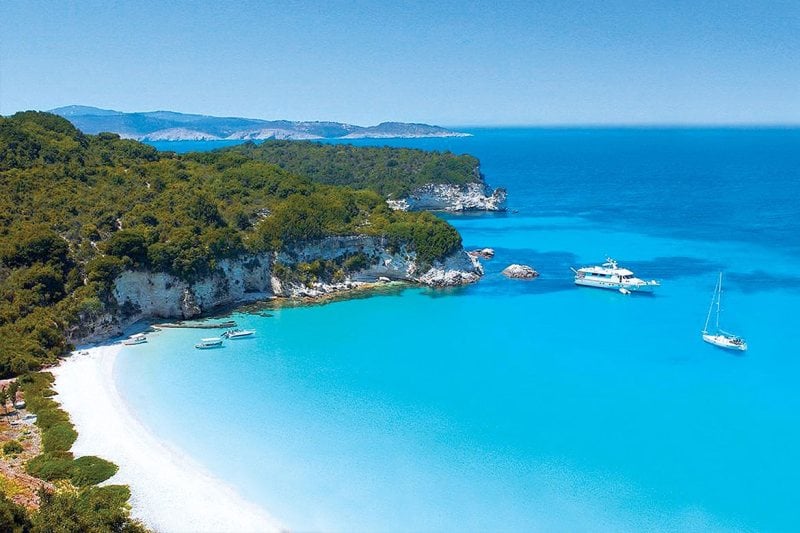
Antipaxos
Where you stay on Paxos Island changes the character of the holiday.
Stay near Gaios if you like having restaurants, shops and evening activity close by.
Choose Loggos for romance and an intimate harbour atmosphere.
Stay around Magazia or the interior for olive groves, peace and a more rural Paxos experience.
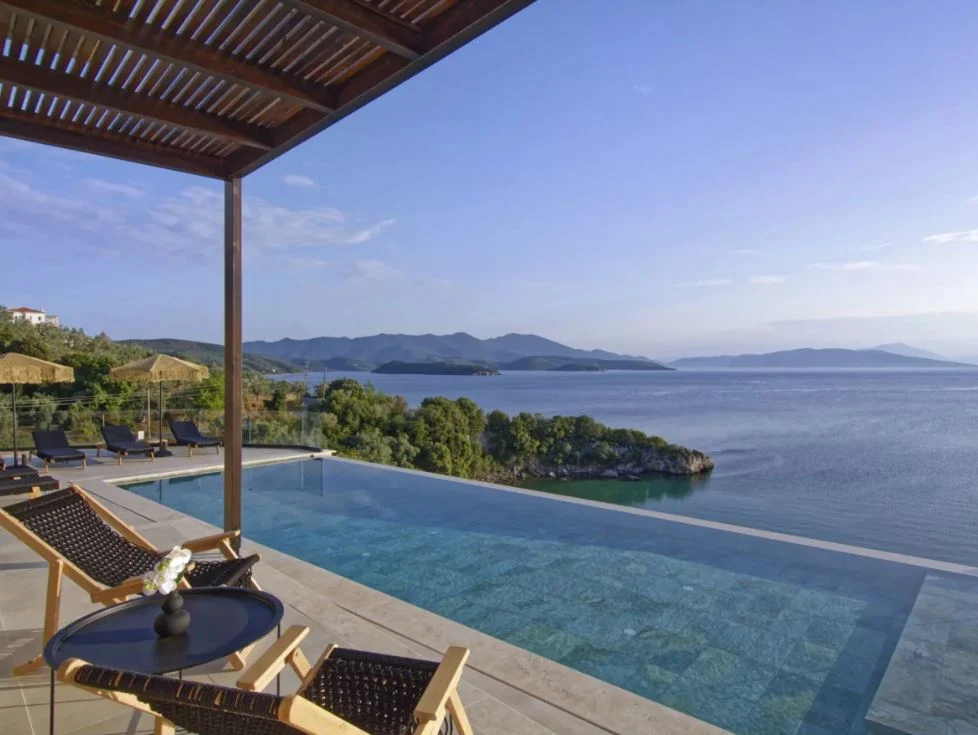
The specialist operator Ionian & Aegean Island Holidays currently offers a substantial Paxos collection including villas around Gaios, Loggos, Magazia and the island’s quieter coastal areas.
Some particularly attractive options include:
Paxos is particularly well suited to villa holidays because the island’s best quality is privacy without isolation.
You can disappear among the olive trees all afternoon and still be eating beside the harbour half an hour later.
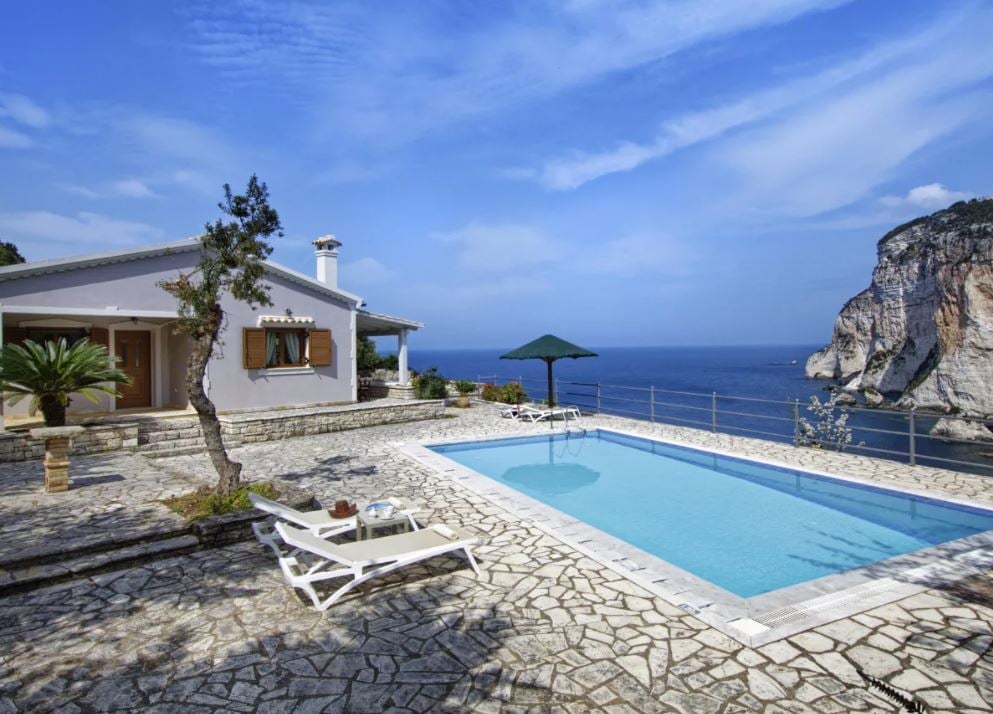
Erimitis View Villa
Paxos looks tiny on a map because it is tiny.
That does not mean you should assume you can walk everywhere.
Beaches, villages and accommodation are spread along narrow roads and steep lanes, and the summer heat can turn a theoretically short walk into a very different experience.
Car Rental: The most flexible option for exploring independently. A small car is usually preferable to something enormous because the island’s roads and village streets can be narrow. Book well ahead for July and August.
Local Bus: A bus service links Gaios, Loggos and Lakka. Services are limited compared with larger Greek islands, so always check the current local timetable rather than constructing an entire day around an old schedule.
Taxi: Useful for evenings when you would rather not drive. There are relatively few taxis on the island and demand becomes high during peak summer, so booking ahead is sensible.
Scooter: Convenient for experienced riders, although narrow roads, bends and summer traffic demand caution.
Boat: On Paxos Island, a boat is not merely an excursion. It is genuinely another form of transport. Beaches invisible from the road suddenly become easy swimming stops.
Walking: Excellent within Gaios, Loggos and Lakka and wonderful through the interior outside the hottest hours of the day.
The ideal Paxos combination?
The car shows you the villages.
The boat reveals the island.
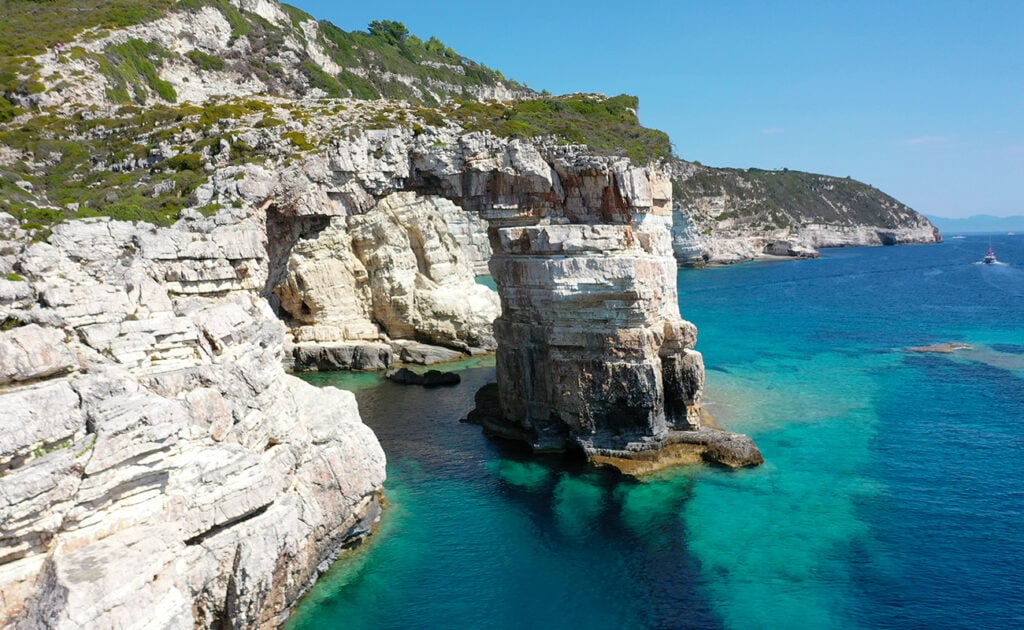
Tripitos Arch
Paxos is generally straightforward to explore, but its small scale should not make you underestimate the landscape.
Some roads are extremely narrow and parking becomes difficult around Gaios, Loggos and Lakka in August. Drive slowly and expect to meet vehicles where two cars do not appear to fit.
The west coast is dramatically more exposed than the sheltered east. Conditions that look calm in Lakka or Gaios do not automatically mean the open Ionian is equally calm.
If you hire a boat, follow the rental company’s route and weather advice. Local boat operators specifically warn that wind can make the exposed western coast difficult later in the day.
Take particular care around cliff edges at Erimitis, Tripitos and other western viewpoints. Paths are not always formal tourist trails.
During periods of high wildfire risk, local authorities may temporarily restrict access to protected natural areas, as the Municipality of Paxos Island did on several days during summer 2026. Check local notices when planning hikes or remote excursions.
And in July and August, carry water.
Paxos is green, but Greek summer is still Greek summer.
European Emergency Number: 112
Police: 100
Medical Emergency / Ambulance: 166
Fire Department: 199
Hellenic Coast Guard: 108
Paxos Health Centre: +30 26623 60100
Paxos Port Authority – Gaios: +30 26620 32533
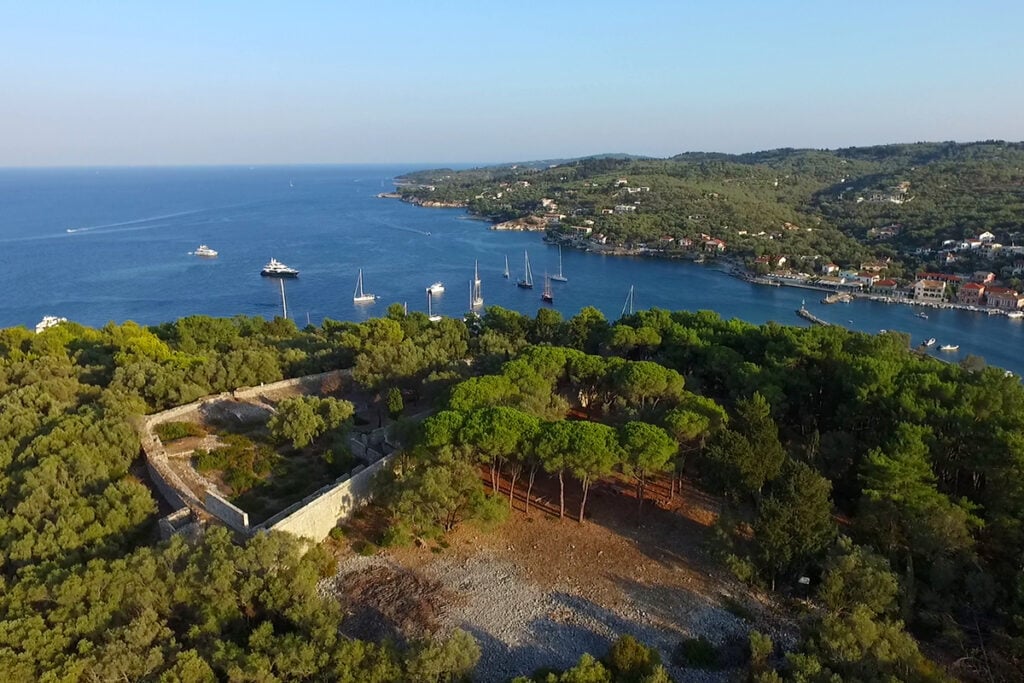
Castle of Agios Nikolaos
Its scale changes everything. Paxos is only around ten kilometres long, has no airport and lacks the large resort developments found on many better-known islands. The landscape remains dominated by olive groves, small settlements and a coastline that is often easier to explore by boat than by road.
Yes — but staying overnight is considerably better.
Day-trip visitors see the Blue Caves, Antipaxos or Gaios.
People who stay on Paxos Island experience the island after the excursion boats leave, when Gaios becomes quieter, Loggos settles into dinner and the harbours belong again to residents, yachts and overnight visitors.
Three nights is enough for an introduction.
Five to seven nights is far better.
A week gives you time for Antipaxos, a boat day, all three villages, several beaches, a few walks and — most importantly — days when you do not need to achieve anything.
Gaios for convenience, restaurants and activity.
Loggos for charm and intimacy.
Lakka for its extraordinary bay, sailing atmosphere and easy access to northern beaches.
There is no wrong answer.
Most beaches on Paxos Island itself are pebble or shingle.
For genuinely pale sand and the most tropical-looking water, take the boat to Antipaxos, especially Vrika and Voutoumi.
Not necessarily if you stay centrally and are happy using buses, taxis and boats.
But a car makes exploring considerably easier, especially if your villa is inland or you want to reach multiple beaches independently.
It can be.
Its small size, limited accommodation supply and popularity with villa and sailing visitors mean peak-season prices are not always low, particularly in July and August.
May, June and September usually offer a better combination of availability, atmosphere and value.
Gaios, Lakka, Loggos and Antipaxos can become very busy during the middle of the day.
But Paxos has an unusual advantage: move a short distance inland, walk through the olive groves or take a boat to a less accessible cove and the crowd can disappear remarkably quickly.
Hire a boat.
It changes the way you understand the island.
The roads show you a small green Greek island.
The sea shows you the cliffs, caves, colours and hidden beaches that make Paxos exceptional.
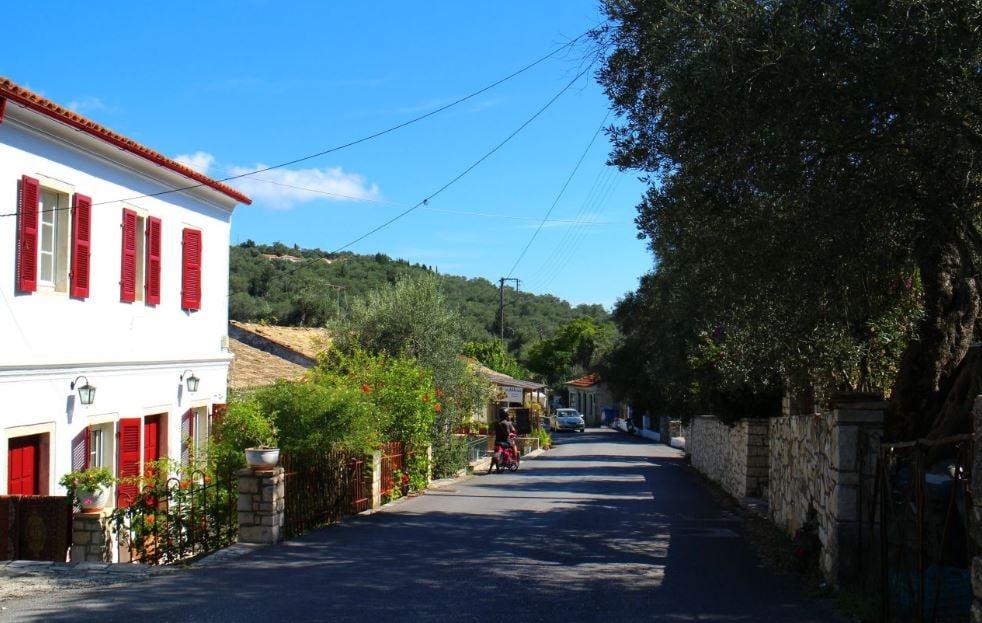
Magazia
Paxos does not overwhelm you with attractions.
That is precisely its appeal.
There is no enormous archaeological site demanding an entire day. No sprawling capital. No endless collection of beach clubs competing for attention.
Instead, there is Gaios hidden behind its wooded islands.
There is Loggos reflected perfectly in the harbour at night.
There is Lakka glowing almost unnaturally turquoise in the morning.
There are olive trees older than the houses beside them.
There are west-coast cliffs that make a ten-kilometre island suddenly feel wild.
And just across the water, Antipaxos appears with beaches that look as though somebody turned the saturation setting too high.
Come for Voutoumi if you must — everyone should see it once.
But stay for the evening in Loggos.
Stay for the first swim before breakfast.
Stay for a drive through Magazia with no destination.
Stay for the boat you almost did not hire.
Stay for an hour beneath the olive trees when the cicadas are louder than everything else.
That is where Paxos becomes more than another beautiful Greek island.
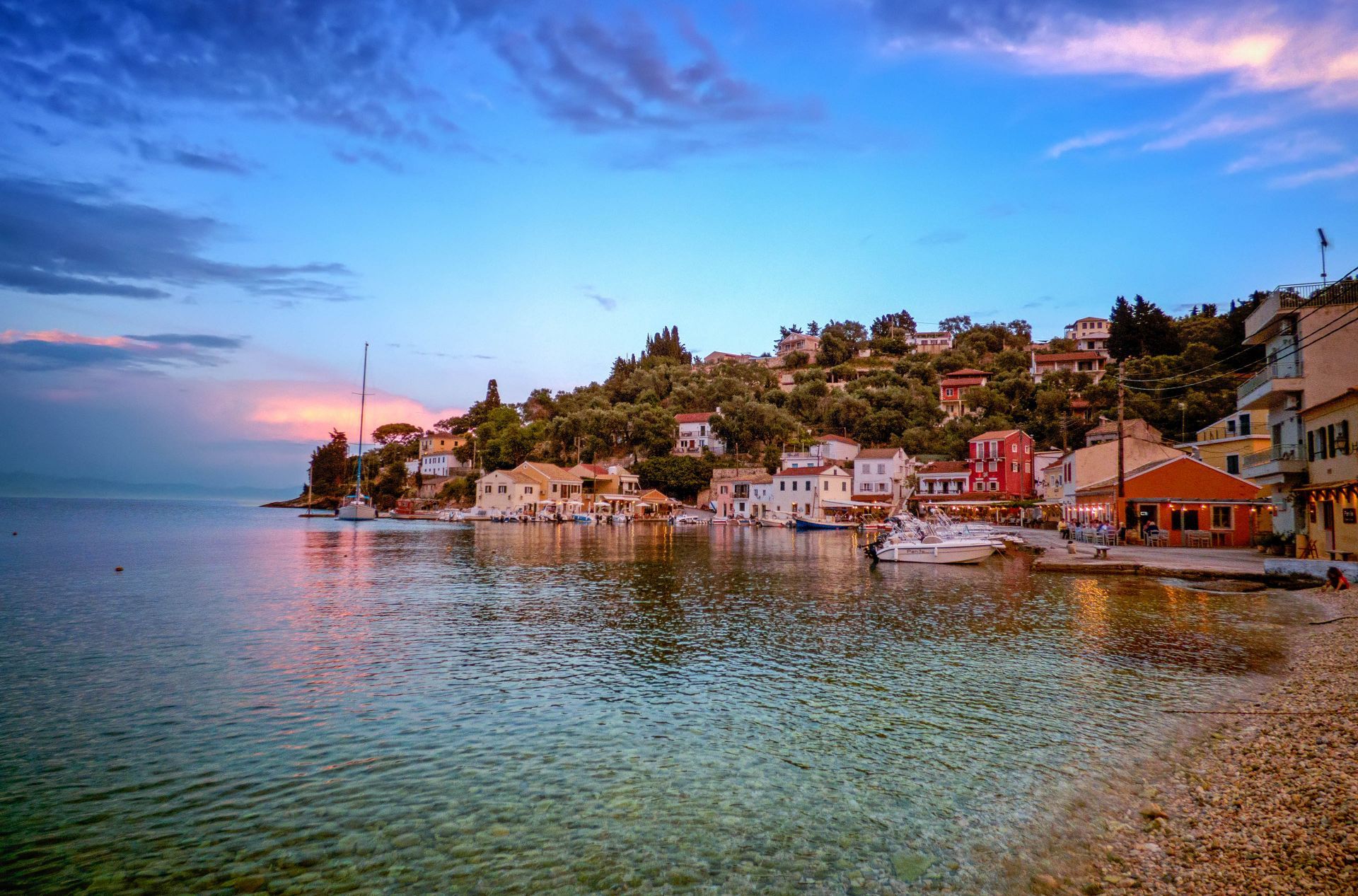
Discover handpicked villas, apartments and holiday options across Paxos Island and the wider Ionian Islands, and experience one of Greece’s smallest islands at exactly the pace it deserves.
Planning more of the Ionian? Pair Paxos Island with our Corfu travel guide for 2026, the Kefalonia travel guide, the Lefkada travel guide and the Ithaca travel guide, or see why Ionian & Aegean Island Holidays should plan your next Greek summer.