

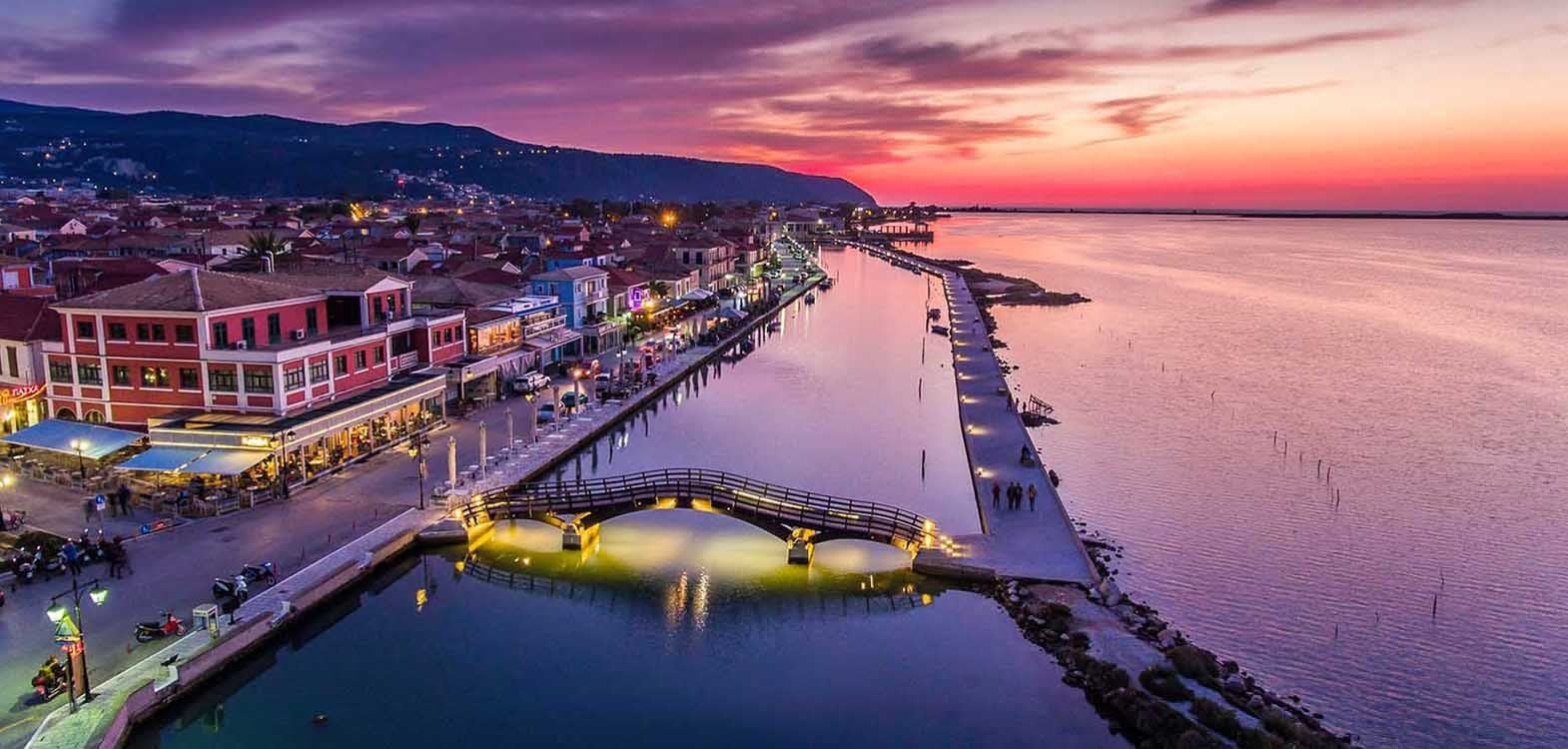
Floating just off the coast of western mainland Greece, Lefkada Island (also known as Leukas) is one of the great surprises of the Ionian Sea. Technically an island, yet connected to the mainland by a causeway and floating bridge, it gives you all the beauty of a Greek island without the ferry journey.
And what beauty it is.
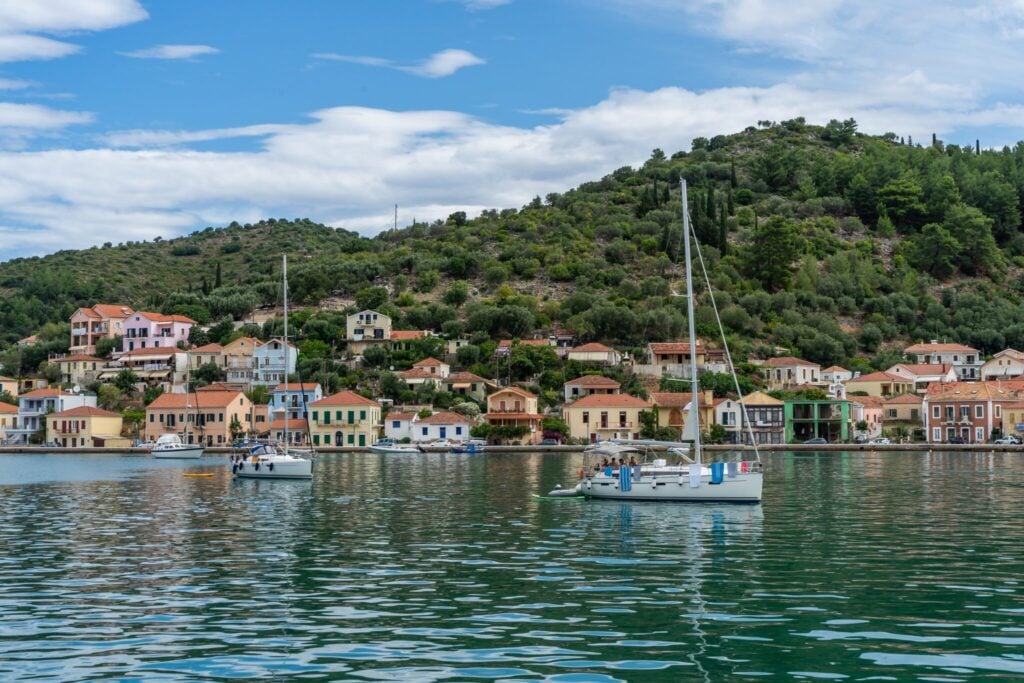
The western coastline is Lefkada at its most dramatic: towering limestone cliffs falling almost vertically into water of an impossible turquoise. Porto Katsiki, Egremni and Kathisma are among the beaches that have made the island famous around the world. The eastern side could hardly be more different: green hills roll down to sheltered bays, yachts gather in Nydri and Sivota, and the sea is calm enough to explore by small boat.
Then there is the interior — something first-time visitors often miss. Drive into the mountains and the beach resorts disappear remarkably quickly. You find stone villages, olive groves, vineyards, lentil fields, tiny churches and tavernas where the menu still follows what is growing nearby.
Lefkada is large enough to explore for a week without getting bored, but compact enough that somewhere completely different is rarely more than an hour away.
Book your Lefkada holidays with Ionian & Aegean Island Holidays and discover one of the most extraordinary islands in the Ionian. Their Lefkada collection includes handpicked villas in locations across the island.
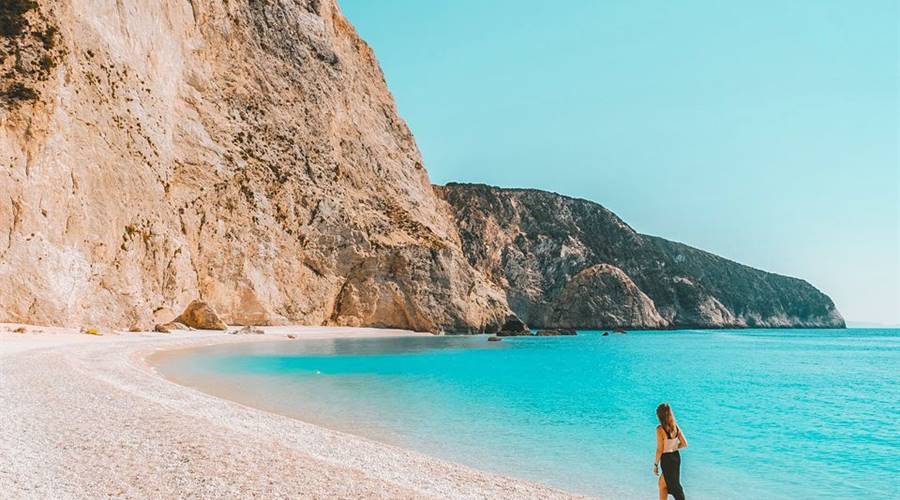
Porto Katsiki, the most famous beach of Lefkada
Lefkada has always sat at a crossroads between mainland Greece and the Ionian Sea, and its history reflects it.
The island was known in antiquity as Leukas, a name associated with the dazzling white rock of its southern cliffs. Cape Lefkatas became wrapped in legend, most famously through the ancient tradition that the poet Sappho threw herself from its cliffs after an unhappy love affair.
Like the other Ionian Islands, Lefkada passed through a long sequence of rulers. Venetian influence became particularly important and left its mark on local culture, cuisine, music and religious art. Later came French and British administration before Lefkada, together with the rest of the Ionian Islands, was united with Greece in 1864.
Earthquakes shaped the island too. The catastrophic Ionian earthquake of 1953 caused extensive destruction, and Lefkada Town was reconstructed using distinctive earthquake-resistant techniques. Its narrow streets and colourful houses, many faced with corrugated metal on their upper floors, now give the capital an architectural character unlike almost anywhere else in Greece.
Lefkada also has an unusually strong literary tradition. The island is associated with major Greek writers and poets including Aristotelis Valaoritis and Angelos Sikelianos, while its cultural life remains remarkably active for an island of its size.
History here is rarely kept behind museum glass. It is in the churches, the village squares, the old olive groves and the peculiar little houses of Lefkada Town.
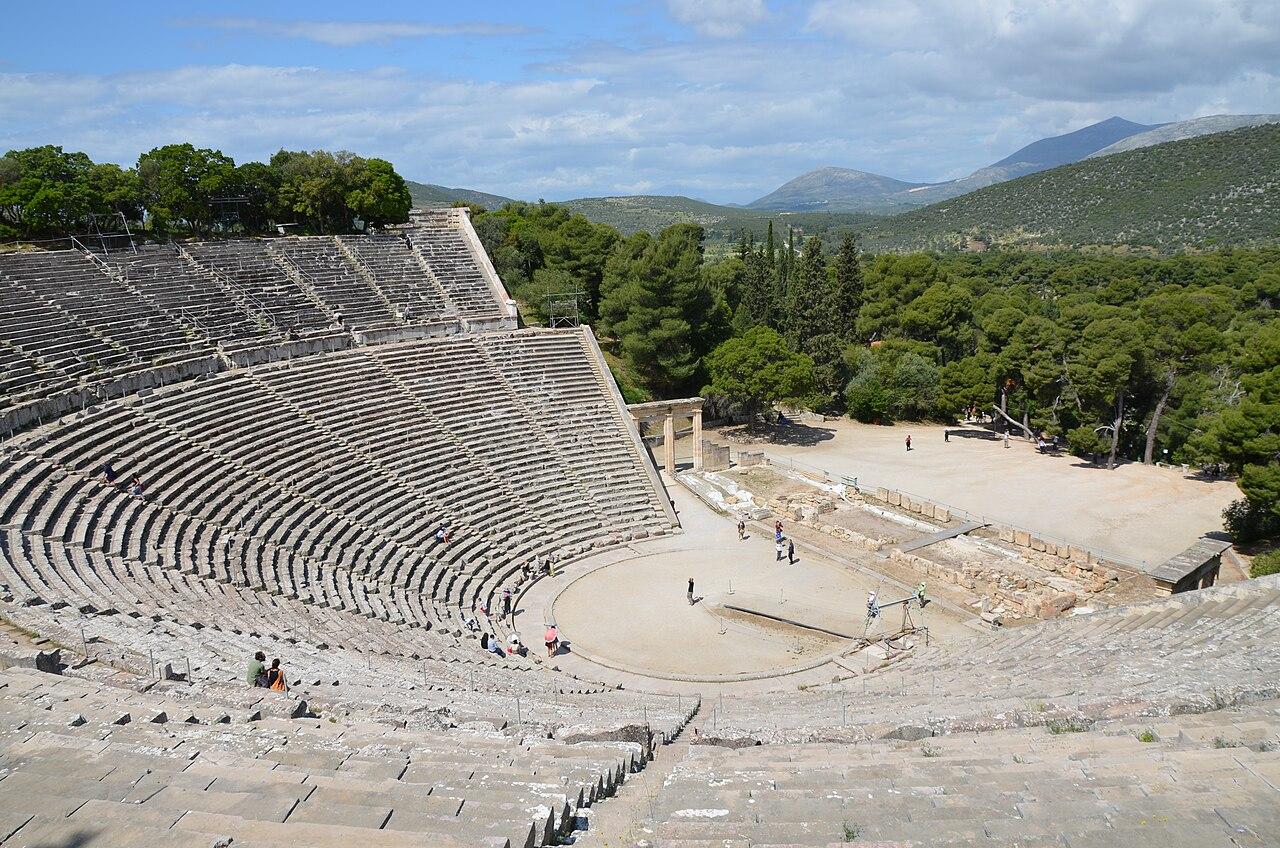
The ancient theater of Lefkada
Here is one of Lefkada’s greatest advantages: there is no ferry required.
The nearest airport is Aktion National Airport at Preveza (PVK) on the mainland. From there, you drive south towards Lefkada and cross directly onto the island by road.
During the summer season there are direct UK services to Preveza. Current flight searches show many famous arilines operating direct services, with London and several regional British airports connected during the season. Flight time from London is roughly three and a half hours.
From Aktion Airport, Lefkada Town is only around half an hour away by car, making Lefkada considerably easier to reach than many islands that require a flight followed by a port transfer and ferry.
If you are travelling in July or August, book flights, accommodation and your hire car well ahead. Lefkada is increasingly popular and the best villas and cars disappear quickly.
Lefkada is also one of the most practical islands to combine with a mainland Greek road trip.
By Car: Drive west from Athens across the Rio-Antirrio Bridge and continue through western Greece towards Preveza and Lefkada. The improved motorway network has made the journey significantly easier than it once was.
By Bus: Intercity KTEL services connect Athens with Lefkada, making it possible to visit without hiring a car for the long journey.
By Air: Domestic connections to Aktion vary seasonally, so for many travellers coming through Athens, driving remains the simplest option.
And remember: unlike almost every other major Ionian island, you do not need to put the car on a ferry.
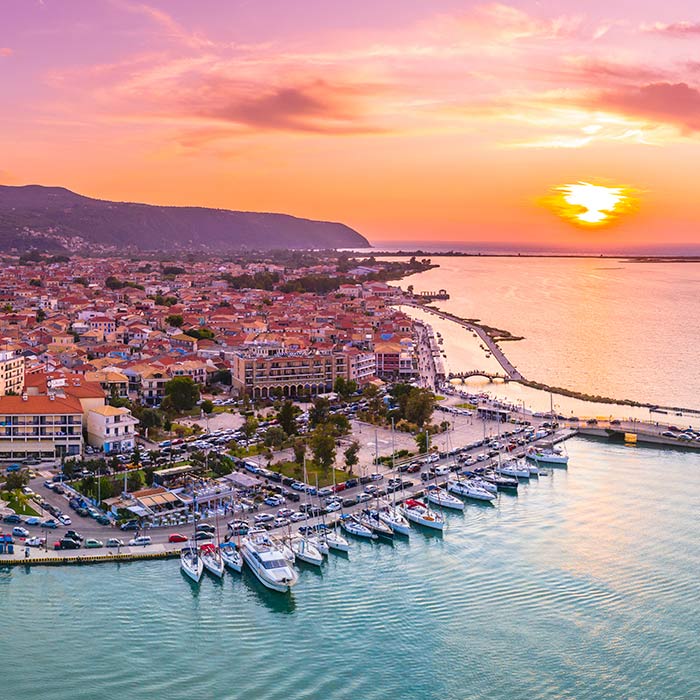
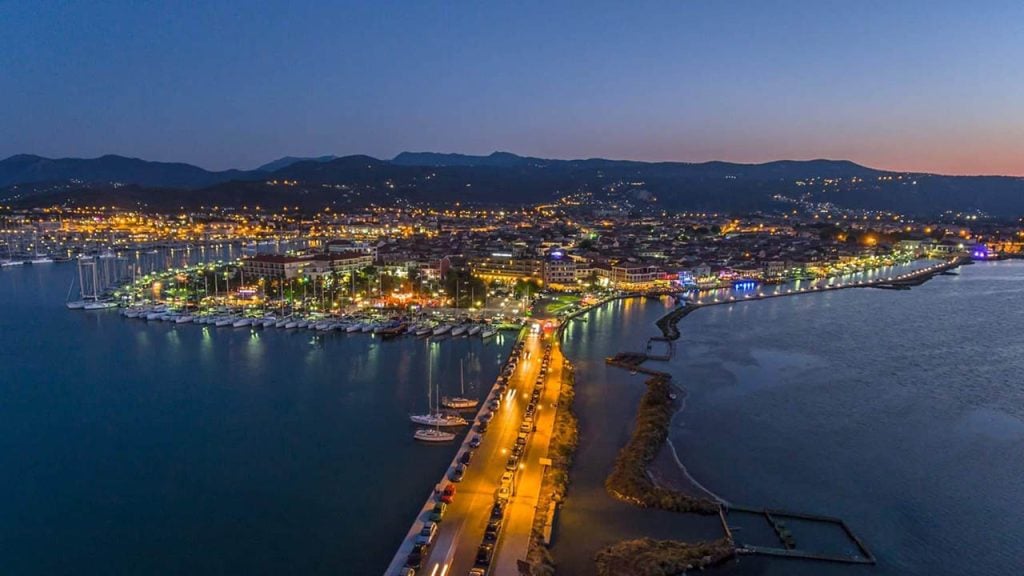
Sunset over the Port of Lefkada
Lefkada has the classic Ionian climate: green, relatively wet winters followed by long, hot and predominantly dry summers. The sea moderates the heat, while the afternoon winds for which Vasiliki and Agios Ioannis are famous make the island one of Greece’s great watersports destinations. August averages around 26°C overall, with daytime highs regularly higher.
| Month | Typical Daytime Conditions | Sea Temp | Sunshine | Crowd Level |
|---|---|---|---|---|
| April | Mild, around 18–20°C | ~16–17°C | 7–8 hrs | Very Low |
| May | Warm, around 22–25°C | ~19–20°C | 9–10 hrs | Low ✓ Best |
| June | Hot, around 27–30°C | ~23°C | 11–12 hrs | Low–Medium ✓ Best |
| July | Hot, around 30–32°C | ~25°C | 12–13 hrs | High |
| August | Hot, around 30–33°C | ~26°C | 11–12 hrs | Very High |
| September | Warm, around 26–29°C | ~25°C | 9–10 hrs | Medium ✓ Lovely |
June offers one of the best combinations of sunshine, warm water and manageable visitor numbers, while September may be even better for swimmers because the Ionian has had the entire summer to warm up. Climate data puts the sea around 23°C in June and approximately 25–26°C by late summer.
Check the weather in Lefkada now, with meteo.gr.
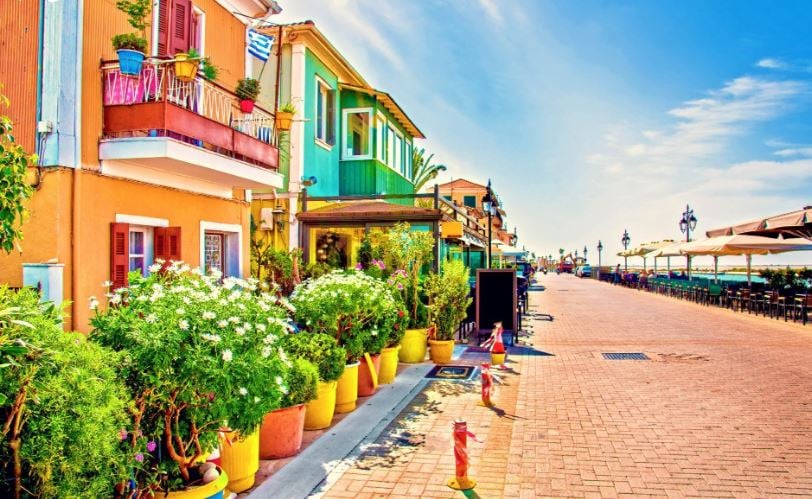
The colorful architecture of Lefkada
Lefkada is an island of contrasts. The glamorous beaches get the photographs, but the villages and interior are what make a week here feel like much more than a beach holiday.
Lefkada Town: The colourful capital sits between the lagoon and the sea. Walk the narrow pedestrian streets, stop around the central square, explore its churches and cafés and continue towards the marina at sunset. Its unusual architecture is one of the island’s defining features.
Castle of Agia Mavra: Standing at the entrance to the island, the great fortress guarded Lefkada for centuries. It is the perfect historical introduction before you even properly arrive.
Monastery of Faneromeni: Set above Lefkada Town among pine trees, Faneromeni is the island’s most important monastery and offers beautiful views across the lagoon and the northern coastline.
Agios Nikitas: A tiny pedestrianised village on the west coast where stone lanes descend to a small beach. Come for lunch, stay for the evening and take the boat or footpath towards Milos Beach.
Karya: One of Lefkada’s loveliest mountain villages, known for its traditional embroidery, plane-shaded square and slower rhythm of life. It is the perfect antidote to a busy August beach.
Englouvi: High in the mountains and famous throughout Greece for its lentils. The surrounding plateau still produces one of Lefkada’s most celebrated agricultural products.
Nydri: Lefkada’s busiest resort and one of the sailing capitals of the Ionian. Its harbour faces a remarkable collection of small green islands and is the departure point for countless cruises and boat trips.
Dimosari Waterfalls: Hidden inland near Nydri, the waterfalls and rock pools make a refreshing change from the coast. Water flow varies significantly with the season, so they are at their most impressive after wetter periods.
Vasiliki: A colourful southern harbour backed by mountains and internationally known for windsurfing. Calm mornings give way to stronger afternoon winds, creating near-perfect conditions for the sport.
Sivota: Not to be confused with Sivota on the Epirus mainland, Lefkada’s Sivota is a deeply sheltered natural harbour lined with yachts and waterfront tavernas.
Cape Lefkatas: The wild southern tip of the island. Here the lighthouse stands above enormous white cliffs and an uninterrupted Ionian horizon. It is one of the most dramatic landscapes on Lefkada.
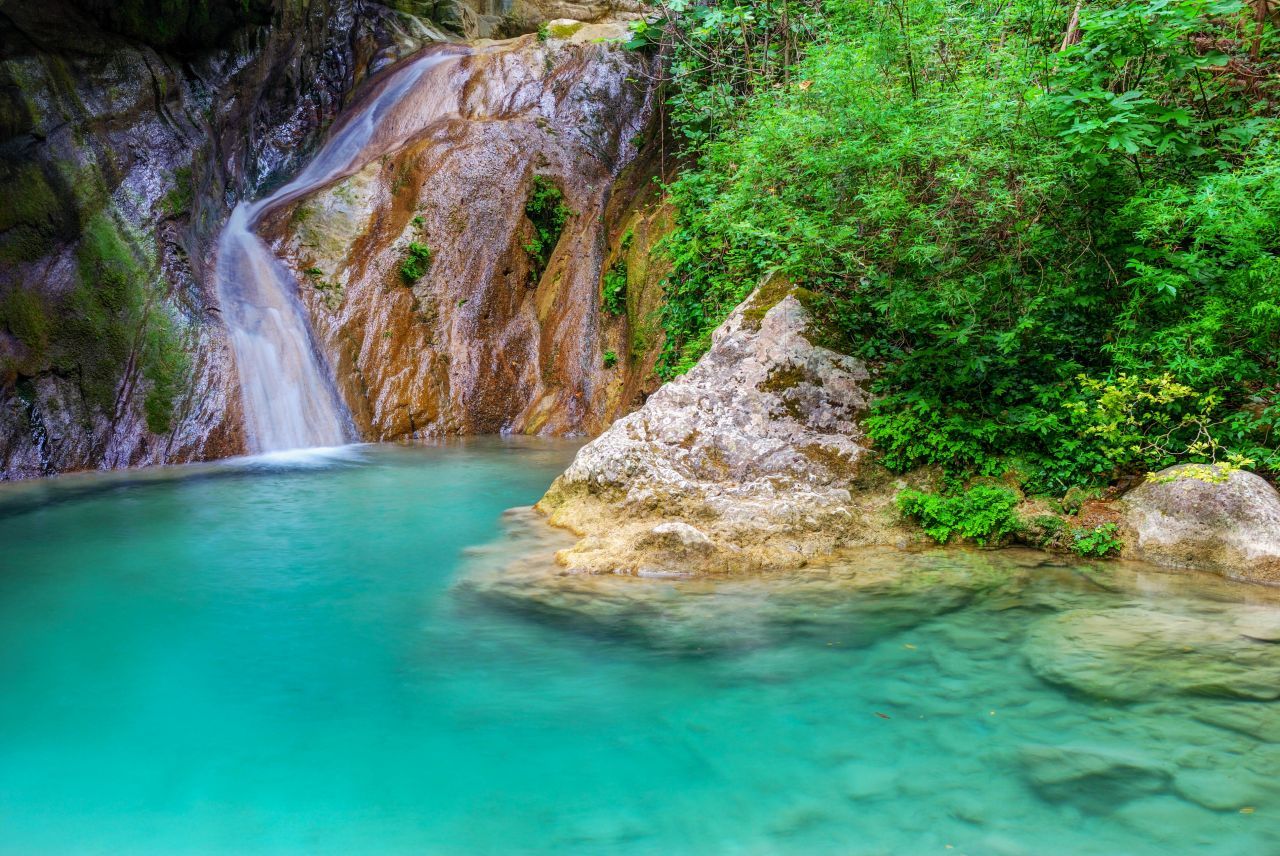
Dimosari Waterfalls
Lefkada does not merely have good beaches. Its west coast contains some of the most extraordinary beaches in the Mediterranean. White limestone cliffs and pale sand or pebbles reflect through clear water, producing the intense blue for which the island is famous.
Porto Katsiki: Lefkada’s superstar. A huge white cliff rises roughly 100 metres above a strip of pale beach and luminous blue sea. Come early in high season, bring water and expect the approach itself to be part of the experience.
Egremni: Longer, wilder and perhaps even more dramatic than Porto Katsiki. The enormous cliffs and long shoreline make people look tiny from above. Access involves a substantial descent, so come prepared for the climb back up.
Kathisma: The most cosmopolitan beach on Lefkada: long, beautiful and fully organised with restaurants, beach bars and sunbeds. Paragliders regularly sweep down from the mountain and land on the sand.
Milos Beach: The reward for walking from Agios Nikitas or taking a seasonal boat. It feels remarkably wild considering how close it is to one of the island’s most popular villages.
Pefkoulia: A long west-coast beach north of Agios Nikitas, backed by green hills and easier to reach than several of the island’s southern giants.
Avali, Kavalikefta & Megali Petra: Three names worth remembering if you want the Lefkada west-coast experience without spending the entire day following the Porto Katsiki crowd. Access roads can be narrow, but the landscape is spectacular.
Agiofili: A beautiful cove near Vasiliki with pale pebbles and exceptionally clear water. Particularly good for snorkelling.
Mikros Gialos: Sheltered, calm and family-friendly, with tavernas close to the water. The east and south-east coasts are often a better choice when the western side is rough.
Agios Ioannis: Just outside Lefkada Town, backed by old windmills and famous for kitesurfing. Sunset here is superb.
One important Lefkada rule: do not judge a beach only from photographs. Wind direction matters. The west coast can become rough while the east remains completely calm, so having a car gives you the freedom to choose the right side of the island each day.
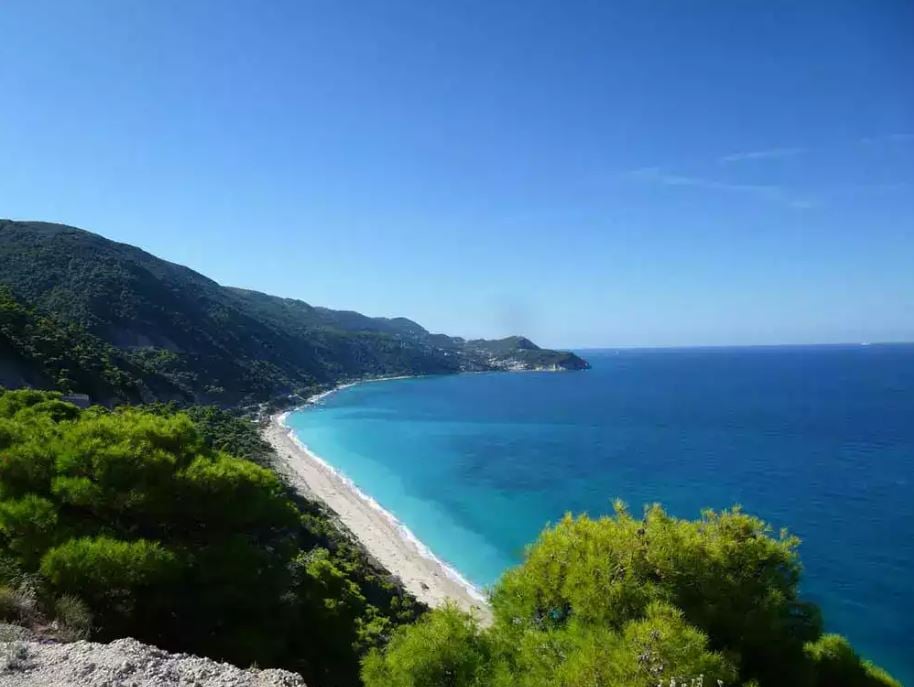
Pefkoulia Beach
Lefkadian food is the other reason to leave the coast. The island combines the seafood traditions of the Ionian with a surprisingly strong mountain kitchen: lentils, sausages, pies, meat cooked slowly in rich sauces, olive oil, honey and local wine. Greece’s official tourism site highlights Englouvi lentils, Lefkadian salami, local fish roe, traditional pies and Vertzami wine among the island’s defining products.
Here are eight excellent places for Greek and Mediterranean food, all listed on TripAdvisor:
Rachi – Exanthia: probably Lefkada’s most famous restaurant with a view. Perched high above the west coast, it combines Greek cooking with one of the island’s great sunset panoramas. Go before sunset, allow time for the mountain drive and make the evening itself part of the experience.
T’agnantio – Agios Nikitas: a very useful choice during a day exploring Agios Nikitas and Milos Beach. TripAdvisor lists it as Greek cuisine, and its position in the village makes it an easy place to stop for a long lunch before returning to the west coast.
Nissi Mediterranean Kuzina – Lefkada Town: one of the capital’s stronger choices when you want something a little more refined than a traditional taverna. The menu is firmly rooted in seafood, Mediterranean and Greek cooking, making it particularly good for an evening dinner in town.
Antivaro – Lefkada Town: a contemporary alternative in the capital, combining Mediterranean and Greek flavours with grilled dishes. It is particularly well suited to a later dinner followed by drinks and a walk through Lefkada Town.
Basilico Restaurant – Nydri: one of Nydri’s established favourites and a strong option if you want seafood without leaving the resort. TripAdvisor categorises it under seafood, Mediterranean and Greek cuisine, with fish and classic Greek dishes forming the backbone of the menu.
The Barrel – Nydri: another long-standing Nydri favourite with a broad menu covering seafood, Mediterranean and Greek cooking. It is an easy recommendation for groups because the menu goes well beyond fish while still feeling unmistakably Greek.
Zolithros – Mikros Gialos: one of the nicest places on this list for a relaxed seaside lunch. Sitting beside the calm waters of Mikros Gialos, it specialises in seafood, Mediterranean and Greek cuisine and works particularly well after a morning on the beach.
Spiridoula Taverna – Sivota: a traditional waterfront-style choice in the beautiful southern harbour of Sivota. TripAdvisor lists seafood, Mediterranean and Greek cuisine, making this a good place for fresh fish, local dishes and a slower dinner beside the boats.
Find more places to eat in Lefkada, here!
The best eating strategy on Lefkada, however, is simple: do not eat every meal in the main resorts. Have seafood beside the water, but spend at least one evening driving into the mountains. Find a village taverna, ask what was cooked that day, order a carafe of local wine and let the kitchen decide the rest.
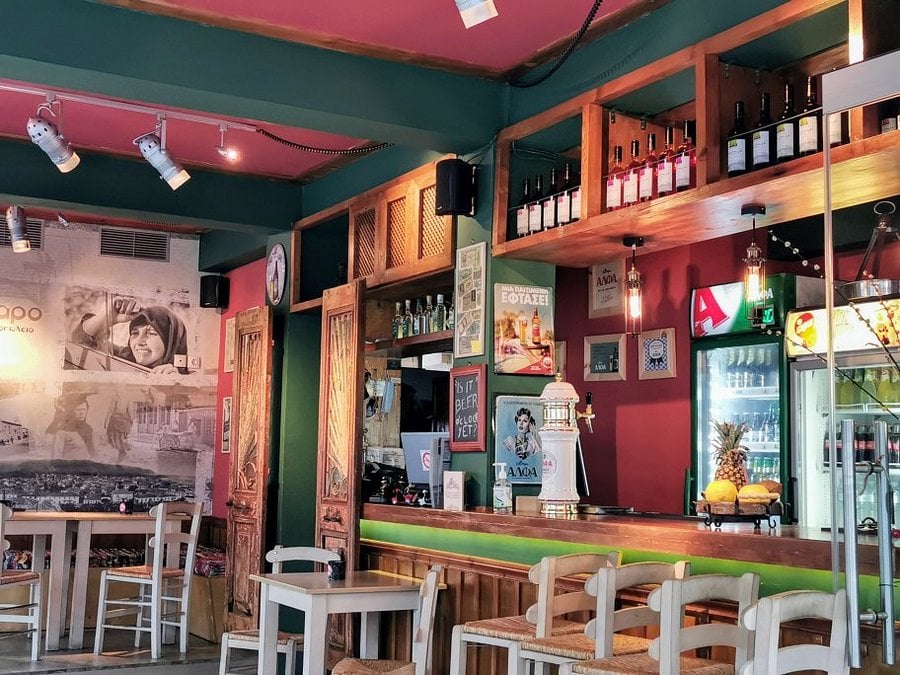
Antivaro Restaurant
Lefkada has one of the most distinctive food identities in the Ionian Islands, built from ingredients that still belong very specifically to the island.
Englouvi Lentils: The island’s great agricultural speciality. Tiny lentils grown on the plateau above Englouvi have become famous for their intense flavour and are traditionally cooked simply, allowing the ingredient itself to dominate.
Lefkadian Salami: Air-dried sausage with a distinctive garlic aroma. Slice it thinly as a meze with wine, ouzo or tsipouro.
Sofigado: One of Lefkada’s most unusual traditional dishes — veal cooked in a sweet-and-sour style with quince and grape syrup.
Savoro: Fried fish preserved and flavoured with vinegar and rosemary, part of the wider culinary heritage of the Ionian Islands.
Riganada: Rustic bread soaked generously with olive oil and seasoned with oregano and salt. Simple food that makes complete sense after a day in the sea.
Ladopita: Lefkada’s traditional olive-oil sweet, closely associated with celebrations and feast days.
Pasteli & Mandolato: Sesame-honey pasteli and Ionian nougat are classic sweet finishes.
And if you see soumada or local rozoli, try those too. Lefkada’s food deserves far more attention than it usually receives.
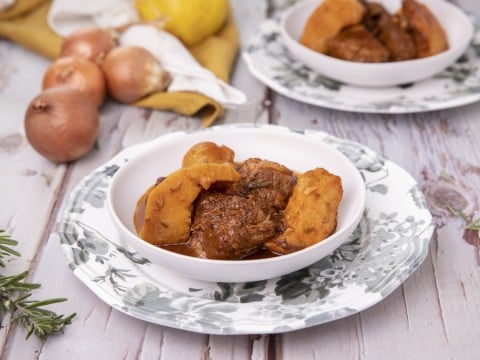
Sofigado
Few Greek islands offer such a strong combination of beach, mountain and water activities.
Windsurfing in Vasiliki: The bay is internationally famous for its afternoon thermal wind. Beginners can practise during the calmer morning while experienced windsurfers wait for the afternoon conditions.
Kitesurfing at Agios Ioannis: The northern coast near Lefkada Town is one of the island’s principal kitesurfing areas.
Paragliding above Kathisma: Launch from the mountains and descend towards one of Greece’s great beaches. Even watching from below is impressive.
Sailing: Lefkada sits at the heart of one of Europe’s finest sailing areas. The waters between Lefkada, Meganisi, Skorpios, Kalamos and Kastos are protected enough to have become a major yachting playground.
Hire a Motorboat: From Nydri, Nikiana or the eastern coast, hiring a small boat lets you turn dozens of otherwise inaccessible coves into your own swimming stops.
Hiking: Spring and early summer reveal a completely different Lefkada — green valleys, old footpaths, mountain villages and wildflowers. The island’s interior deserves at least one walking day.
Visit the Wineries: Lefkada has a long wine tradition and local producers offer the chance to taste wines from grapes including Vertzami while seeing another side of island agriculture.
Snorkelling and Diving: The protected coves of the east and south are particularly good when the west coast has stronger waves.
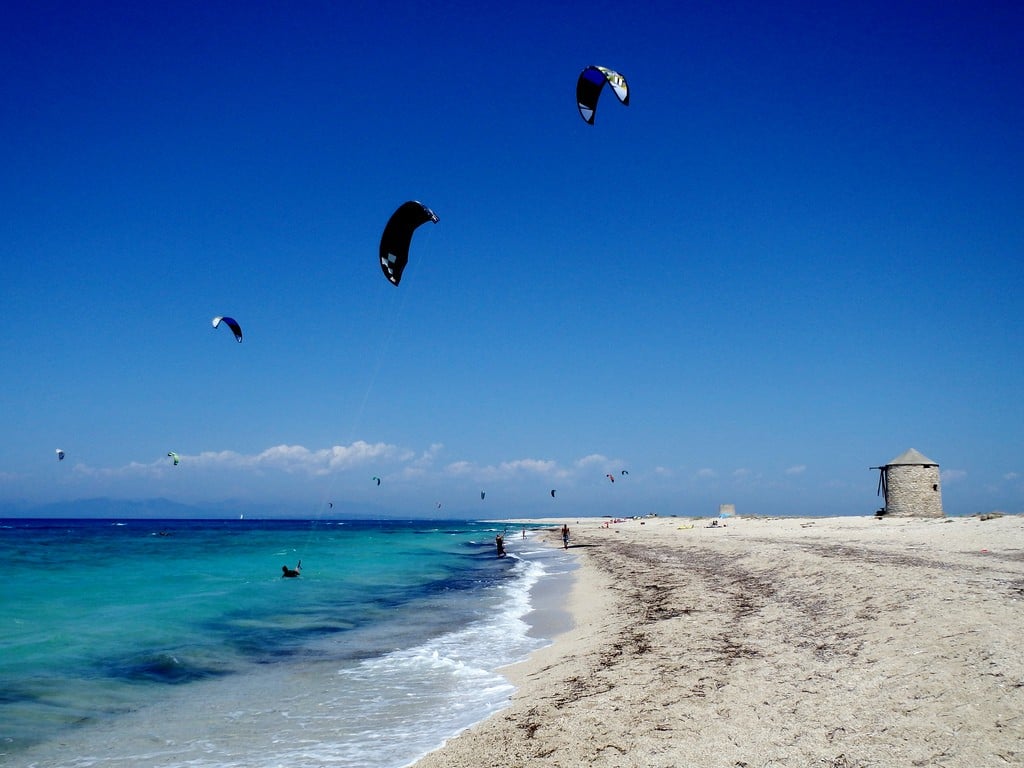
Kitesurfing over the waters of Lefkada
One of Lefkada’s great strengths is its position. It is both an island destination and a base for exploring the Inner Ionian and western mainland Greece.
Meganisi: The easiest island escape. Sail into Vathy or Spartochori, swim in sheltered bays and discover an island that feels several decades slower than Lefkada.
Skorpios and the Pringiponisia: Boat trips from Nydri cruise through the cluster of green islands offshore, traditionally associated with Aristotle Onassis and the golden age of the international jet set. The wider sailing area around Nydri, Meganisi, Kalamos and Kastos is one of Lefkada’s defining experiences.
Kalamos & Kastos: Smaller, quieter and much less developed. If Meganisi feels relaxed, these islands take the idea even further.
Ithaca: Seasonal excursions can bring you into the world of Odysseus for a day — although Ithaca is good enough to deserve a holiday of its own.
Kefalonia: Another possible island-hopping option from the southern Ionian, particularly for travellers building a longer itinerary through western Greece.
Preveza: Because Lefkada is connected to the mainland, an evening in old Preveza is remarkably easy. Its waterfront and pedestrian centre make a pleasant change of scene.
Parga and Epirus: With your own car, you can turn Lefkada into the starting point for a wider exploration of western Greece.
Or simply make the Lefkada road trip your day excursion: Lefkada Town → Agios Nikitas → Kathisma → Karya → Englouvi → Nydri → Sivota → Vasiliki → Cape Lefkatas. You will finish the day wondering how all of it fitted onto one island.
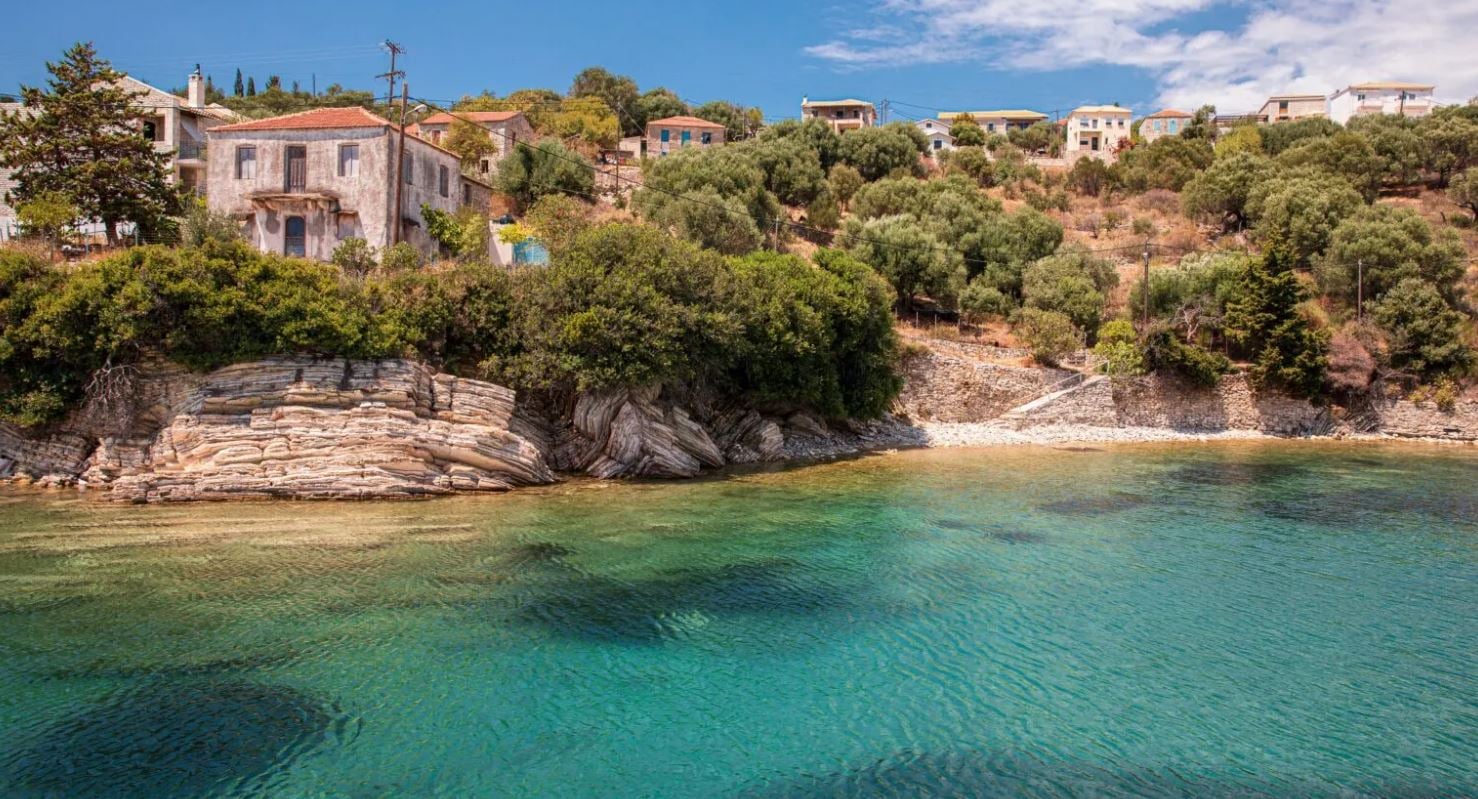
Kastos, the tiny island of Lefkada
Where you stay on Lefkada makes a real difference.
The west coast gives you enormous sunsets and access to the famous beaches. The east coast offers calmer water, boat hire and easier access to Lefkada Town and Nydri. The south is perfect for Vasiliki, watersports and exploring Cape Lefkatas.
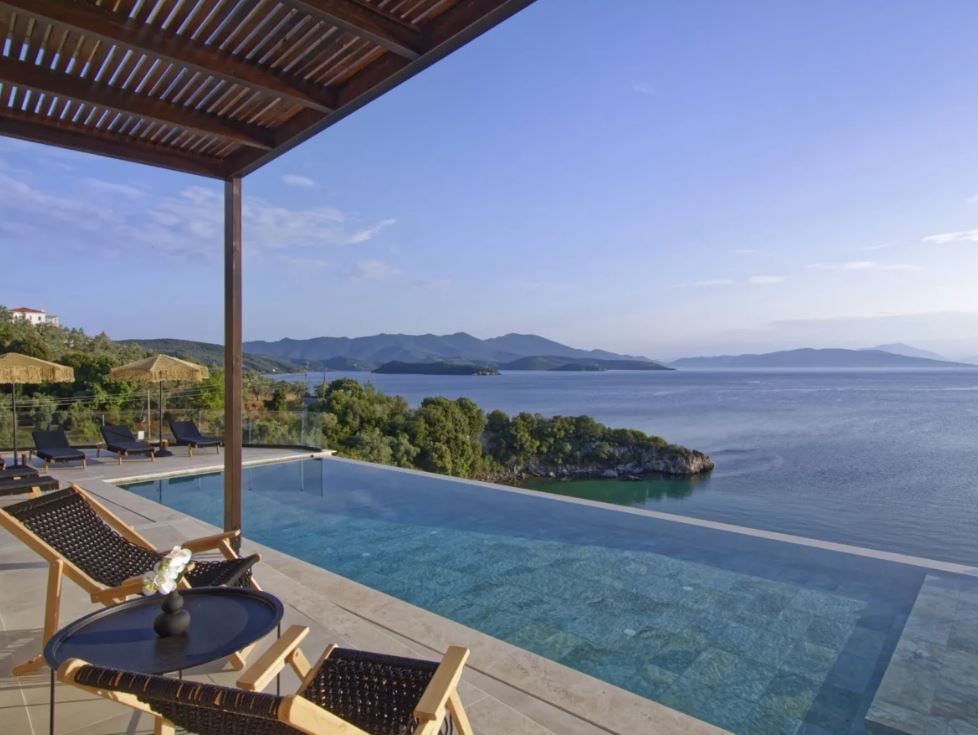
This is where Ionian & Aegean Island Holidays comes in. The specialist Greek-island operator offers handpicked villas and holidays, with package options including flights, transfers or car hire, depending on the booking.
Here are some suggestions:
Browse the full Ionian & Aegean Island Holidays Lefkada collection to find villas across the island.
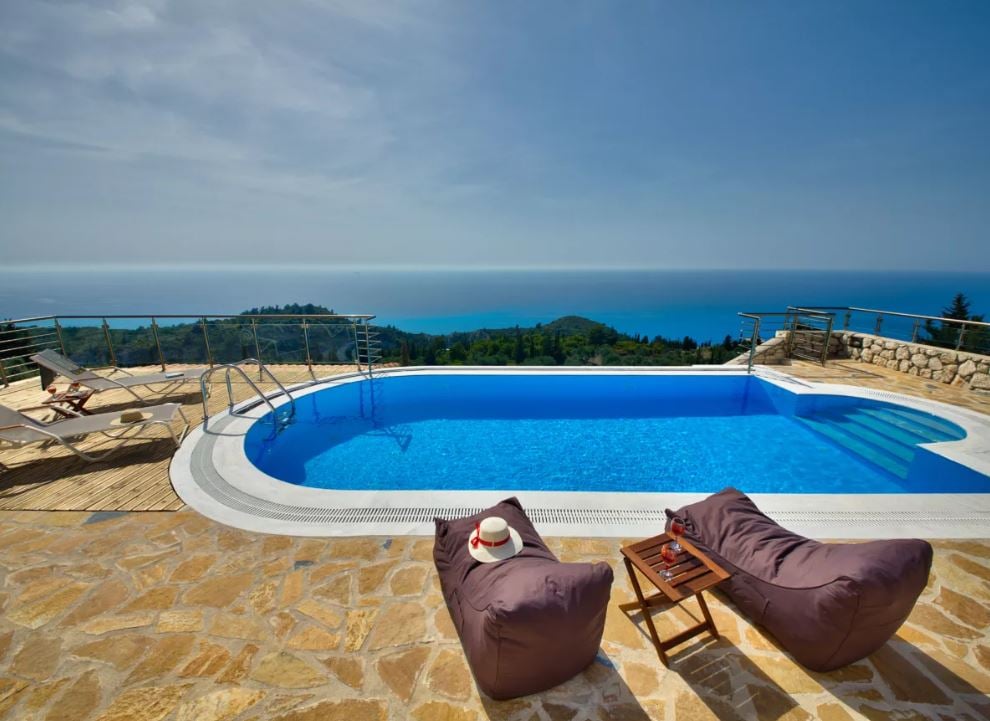
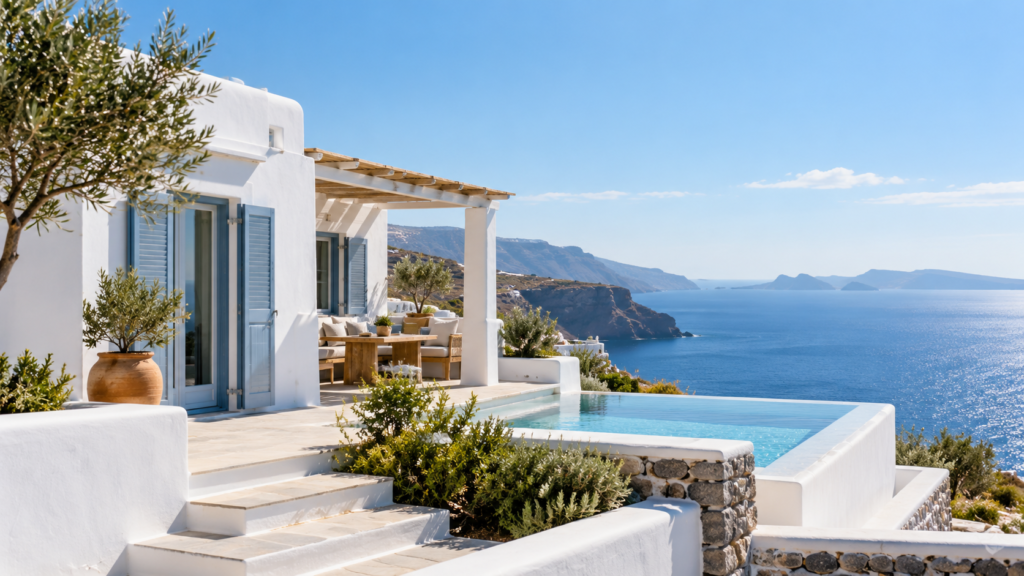
Villa Aperanto Blue
Lefkada looks compact on a map, but the mountains, hairpin roads and enormous difference between east and west mean journey times are longer than the distances suggest.
Car Rental: Strongly recommended. It transforms Lefkada from a resort holiday into an island you can genuinely explore. Book early in July and August.
Local Bus: Services connect Lefkada Town with major settlements and beaches, but a bus timetable will never give you the flexibility required to discover the more remote west coast properly.
Taxi: Useful for airport transfers and evenings out, but relying exclusively on taxis becomes expensive if you intend to explore every day.
Scooters: Convenient for shorter journeys, but Lefkada’s mountain roads, sharp bends and steep access routes demand experience and caution.
Boat Hire: On the eastern coast, a boat can be almost as useful as a car. Nydri and the surrounding resorts are excellent starting points for exploring the sheltered Inner Ionian.
Walking: Lefkada Town and Agios Nikitas are best enjoyed on foot, while the mountainous interior rewards hikers outside the hottest summer hours.
The ideal Lefkada combination is car + one day with a boat. The car shows you the island. The boat shows you why people fall in love with the Ionian.
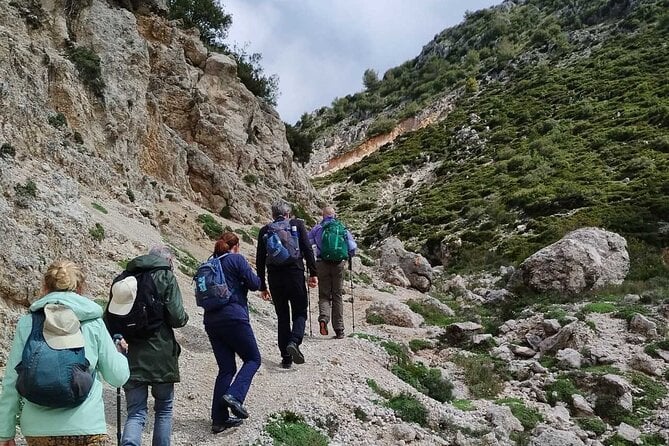
Hiking in Lefkada
Lefkada is straightforward to travel around, but its landscape deserves respect.
The biggest practical issue is driving. Roads approaching beaches such as Egremni, Porto Katsiki, Avali and Kavalikefta can be steep, narrow or crowded. Drive defensively, avoid rushing and do not leave the petrol gauge until the last minute when heading into the south-west.
The famous west coast is exposed to the open Ionian. Beautiful blue water can become powerful very quickly, so pay attention to local conditions and do not underestimate waves or currents.
At cliff-backed beaches, avoid sitting directly beneath unstable rock faces and follow any local safety restrictions.
In July and August, carry more water than you think you need. Some beaches require significant descents and the return climb takes place in full afternoon heat.
Lefkada has its own General Hospital, with additional medical facilities in Vasiliki and Nydri. The Municipality of Lefkada lists the hospital and local emergency contacts for visitors and residents.
European Emergency Number: 112
Police: 100
Medical Emergency: 166
Fire Department: 199
Hellenic Coast Guard: 108
General Hospital of Lefkada: +30 26450 38200
Port Authority of Lefkada: +30 26450 22322
The municipality currently publishes the Lefkada hospital and port numbers above, while the Hellenic Coast Guard confirms 108 and 112 as emergency numbers.
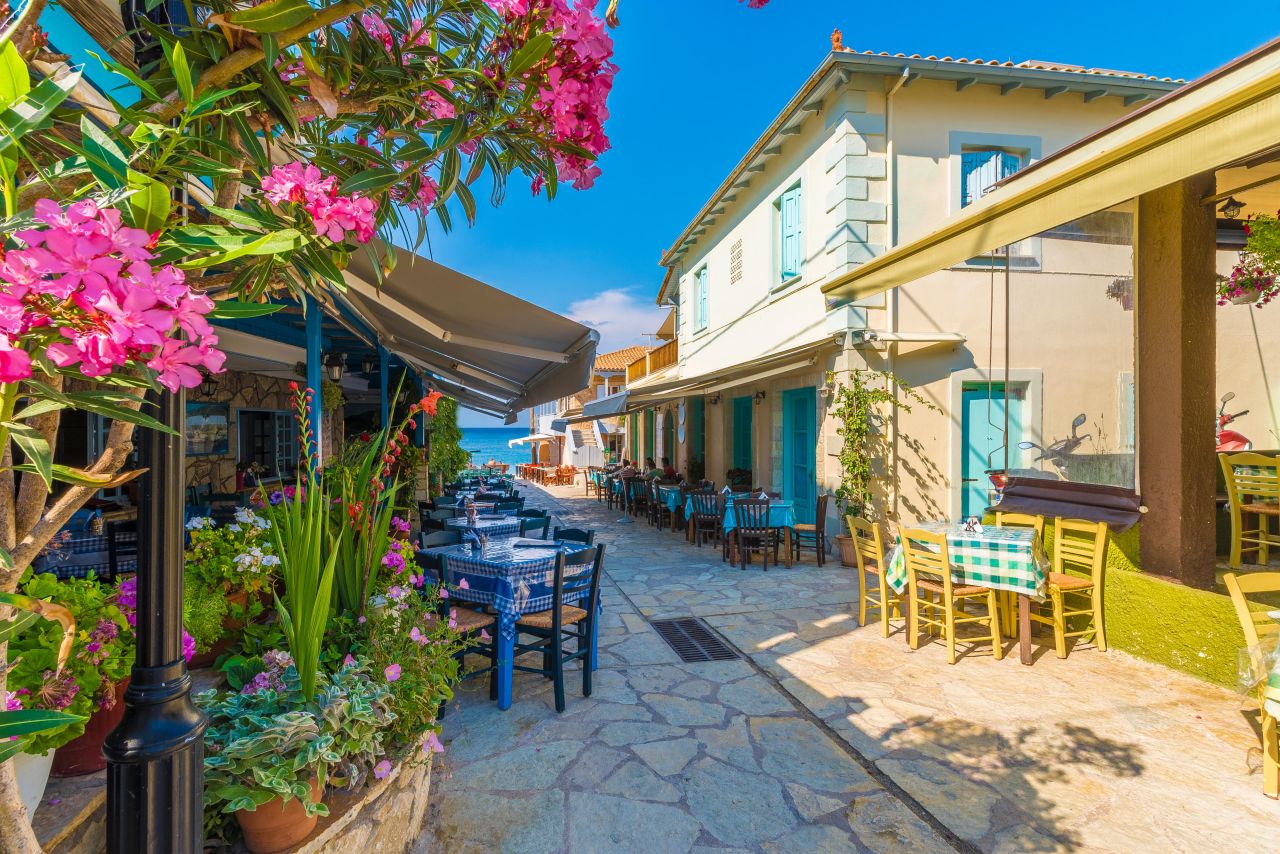
Agios Nikitas Village, Lefkada
Lefkada’s western coastline is dominated by enormous pale limestone cliffs dropping directly into intensely blue water. This combination gives beaches such as Porto Katsiki and Egremni their almost tropical appearance and makes the island noticeably more dramatic than its greener, gentler eastern coast.
The island has two very different coastlines. The east faces the sheltered Inner Ionian Sea and is usually calmer, while the west is exposed to the open Ionian and can develop substantial waves. On the same afternoon, you can find almost glass-like water near Nikiana and powerful surf at Kathisma.
Usually, yes. Their colour is not simply the result of heavily edited photographs. Bright limestone cliffs, white pebbles, exceptionally clear water and strong Ionian sunlight genuinely create the electric turquoise shades for which Lefkada is famous.
Vasiliki Bay has a remarkably reliable local afternoon wind, traditionally nicknamed Eric, created by the surrounding mountains and daily temperature differences. Calm mornings are often followed by considerably stronger afternoon conditions, making the bay internationally known for windsurfing.
The waters opposite Nydri are scattered with islands including Meganisi, Skorpios, Skorpidi and Madouri. Together they create one of the most distinctive landscapes in the Ionian and make this part of Lefkada especially popular for sailing and boat trips.
You can sail around it and see it very closely from boat excursions, but Skorpios is privately owned and ordinary visitors cannot freely explore the island itself. Its association with Aristotle Onassis remains one of the reasons it attracts so much curiosity.
The mountain village of Englouvi has cultivated lentils for generations on a high plateau above the village. They are unusually small, intensely flavoured and considered one of Lefkada’s signature local products.
The spectacular white cliffs at Lefkada’s southern tip have been connected with mythology since antiquity. Ancient writers associated the cape with Apollo and with the legendary “Lover’s Leap”, where people supposedly threw themselves from the cliffs because of unrequited love.
Yes, but probably not the famous ones at midday. Porto Katsiki, Kathisma and Agios Nikitas become extremely busy in peak season. Smaller bays, beaches reached on foot or by boat, and early-morning visits offer a much quieter experience.
The driving distances. Lefkada is not enormous, but its mountainous interior, narrow roads and winding coastal routes mean journeys can take considerably longer than they appear on a map. Trying to visit too many beaches in one day can easily mean spending more time driving than swimming.
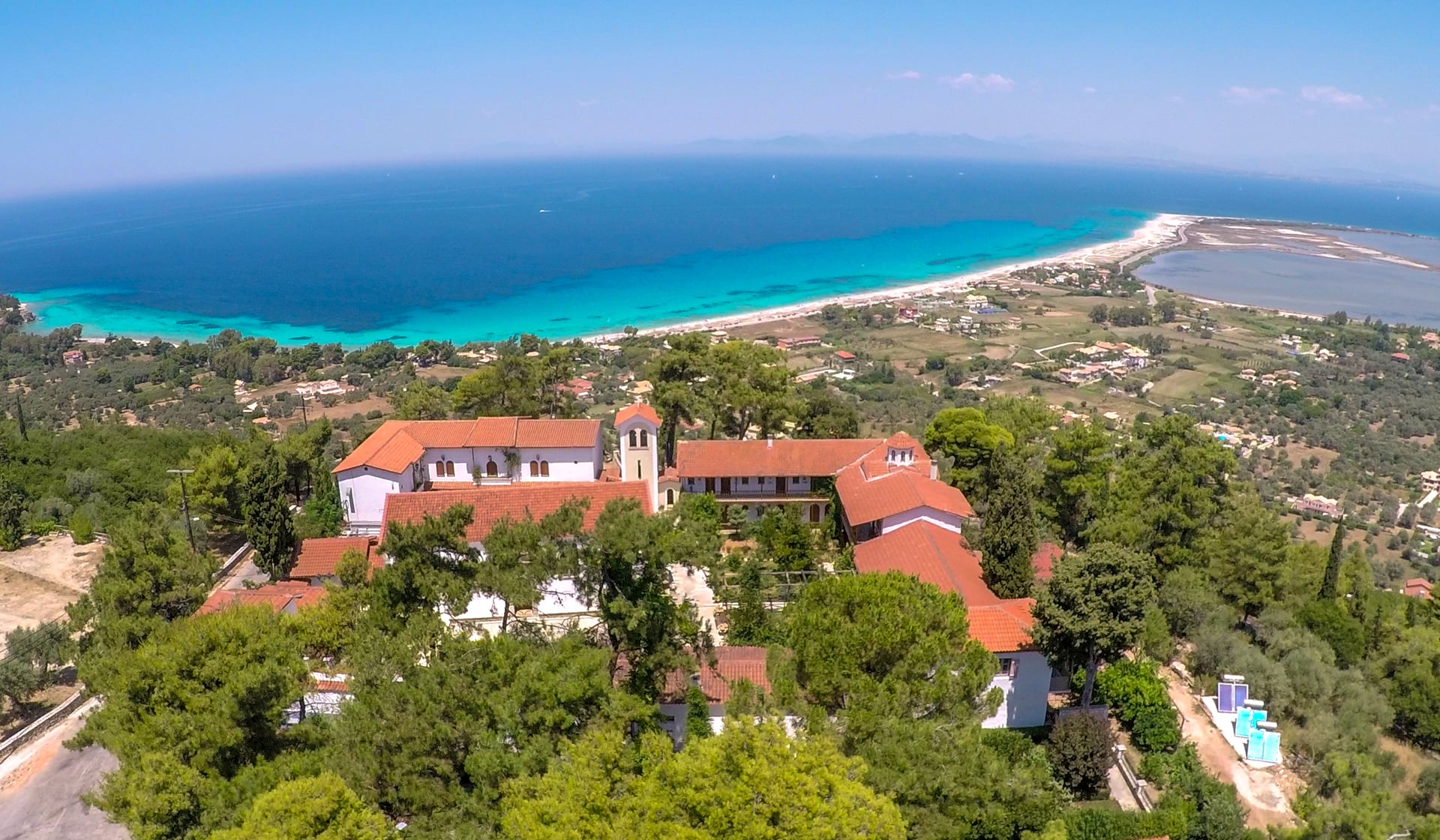
Monastery of Panagia Faneromeni
Lefkada does not make you choose between an easy holiday and an adventurous one.
You can spend the morning beneath a hundred-metre white cliff at Porto Katsiki, eat lentils in a mountain village at lunchtime, sail past green islands in the afternoon and finish with dinner above the Ionian as the sun drops directly into the sea.
Few Greek islands change character so completely from one coast to the other. The wild western beaches feel almost tropical. The east feels like an enormous natural marina. The interior still belongs to farmers, vineyards and villages. And the capital somehow manages to feel distinctly Greek, distinctly Ionian and entirely its own.
Come for Porto Katsiki if you must — everyone does.
But stay long enough to find Englouvi, Karya, Meganisi, the evening wind in Vasiliki, the old streets of Lefkada Town and the first glass of Vertzami after sunset.
That is when Lefkada becomes more than the island from the photographs.
Discover handpicked villas, apartments and holiday options across Lefkada and the rest of the Ionian Islands, and turn one of Greece’s most beautiful coastlines into your next Greek summer.