

Rising from the turquoise waters of the western coast of Greece, Kefalonia is the largest of the Ionian Islands — a green giant of fir-clad mountains, dazzling white-pebble bays, underground lakes, and harbour villages so pretty they look painted. Made world-famous by Captain Corelli’s Mandolin, Kefalonia has somehow kept its soul intact: beyond the celebrated postcard views of Myrtos lie sleepy hill villages, family-run wineries, and locals who still greet visitors like long-lost cousins.
This is an island of glorious contrasts. One day you can be sailing into the sky-blue grotto of Melissani Cave, the next standing on the summit of Mount Ainos amid a forest of rare Kefalonian fir — before ending the evening with a glass of crisp Robola wine at a harbourside taverna in Fiskardo. Whatever kind of traveller you are, Kefalonia promises an experience that will stay with you long after the ferry pulls away.
Best Season to Visit Kefalonia: While the island shines from May right through to October, the very best time to visit is late May through to the end of June. The landscape is at its greenest after the winter rains, the sea has warmed beautifully, direct flights from the UK are in full swing, and every taverna, beach bar and boat-hire kiosk is open — yet the peak-summer crowds have not yet arrived. September runs it a very close second, with the warmest sea of the year. This is Kefalonia at its finest. Book your holidays with Ionian & Aegean Island Holidays now!
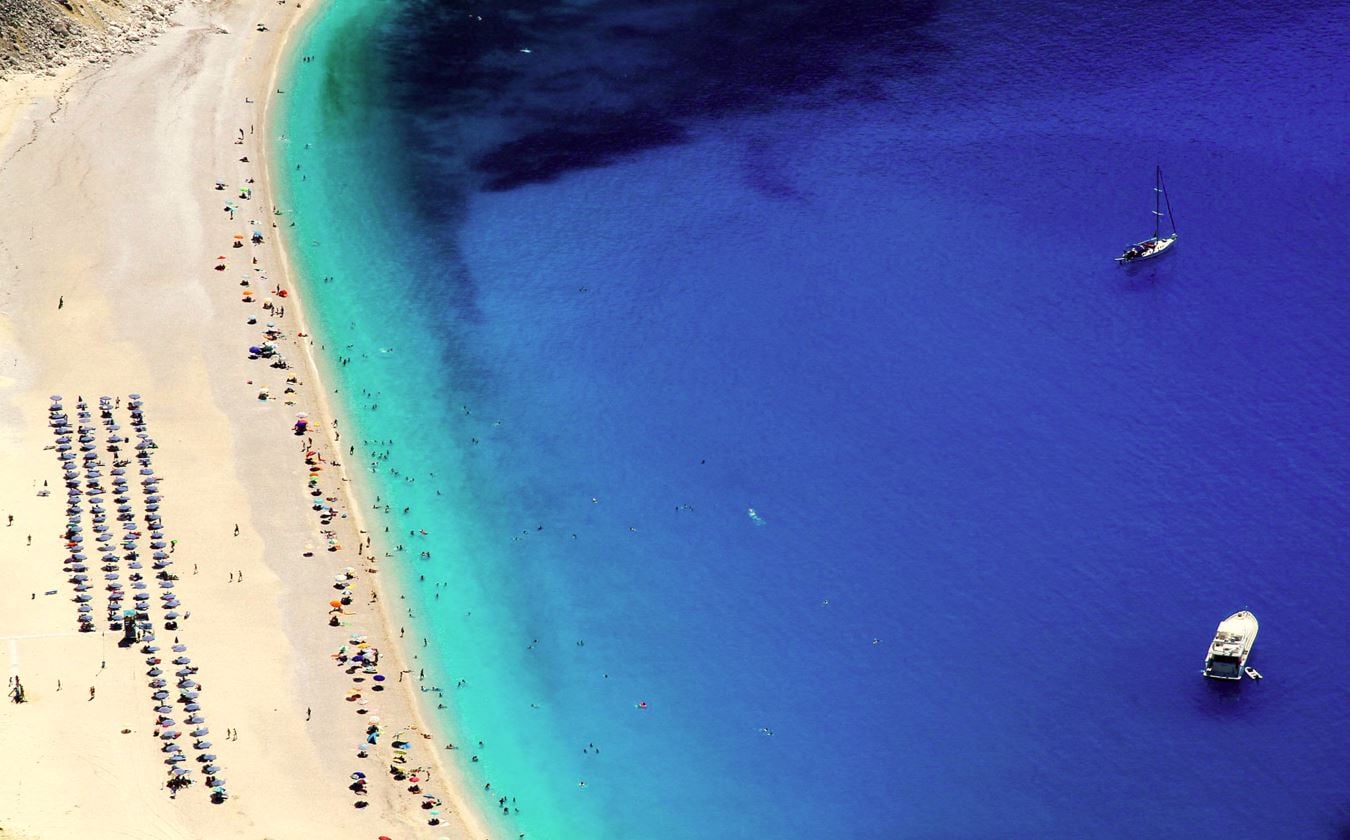
The bay of Myrtos — Kefalonia’s most famous view
Kefalonia’s story is as dramatic as its landscape. In antiquity, the island was home to a powerful tetrapolis — four independent city-states, Same, Pali, Krane and Pronnoi — whose names still echo across the island today in Sami, Lixouri’s Paliki peninsula and beyond. Lying directly opposite Ithaca, Kefalonia sits at the very heart of the Homeric world, and scholars have long debated whether parts of the island itself belonged to the kingdom of Odysseus.
Centuries of Roman and Byzantine rule were followed by a long Venetian era, when the island was governed from the mighty Castle of Saint George — Kefalonia’s medieval capital. Unlike most of Greece, the Ionian Islands never fell under Ottoman rule; instead, Kefalonia passed to the French and then the British, who left behind roads, institutions, and the elegant De Bosset Bridge across Argostoli’s lagoon — the longest stone bridge over the sea in the world. While mainland Greeks fought the Greek War of Independence, Kefalonians agitated tirelessly for union with the new Greek state — a dream finally realised in 1864.
The 20th century brought tragedy and rebirth. The island endured one of the darkest episodes of the Second World War — the fate of the Italian Acqui Division in 1943, later immortalised in Captain Corelli’s Mandolin — and then, in August 1953, a devastating earthquake that levelled almost every town on the island. Only Fiskardo, in the far north, was spared — which is why its pastel Venetian houses survive to enchant visitors today.
Rebuilt with the grit and seafaring wealth for which its shipowning families are famous, Kefalonia today wears its history lightly — and invites every visitor to discover it.
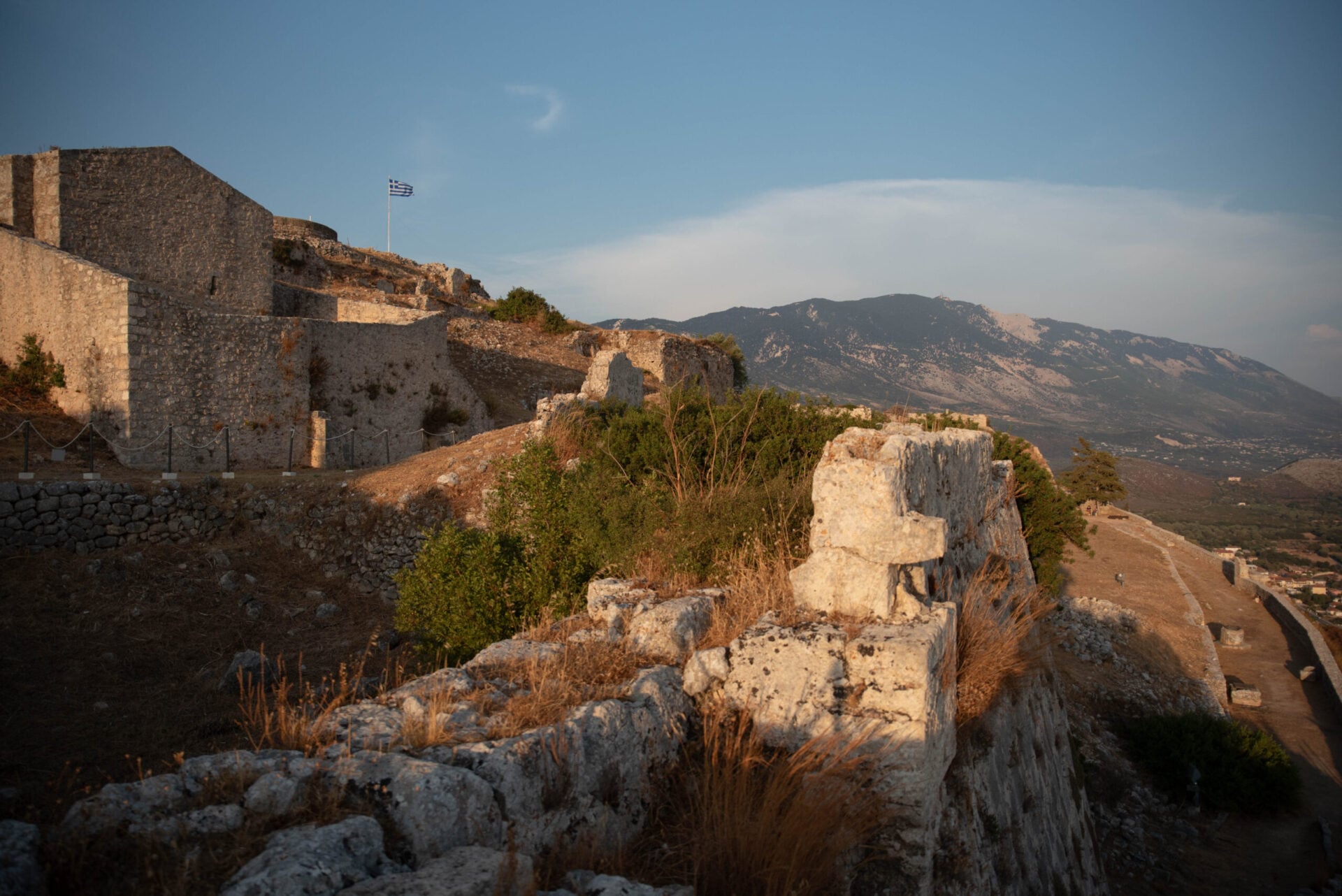
The Venetian Castle of Saint George, medieval capital of Kefalonia
Travelling to Kefalonia from the United Kingdom could hardly be easier in 2026. From roughly May through to October, direct flights operate to Kefalonia International Airport “Anna Pollatou” (EFL) — just 9 km from the capital, Argostoli — from an impressive spread of UK airports: London Gatwick (easyJet, Jet2, TUI), London Stansted (Jet2, Ryanair, TUI), London Heathrow (British Airways, seasonal), Manchester, Birmingham, Bristol, Newcastle, Leeds Bradford, Glasgow — and, new for 2026, Edinburgh with Jet2. Flight time from London is around 3 hours 30 minutes. Compare fares and book on Skyscanner now!
Outside the direct-flight season — or for a wonderful slow-travel adventure — fly to Athens International Airport (ATH) and continue to the island from there. Important Note: Kefalonia’s main ferry gateways from the mainland are Kyllini (to Poros) and Patras (to Sami) — there are no ferries to Kefalonia from Piraeus.
Book flights at least 2–3 months in advance for June–September travel. Kefalonia’s popularity with UK holidaymakers grows every year, and hire cars and ferry places sell out fast in high summer.
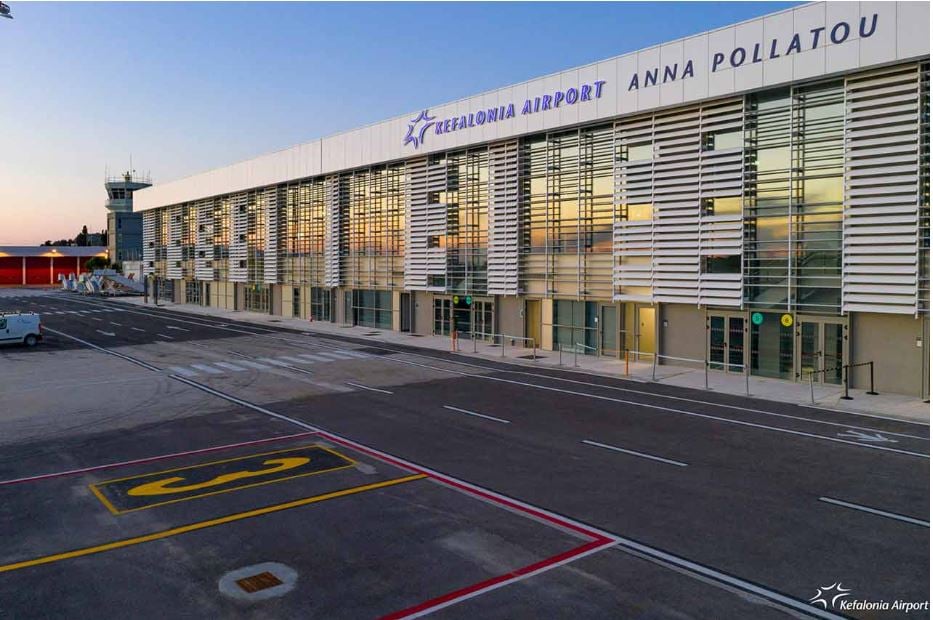
The Kefalonia International Airport “Anna Pollatou”
Kefalonia enjoys a classic Ionian climate — long, hot, reliably sunny summers and mild, rainy winters that keep the island far greener than its Aegean cousins. Of all the months, late May and June stand out as the sweet spot: the hillsides are still lush, the wildflowers linger, the sea is warm enough for long swims, and the island hums with early-season energy — without the intensity of August.
September deserves a special mention: the sea reaches its warmest of the entire year, the light turns golden, and the crowds melt away — a wonderful second window for those who prefer a quieter island.
| Month | Avg. Temp (°C) | Sea Temp (°C) | Sunshine (hrs/day) | Crowd Level |
|---|---|---|---|---|
| April | 14–20°C | 16°C | 7 | Low |
| May | 17–24°C | 18°C | 9 | Low–Medium ✓ Best |
| June | 21–29°C | 22°C | 11 | Medium ✓ Best |
| July | 24–32°C | 24°C | 12 | High – Peak Season |
| August | 24–33°C | 25°C | 11 | Very High – Peak Season |
| September | 21–28°C | 24°C | 9 | Medium ✓ Lovely |
⚠️ Note on July & August: Unlike the wind-blasted Cyclades, Kefalonia is largely spared the fierce meltemi — afternoons usually bring only a gentle north-westerly sea breeze, the maistros. The main challenges of peak season are the heat, the crowds at headline beaches like Myrtos and Antisamos, and fully booked hire cars. If you can only travel in August, book absolutely everything well ahead.
For a comprehensive weather forecast, check meteo.gr.
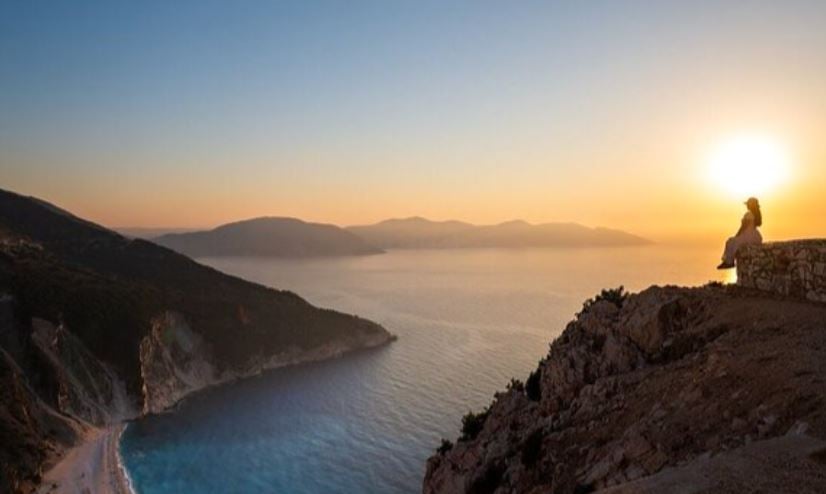
Golden hour over the Argostoli waterfront
Kefalonia is a captivating island shaped by myth, seafaring wealth, Venetian castles and extraordinary geology. From underground lakes lit by shafts of midday sun to mountain-top fir forests and harbour villages untouched by time, the island rewards every kind of explorer. Whether tracing the footsteps of Odysseus, tasting Robola at its source, or simply watching the fishing boats glide into Fiskardo at dusk, visitors are sure to be enchanted by the remarkable depth of this island.
Here are some selected must-visit places in Kefalonia:
Argostoli: The lively capital, rebuilt after 1953 around a palm-lined waterfront, a buzzing pedestrianised Lithostroto, and a morning harbour where loggerhead turtles glide past the fishing boats.
De Bosset Bridge & Koutavos Lagoon: A magical sunset stroll across the world’s longest stone sea bridge, built during the British era in 1813, with the wooded lagoon shimmering on one side and Argostoli on the other.
Sami: A picturesque harbour town on Kefalonia’s east coast, surrounded by forested hills and crystal-clear waters. Best known as a filming location for Captain Corelli’s Mandolin. Its lively waterfront, lined with cafés and tavernas, makes it an ideal place to pause before exploring the island’s natural wonders.
Myrtos Viewpoint: Quite simply one of the most photographed views in all of Greece — the dazzling white crescent of Myrtos framed by sheer thousand-foot cliffs. Sunset here is unforgettable.
Melissani Cave: An underground lake in a collapsed cavern near Sami, where rowing boats drift across water of an impossible electric blue. Visit close to midday, when the sun pours through the open roof.
Drogarati Cave: A vast, million-year-old chamber of stalactites and stalagmites so acoustically perfect that concerts have been held inside it.
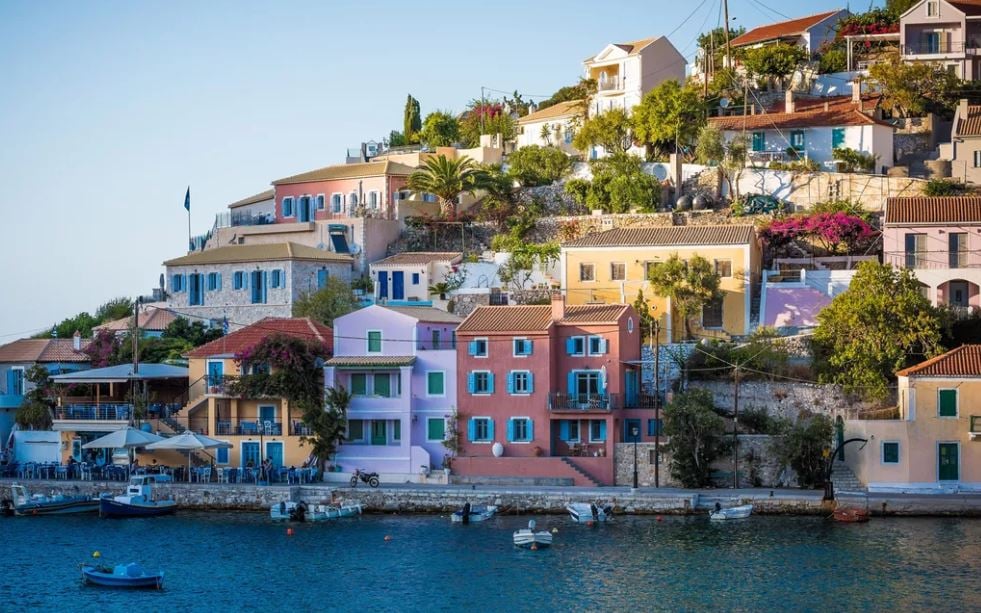
Assos: A tiny pastel village draped across the neck of a pine-covered peninsula, crowned by a ruined Venetian fortress — many visitors’ favourite spot on the entire island.
Fiskardo: The jewel of the north — the only village to survive the 1953 earthquake, its Venetian harbourfront now lined with yachts, boutiques and some of the island’s finest tables.
Castle of Saint George: The island’s Venetian-era capital, perched on a hilltop near Peratata with sweeping views over the south coast.
Mount Ainos National Park: The highest peak in the Ionian (1,628 m), cloaked in a unique forest of Kefalonian fir and roamed by semi-wild horses — a different world from the beaches below.
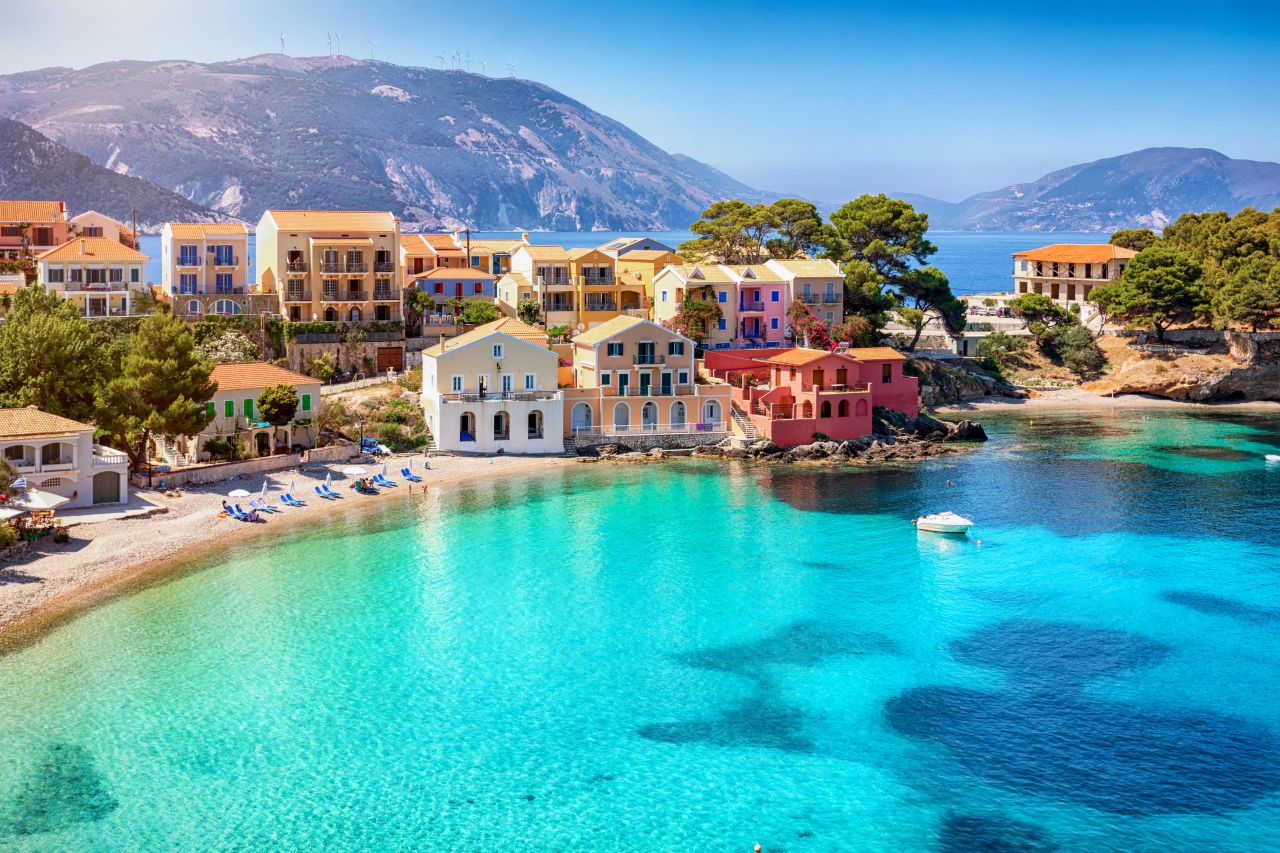
Assos village
Kefalonia is blessed with some of the most celebrated beaches in the entire Mediterranean — from cliff-backed amphitheatres of blinding white pebbles to gentle bays of golden and even brick-red sand. Thanks to the island’s limestone geology, the water clarity here is simply astonishing: an intense, glowing turquoise that has to be seen to be believed. In late spring and early summer you may well have some of these marvels almost to yourself.
Many of Kefalonia’s finest swimming spots — hidden coves along the Erissos peninsula, sea caves near Sami — are best reached by hire boat, which is one of the island’s great joys (no licence needed for the smaller ones!).
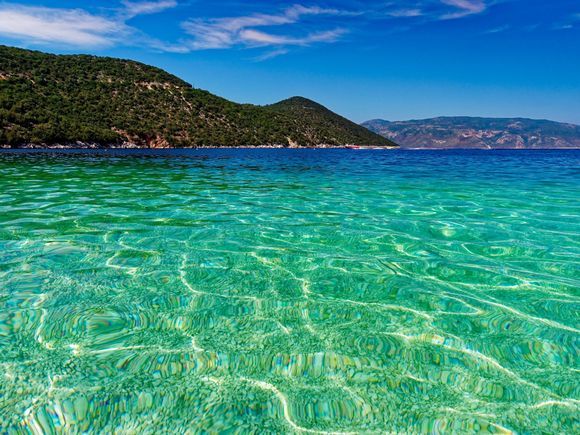
The unmistakable turquoise of Antisamos
Kefalonia is one of Greece’s top foodie destinations, where traditional Ionian recipes, fresh seafood and locally produced Robola wine come together. Whether you’re looking for a rustic mountain taverna or an elegant waterfront restaurant, these are some of the island’s best places to enjoy authentic Greek cuisine.
Here are some recommendations!
Olive Lounge Restaurant & Bar (Kastro)
Consistently ranked among Kefalonia’s finest restaurants, Olive Lounge combines traditional Greek flavours with modern presentation in a beautiful hilltop setting overlooking the Ionian Sea. Their menu highlights local ingredients and seasonal produce.
Must try: Kefalonian meat pie, slow-cooked lamb, fresh catch of the day and Robola wine.
A family-run taverna near the famous Myrtos Beach serving authentic homemade Greek food. Expect generous portions, warm hospitality and recipes passed down through generations.
Must try: Moussaka, stuffed peppers, lamb in lemon sauce and homemade desserts.
Alati All Day Bar & Restaurant (Near Fiskardo)
Set beside the crystal-clear waters of Alaties Beach, Alati is one of northern Kefalonia’s best seafood restaurants. The menu focuses on fresh local fish, traditional Greek recipes and spectacular sea views.
Must try: Grilled octopus, seafood platter, lobster pasta and fresh fish.
A long-time favourite in Skala, Taverna Apostolis is known for its friendly atmosphere and authentic Greek cooking using local ingredients.
Must try: Souvlaki, grilled lamb chops, moussaka and tzatziki.
One of Argostoli’s best traditional tavernas, famous for hearty Greek comfort food at excellent prices.
Must try: Kefalonian meat pie, pork souvlaki, village salad and fried zucchini.
An award-winning fine dining restaurant showcasing contemporary Greek cuisine while celebrating Kefalonian culinary traditions.
Must try: Seasonal tasting menu, local seafood and modern interpretations of classic Greek dishes.
Set inside a beautifully restored windmill, Milos offers authentic Greek cuisine with stunning sunset views over the Ionian Sea.
Must try: Fresh grilled fish, seafood linguine, Greek salads and local desserts.
Find more places to eat in Kefalonia, here!
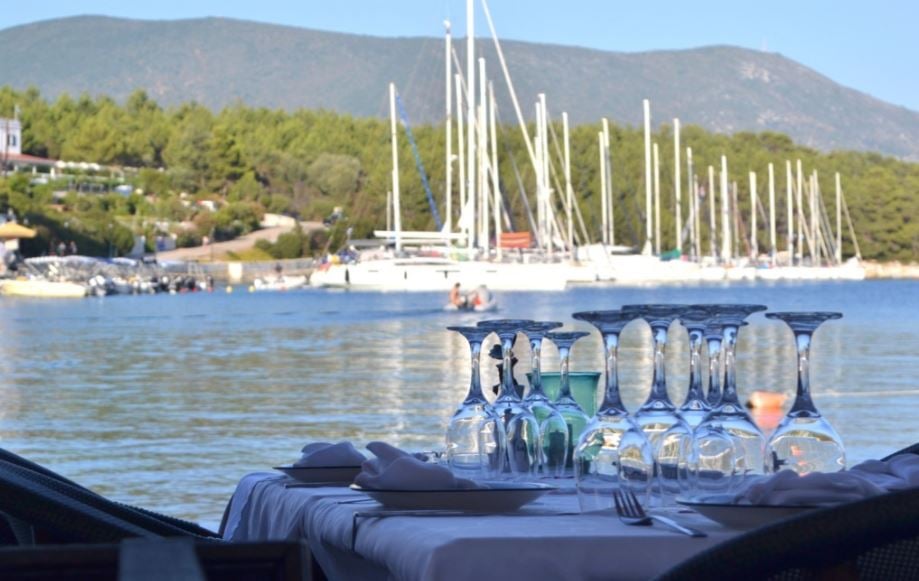
Dinner on the harbourfront at Fiskardo
No visit to Kefalonia is complete without sitting down to the island’s most beloved dishes — recipes passed down through generations and rooted in the produce of its mountains, vineyards and seas. Don’t miss the following local flavours!
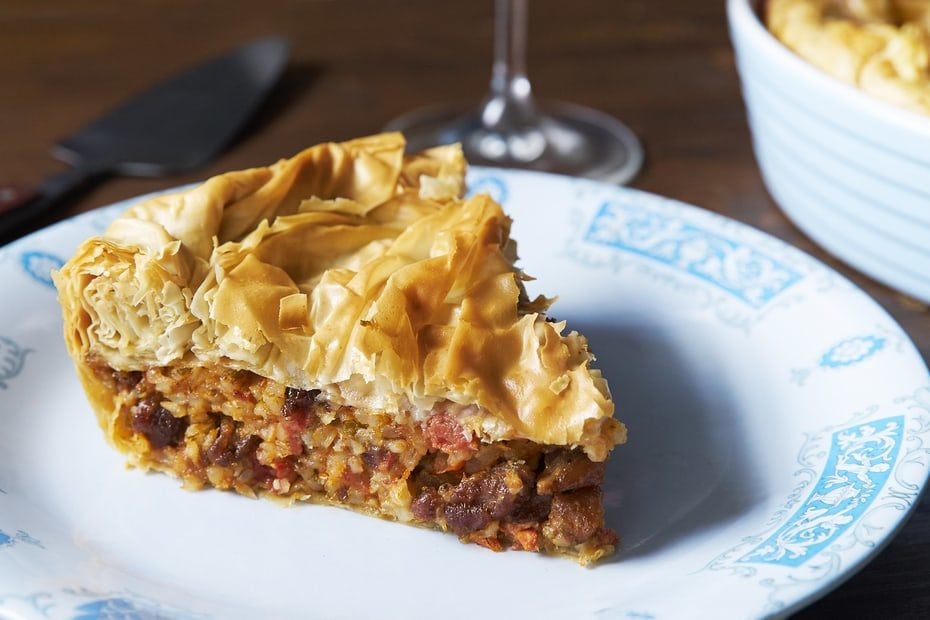
Kreatopita — the famous Kefalonian meat pie
With the highest mountain in the Ionian, a coastline riddled with caves and coves, and some of the clearest water in Europe, Kefalonia is a magnificent open-air playground. Late spring and early summer — when the hills are green, the days long and the temperatures kind — are simply perfect for exploring it.
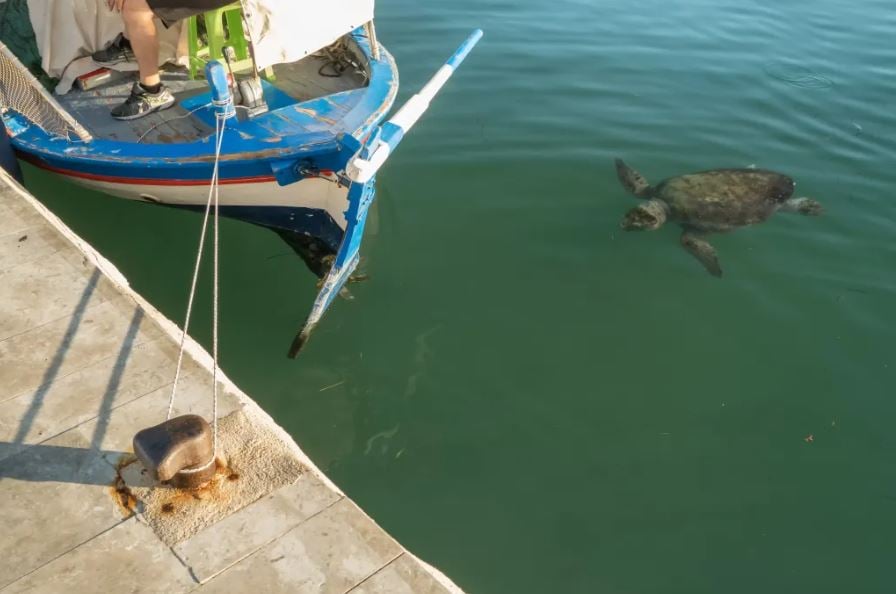
Turtle in Argostoli Harbour
Kefalonia’s position at the heart of the Ionian — ringed by storied neighbours and blessed with five working ports — makes it a superb base for island-hopping adventures. Each of the surrounding islands offers a completely different flavour to complement your Kefalonian stay.
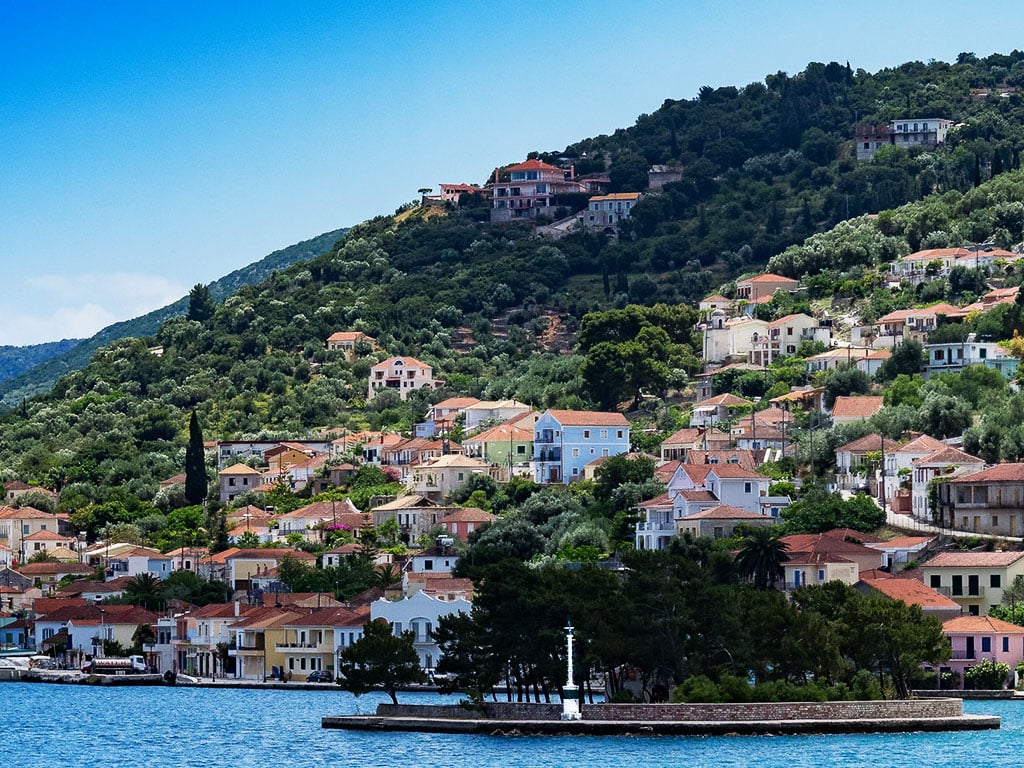
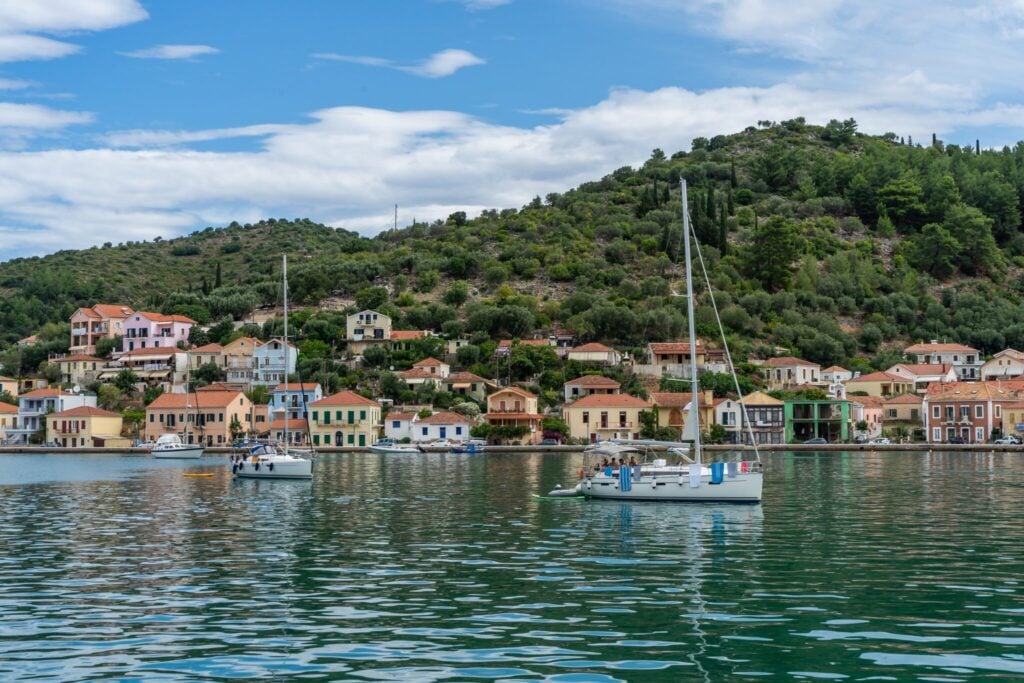
Vathy, the harbour capital of neighbouring Ithaca
Kefalonia offers a wonderfully varied range of places to stay — from stylish resort hotels above the beaches of Lassi and Skala to boutique residences in Argostoli, family-run guesthouses in the mountain villages, and villas with pools gazing out over the Ionian. In late spring and early summer the island offers superb value, with rates well below those of peak July and August.
Here are our suggestions:
Don’t forget that Ionian & Aegean Island Holidays offers fantastic hotels in Kefalonia and the rest of Ionian Islands!
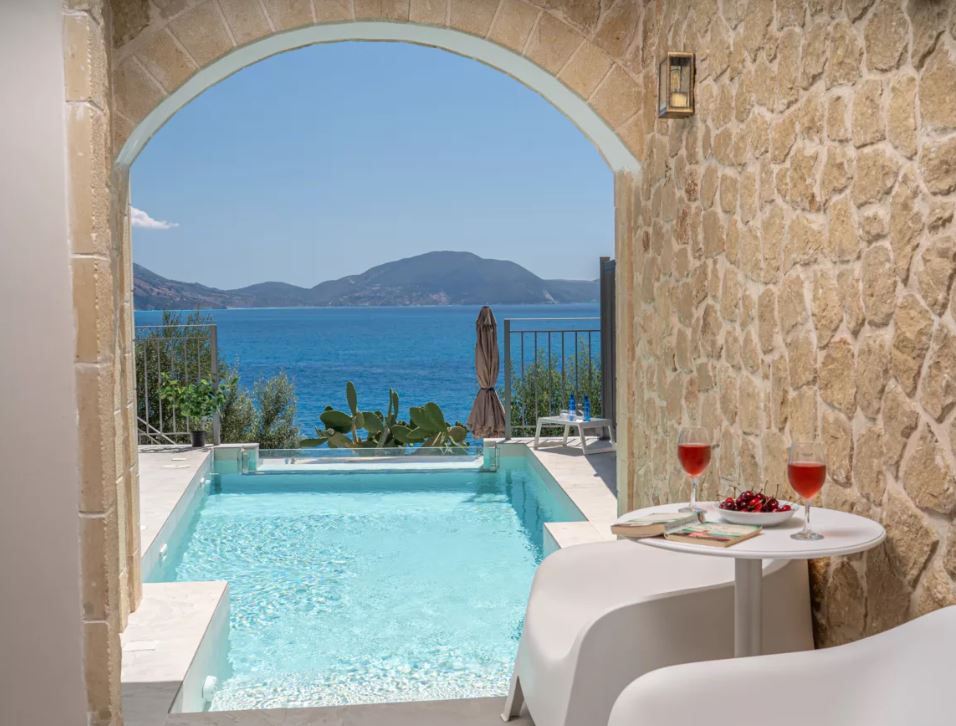
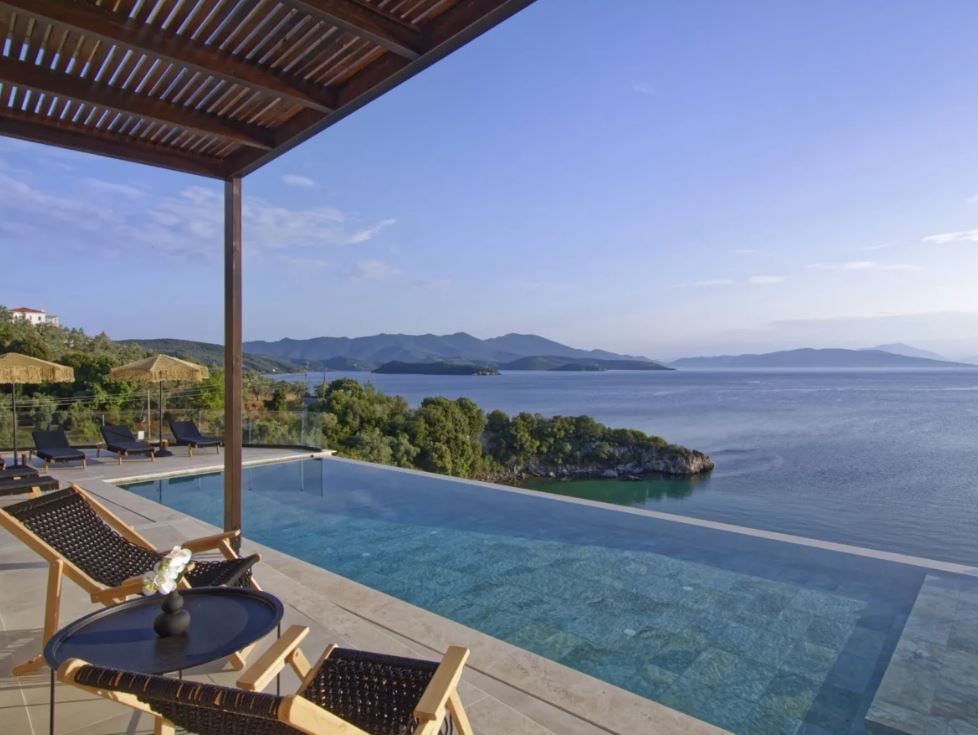
Assos Rockshore Villa, living above the Ionian blue!
Kefalonia is a genuinely big island — over 50 km from Fiskardo in the north to Skala in the south, with mountains in between — so planning how you’ll get around is essential to making the most of your visit. Here are the main options:
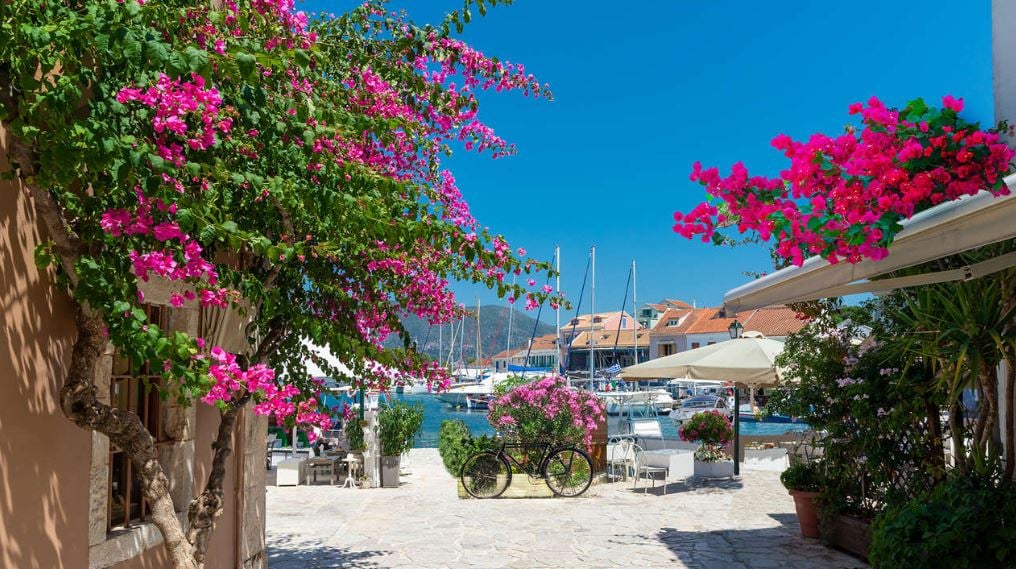
Argostoli and the famous Bougainvilleas
Kefalonia is a very safe and warmly welcoming island, with tourism woven deeply into local life. Nevertheless, a little preparation will help you make the very most of your visit. Here are the most important tips:
🚨 Emergency Numbers — Save These!:
– Police: 100
– European Emergency Number: 112
– Medical Emergency: 166
– Fire Department: 199
– General Hospital of Kefalonia (in Argostoli): +30-2671361100
– Argostoli Port Authority: +30-2671022224
– British Embassy Athens: +30-2107272600
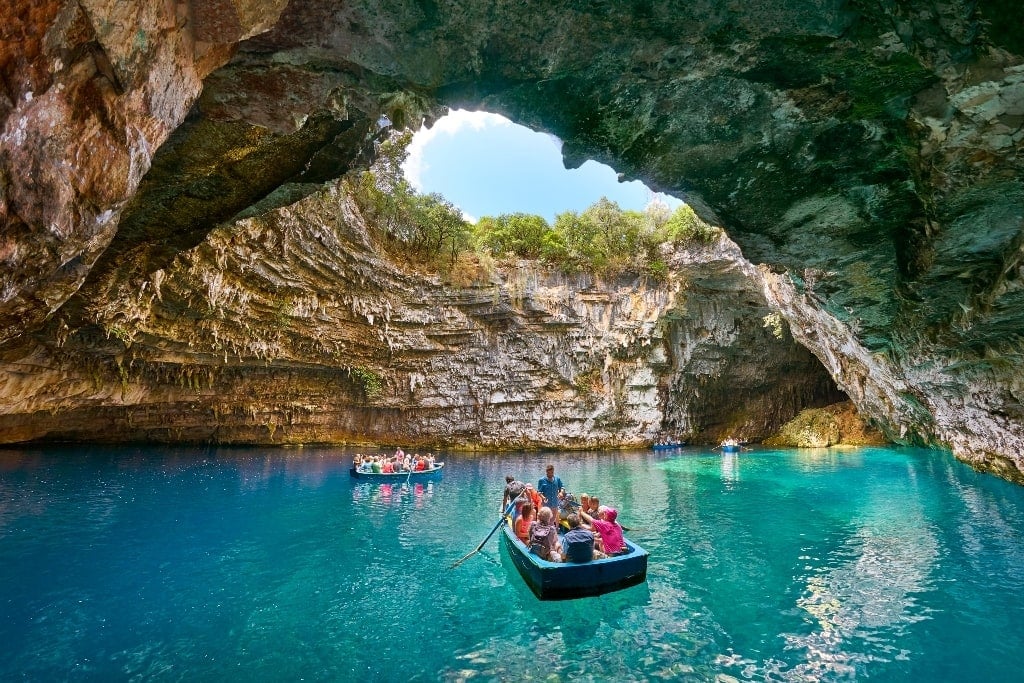
The breathtaking Melissani Cave
It’s a combination of exceptional water clarity, bright white limestone beneath the surface and intense Mediterranean sunshine. The Ionian Sea contains very little suspended sediment, allowing sunlight to penetrate deeply and reflect back vivid shades of turquoise, sapphire and cobalt. On calm days, the water can appear almost unreal—particularly at Myrtos, Antisamos and Petani Beach.
It depends on the holiday you’re after. Argostoli offers cafés, restaurants and easy access to beaches; Fiskardo is the prettiest harbour village, perfect for boutique stays; Sami is ideal for exploring the east coast and visiting Melissani Cave; Skala suits families looking for long sandy beaches; while Assos is wonderfully peaceful and romantic, with postcard-worthy views at every turn.
Assassin’s Creed Odyssey recreates much of ancient Greece, including the neighbouring island of Ithaca, the legendary home of Odysseus, which lies just across the water from Kefalonia. In fact, the game begins on the fictionalised version of Kefalonia itself, where players first meet Kassandra or Alexios before setting sail across the Aegean. While Ubisoft took creative liberties with geography and history, fans will instantly recognise the dramatic cliffs, olive groves and Ionian atmosphere that still define the island today.
Yes—and surprisingly easily. Every morning during the warmer months, endangered loggerhead turtles (Caretta caretta) often swim around Argostoli harbour, hoping for scraps from returning fishing boats. Boat trips also offer opportunities to spot turtles around the island, although all wildlife should be observed respectfully from a distance.
Yes. Every August, tiny harmless snakes are said to appear at the Church of the Virgin Mary in the village of Markopoulo for the Feast of the Dormition. Locals regard them as a symbol of good fortune and divine protection, while scientists believe they’re a native species emerging seasonally. Whatever the explanation, it’s one of Greece’s most unusual traditions.
Mostly white and golden. Kefalonia’s beaches are renowned for brilliant white pebbles, pale limestone cliffs and crystal-clear water rather than tropical-style pink sand. Xi Beach is the exception, with its unusual reddish-orange sand and clay-rich cliffs that visitors often use as a natural skin treatment.
The island is largely made of limestone, which has been slowly dissolved by rainwater over millions of years. This created an extraordinary underground world of caves, sinkholes and hidden lakes. Melissani and Drogarati are the most famous, but geologists consider Kefalonia one of Greece’s most fascinating karst landscapes.
Yes. High on Mount Ainos lives a small population of semi-wild horses, thought to descend from animals left behind by farmers decades ago. Spotting them isn’t guaranteed, but hikers occasionally encounter them grazing among the island’s unique black fir forests.
Because much of the island was rebuilt after the devastating 1953 Ionian earthquake, which destroyed the majority of Kefalonia’s towns and villages. Fiskardo, in the north, famously escaped major damage and remains one of the few places where you’ll find original Venetian architecture.
Kefalonia has always felt a little wilder than many Greek islands. Its dramatic mountains, scattered villages and protected national park have limited overdevelopment, helping preserve its natural beauty. Even in the height of summer, it’s remarkably easy to find a quiet beach, traditional taverna or mountain viewpoint almost entirely to yourself.
Especially in spring and early summer, the island is scented by wild thyme, oregano, rosemary, pine forests, citrus blossom and flowering herbs growing naturally across the hillsides. Add warm sea air and olive groves, and many visitors remember the smell as much as the scenery.
Amazingly, yes. Near Argostoli, seawater flows into mysterious sinkholes known as the Katavothres, seemingly vanishing underground. Scientists later discovered the water travels beneath the island through an underground network before eventually emerging at Melissani Lake on the opposite coast—a geological phenomenon found almost nowhere else in the world.
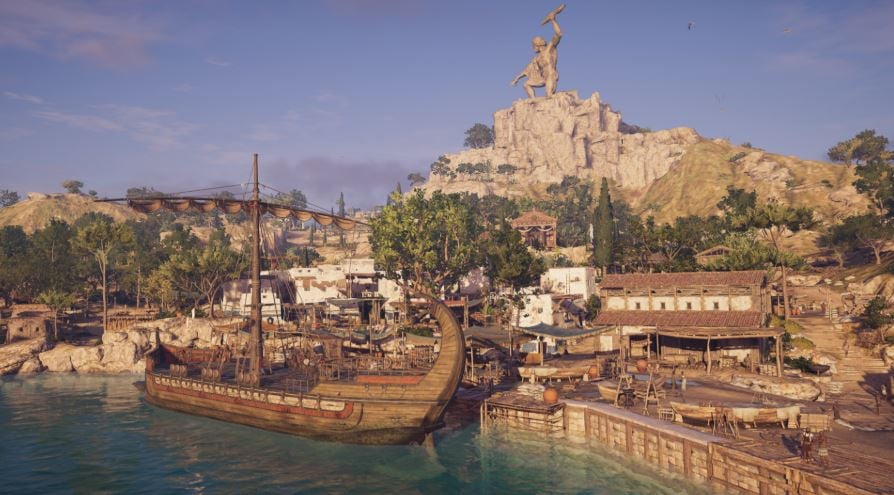
Ancient Kefalonia as depicted in Assasins Creed: Odyssey
Whether you come for the legendary beaches, the dramatic mountain landscapes, the rich history, or simply the warmth of Kefalonian hospitality, this remarkable Ionian island has a way of capturing hearts and drawing visitors back time and time again. Slow down, embrace the island’s relaxed rhythm, savour every meal, swim in its crystal-clear waters, and venture beyond the famous landmarks to discover its hidden corners. From your first glimpse of Myrtos to your final sunset over the Ionian Sea, Kefalonia is more than just a holiday destination—it’s an experience that lingers long after you’ve returned home. Safe travels, and καλό ταξίδι (kaló taxídi)—may your journey to Kefalonia be the first of many.
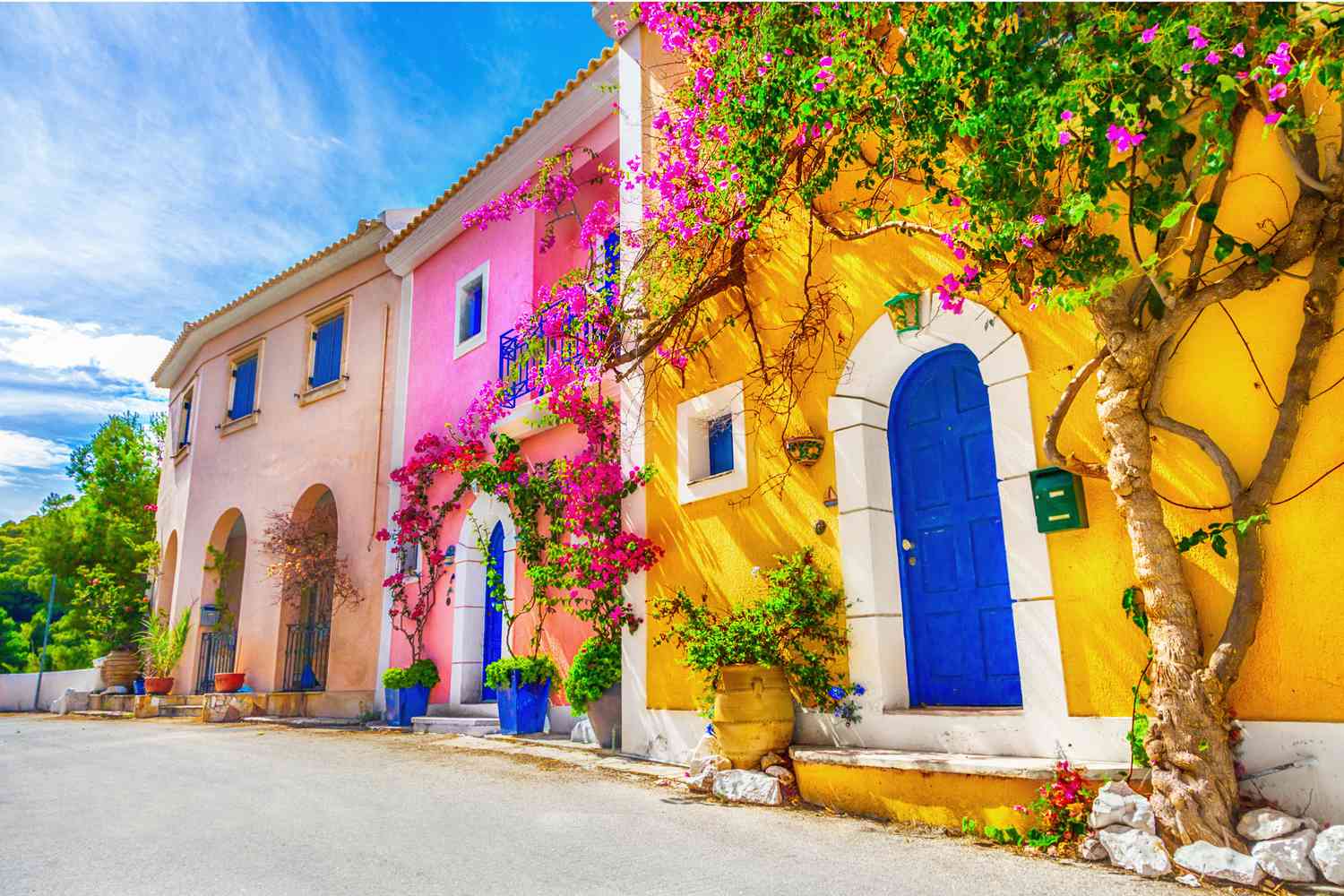
Kefalonia, full of colours!