

This Ioannina travel guide covers everything you need to plan your trip to one of Greece’s most extraordinary cities — from its Byzantine castle and Ottoman lake island to mountain gorges, Epirote cuisine, and the best hotels, restaurants, and day trips in the region.
Ioannina arrives unlike any other Greek city. There is no sea here — and yet the water is everywhere, because the city is built along the edge of Lake Pamvotis, one of the most beautiful and ancient lakes in the Balkans, whose surface catches the light of the surrounding mountains in ways that change hour by hour and season by season. In the early morning, with mist rising from the water and the silhouette of the island floating at the centre of the lake, Ioannina has a quality that is almost otherworldly — part Greek, part Ottoman, part mountain fortress, entirely itself.
This is a city where three great religions once lived side by side, shaping its identity in quiet but profound ways. Within the walls of the grandiose castle and beyond, Christianity, Judaism, and Islam each left their imprint — in stone, in memory, and in the rhythm of daily life. Orthodox churches with their icon-filled interiors stand not far from elegant Ottoman mosques, their abandoned minarets still rising above the skyline, while the legacy of one of the most important Romaniote Jewish communities in Greece lingers in the old Jewish quarter and its historic synagogue. For centuries, these traditions coexisted here, not without tension, but with a shared sense of place that gave Ioannina a rare cultural depth — a city where faiths met, overlapped, and together shaped something entirely unique.
Ioannina is the capital of Epirus, a region that has always felt slightly apart from the rest of Greece — harder, wilder, more dramatically beautiful, and possessed of a cultural and culinary tradition that is entirely its own. It is one of the great Greek cities that most foreign visitors have never heard of. That is their loss — and, for now, your extraordinary good fortune.
A Byzantine castle, an Ottoman lake island, and majestic mountains — all in the most magnificent city of Grece!
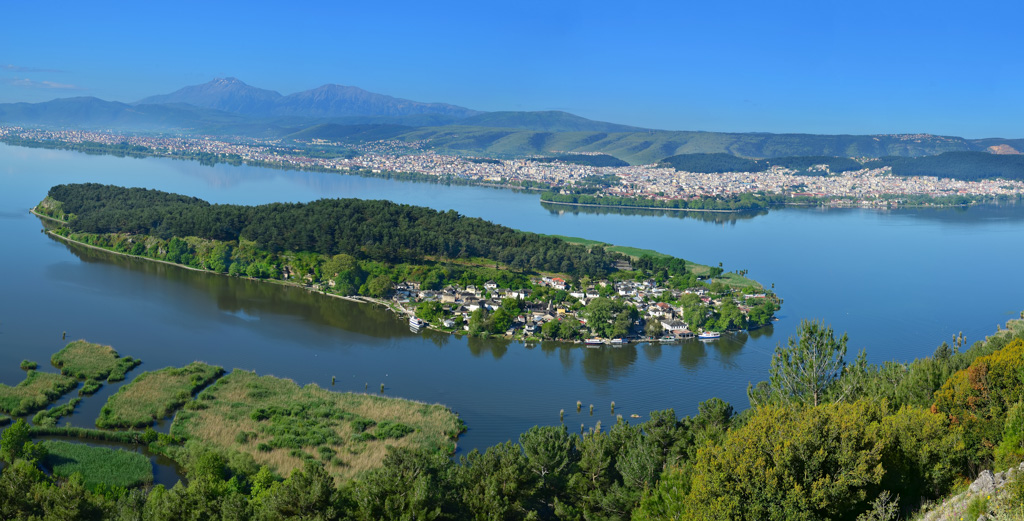
The island on Lake Pamvotis, with Ioannina in the background
The history of Ioannina is a story of extraordinary resilience — a city that has been fought over, ruled by empires, besieged, and reinvented across two thousand years without ever losing its essential identity.
The area around Lake Pamvotis has been inhabited since antiquity, and the ancient oracle of the dead at Acheron — one of the most significant sacred sites in the ancient world — lies just to the south. The city itself takes shape in the Byzantine period, emerging as a significant fortified settlement by the 10th century AD. Its position at the crossroads of the mountain routes through Epirus made it a prize of perpetual strategic value.
In the 13th century, following the sack of Constantinople by the Fourth Crusade, Ioannina became the capital of the Despotate of Epirus — one of the successor states to the Byzantine Empire — and experienced a period of remarkable cultural and architectural flourishing. The Kastro district, with its Byzantine churches and fortifications, preserves the memory of this period to this day.
Ottoman rule began in 1430 and lasted nearly five centuries, transforming the city profoundly. Ioannina became one of the most important cities in the Ottoman Balkans — a great centre of commerce, learning, and the famous Greek Enlightenment. The city’s merchant families, enriched by trade across the empire, funded schools, libraries, and the intellectual networks that would eventually ignite the Greek Revolution. It was in Ioannina that Rigas Feraios, the revolutionary poet, studied; it was from Ioannina that many of the intellectual architects of Greek independence came.
But the figure who towers above all others in the history of the city — and who made Ioannina famous across Europe — is Ali Pasha of Ioannina (1740–1822): the Albanian-born Ottoman ruler who carved out a semi-independent state across Epirus and western Greece, entertained Lord Byron at his court (Byron visited in 1809 and wrote about him with a mixture of fascination and horror), corresponded with Napoleon, and ruled his domain with a combination of extraordinary sophistication and pitiless brutality. His story ends on the lake island just metres from the city — hunted through the rooms of an abandoned monastery, shot, and beheaded. His grave is there still.
Greek rule came in 1913, after the Balkan Wars, when Ioannina was finally liberated from Ottoman control. The 20th century brought occupation, resistance, and postwar recovery. Today, the city stands transformed: a dynamic university center and emerging innovation hub of around 100,000 residents — young, culturally alive, gastronomically outstanding, and possessed of a beauty and historical depth that rewards every visitor who makes the journey to find it.
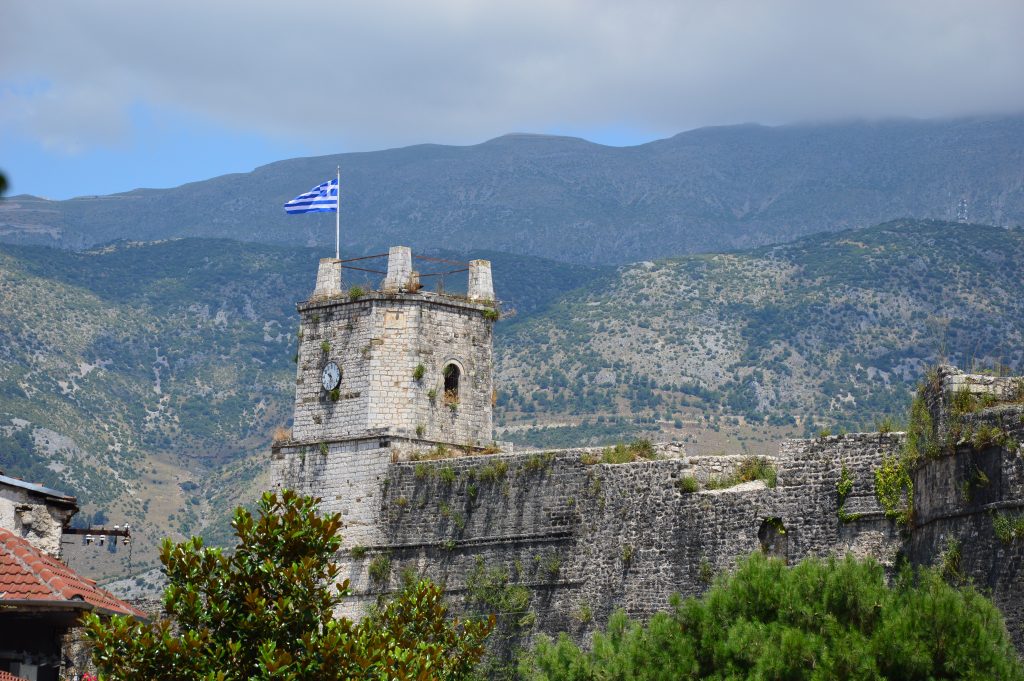
One of the castle towers
Ioannina is a rewarding destination to reach — not the easiest, but very manageable, and the journey through the mountains that concludes any approach to the city is an experience in itself.
By Air — Direct from the UK: Ioannina National Airport (IOA) — also known as King Pyrros Airport — receives seasonal direct flights from the UK, operated primarily by Ryanair from London Stansted. Flights operate mainly during the spring and summer season (approximately April to October). Flight time from London is approximately 3 hours 15 minutes. Outside the direct flight season, connections via Athens are straightforward and reliable.
By Air — Via Athens: Flying to Athens International Airport (ATH) and connecting onward is the most reliable year-round option. Aegean Airlines and Sky Express both operate multiple daily flights from Athens to Ioannina; the flight takes approximately 55 minutes. The full journey from London — including connection time — is typically 5–6 hours door to door.
By Air — Via Corfu: For those visiting both destinations, flying into Corfu and travelling overland via the ferry to Igoumenitsa and then by road to Ioannina (approximately 1.5 hours from the port) is a wonderfully scenic combination journey — and an excellent way to experience the drama of the Epirus landscape arriving from the coast.
Getting from Ioannina Airport into the City:
Book flights at least 6–8 weeks in advance for spring and summer travel.
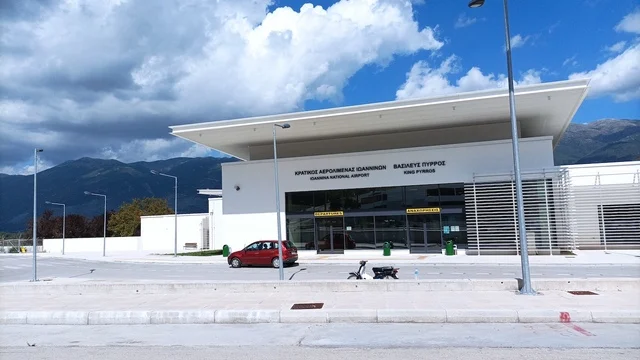
“King Pyrros” Ioannina Airport
Ioannina has a mountain climate quite unlike the rest of Greece — cooler and considerably wetter than the islands, with proper winters, spectacular springs, warm summers, and golden autumns. It is one of the rainiest cities in Greece (a fact that only enhances its extraordinary greenness) and one of the most beautiful in every season.
| Month | Avg. Temp (°C) | Rainfall | Sunshine (hrs/day) | Crowd Level |
|---|---|---|---|---|
| March | 8–14°C | Moderate | 5 | Low |
| April | 11–18°C | Moderate | 6 | Low ✓ Beautiful |
| May | 15–23°C | Low | 8 | Low–Medium ✓ Perfect |
| June | 19–27°C | Low | 10 | Medium |
| July | 22–31°C | Very Low | 11 | Medium–High |
| August | 22–31°C | Very Low | 11 | High |
| September | 17–27°C | Low | 9 | Medium ✓ Excellent |
| October | 12–20°C | Moderate | 6 | Low ✓ Excellent |
| December–February | 2–9°C | High/Snow | 3–4 | Very Low |
Best Season to Visit Ioannina: May is, without question, the finest month to visit — the city and the surrounding mountains are at peak greenness after the spring rains, the wildflowers are extraordinary, the days are warm and clear, and the evenings are cool and perfect for long outdoor dinners by the lake. The May 1st long weekend in particular draws Greeks from across the country — the city comes alive with a festive energy that makes it an outstanding time to arrive. September and October are equally rewarding for the autumn colours in the mountain villages and the return of the city to its own quiet rhythm.
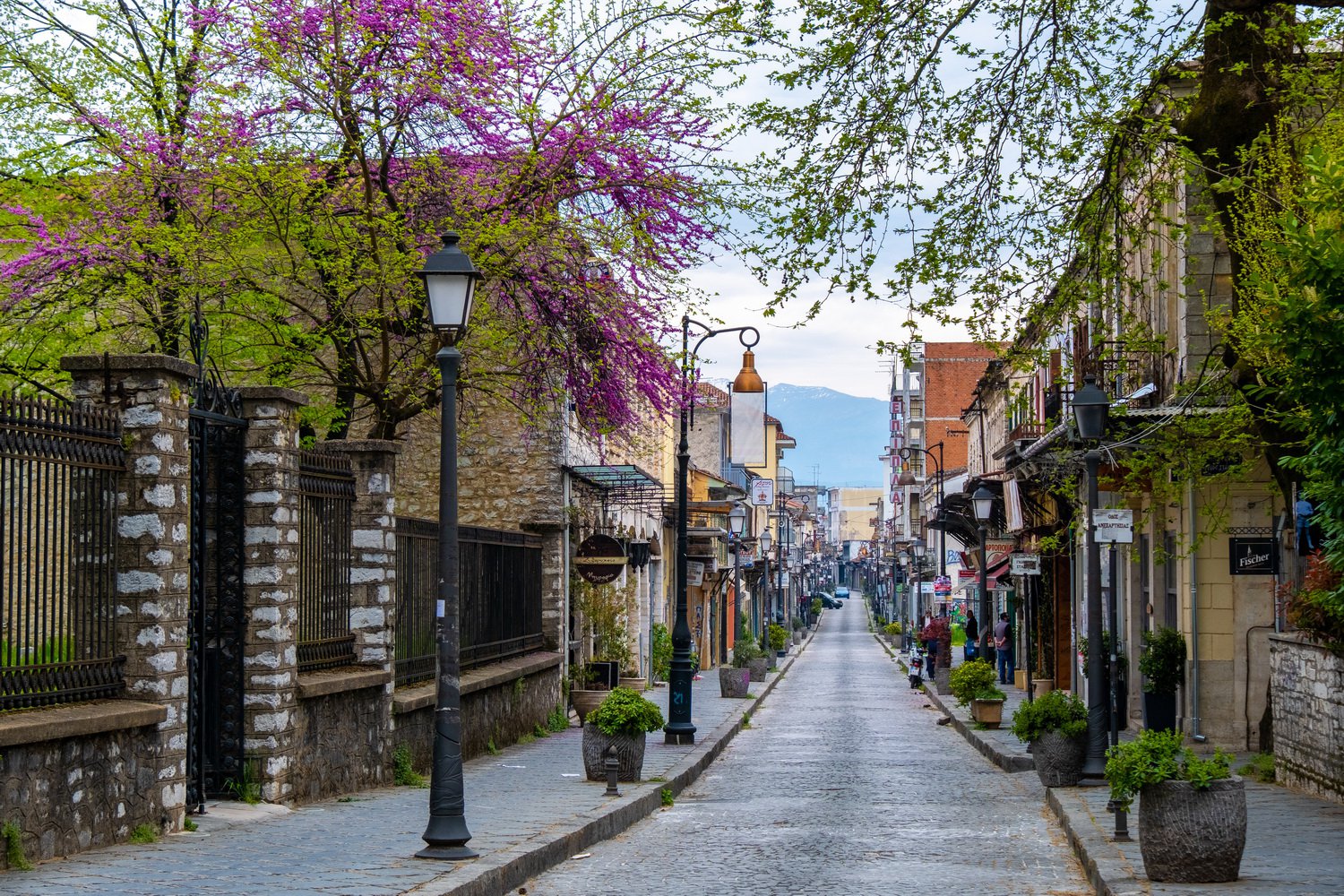
The colours of Ioannina during Spring
Ioannina is a city that rewards the curious — a place where Byzantine, Ottoman, and modern Greek layers coexist in extraordinary density, and where the natural landscape of mountains and lake is itself one of the great attractions.
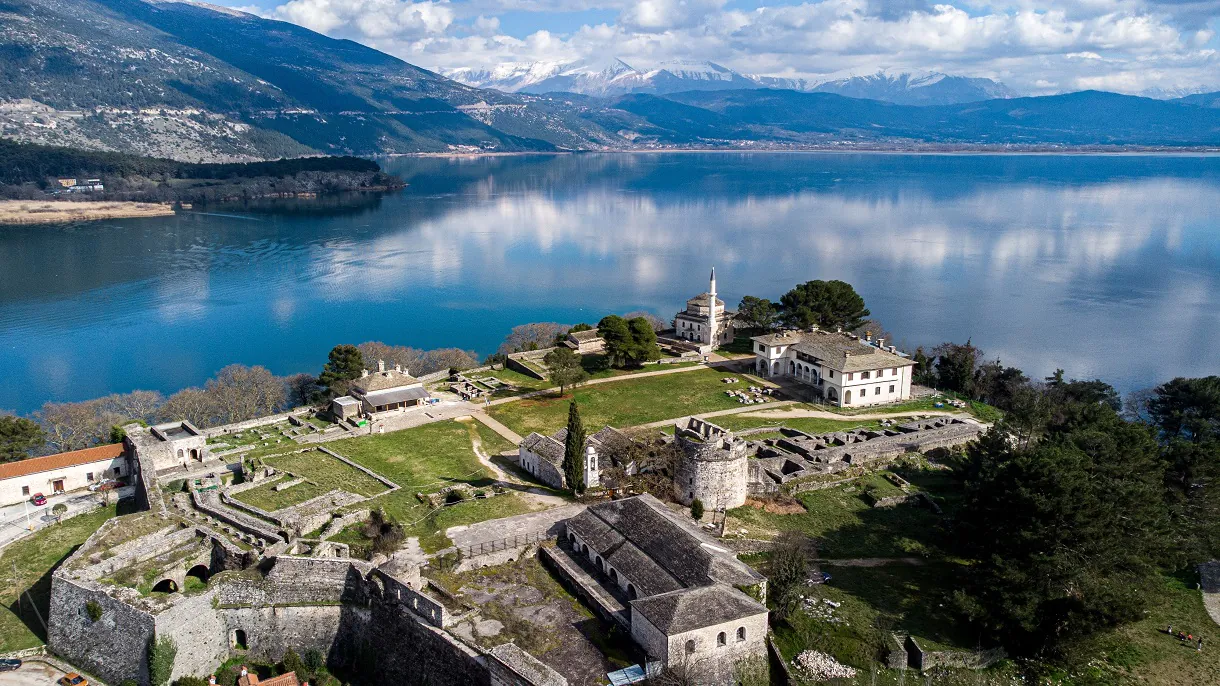
The Castle (Kastro): The fortified old quarter of Ioannina, enclosed by Byzantine and Ottoman walls above the lake, is the beating historical heart of the city — a neighbourhood of narrow lanes, Byzantine churches, Ottoman mosques, stone houses, and magnificent views over Lake Pamvotis. To walk the Kastro at dusk, as the lights come on across the water and the mountains darken behind the city, is one of the essential Greek urban experiences.
The Lake Island (Nissaki): The tiny island with no actual name (Nissaki means “little island” in Greek) — reached by a short and frequent boat service from the lakefront — is a place unlike any other in Greece. A village of fewer than a hundred permanent residents lives among eight Byzantine and post-Byzantine monasteries, surrounded by the still waters of the lake. The monastery of Agios Panteleimon marks the room where Ali Pasha was cornered and killed in January 1822 — the bullet holes in the floor are still visible. The island’s kafeneions and fish tavernas, serving lake eel and frog stew, make an unforgettable lunch.
The Aslan Pasha Mosque – Municipal Museum: One of the finest Ottoman mosques in Greece, built in 1618 and now housing the Municipal Museum of Ioannina — an outstanding collection of silver artefacts, folk costumes, Jewish community objects, and Ottoman-era material culture that illuminates the extraordinary multicultural history of this city.
The Fethiye Mosque & the Tomb of Ali Pasha: Within the inner citadel of the Kastro (the Its Kale), the Fethiye Mosque — the oldest mosque in Ioannina, converted from a Byzantine church — stands beside the modest tomb of Ali Pasha himself. The inner citadel also houses the Byzantine Museum, with an excellent collection of icons and ecclesiastical treasures from across Epirus.
The Byzantine Museum of Ioannina: Housed in the Its Kale inner citadel, this carefully curated museum presents icons, frescoes, sculptures, and Byzantine and post-Byzantine art from across Epirus — an outstanding collection for anyone with an interest in the rich cultural life of this region across the medieval and early modern periods.
The Archaeological Museum of Ioannina: The city’s main archaeological museum, recently renovated, presents finds from across Epirus — including material from the great oracle of Zeus at Dodona (just 22 kilometres south of the city) and from the prehistoric and classical settlements of the region. The Dodona collection, in particular, is outstanding.
The Lakefront Promenade (Molos): The great public space of modern Ioannina — a wide lakeside promenade stretching along the eastern shore of Lake Pamvotis, lined with café tables, plane trees, and the daily life of the city. In the evening, the entire population of Ioannina seems to materialise here for the volta — the traditional Greek evening stroll — and the effect, with the lit Kastro walls above and the dark lake reflecting the mountains, is one of the most beautiful urban scenes in Greece.
The Perama Cave: A vast cave system on the northern outskirts of Ioannina — one of the largest and most impressive in Greece, with formations of extraordinary variety and beauty developed over three million years. Discovered during the Second World War by local residents sheltering from air raids, the cave extends for over a kilometre of illuminated passages and chambers.
The Silversmithing & Folk Art Museum: A dedicated museum presenting the history and craft of Ioannina’s famous silversmithing tradition in exceptional depth — tools, archival photographs, masterwork pieces from across the centuries, and a clear account of how this tradition shaped both the city’s economy and its identity across five hundred years of Ottoman and Greek history.
The Monastery of Agios Nikolaos Philanthropinon: The finest of the lake island’s monasteries — a 13th-century foundation whose 16th-century frescoes are among the most remarkable in Epirus, depicting not only the usual sacred subjects but also — in a unique and extraordinary touch — portraits of ancient Greek philosophers including Plato, Aristotle, and Plutarch alongside the Christian saints. A small miracle of cultural synthesis, hidden in plain sight on a lake island.
The Jewish Quarter & Holocaust Memorial: Ioannina was home to one of the oldest Jewish communities in Greece — a Romaniote community whose presence predated the destruction of the Temple in Jerusalem, and whose members were largely deported and murdered in 1944. The old Jewish quarter in the Kastro, the remaining synagogue, and the city’s Holocaust memorial bear witness to this history with a dignity and sorrow that demands to be acknowledged.
The Clock Tower of Ioannina: Stading in the Dimokratias Square, is one of the city’s most recognisable landmarks. Originally erected in the Ottoman period and later rebuilt in the 20th century, it functions as both a civic symbol and a practical meeting point. Illuminated at night, it marks the transition between the historic fortress and the modern city — a quiet but constant presence in daily Ioannina life.
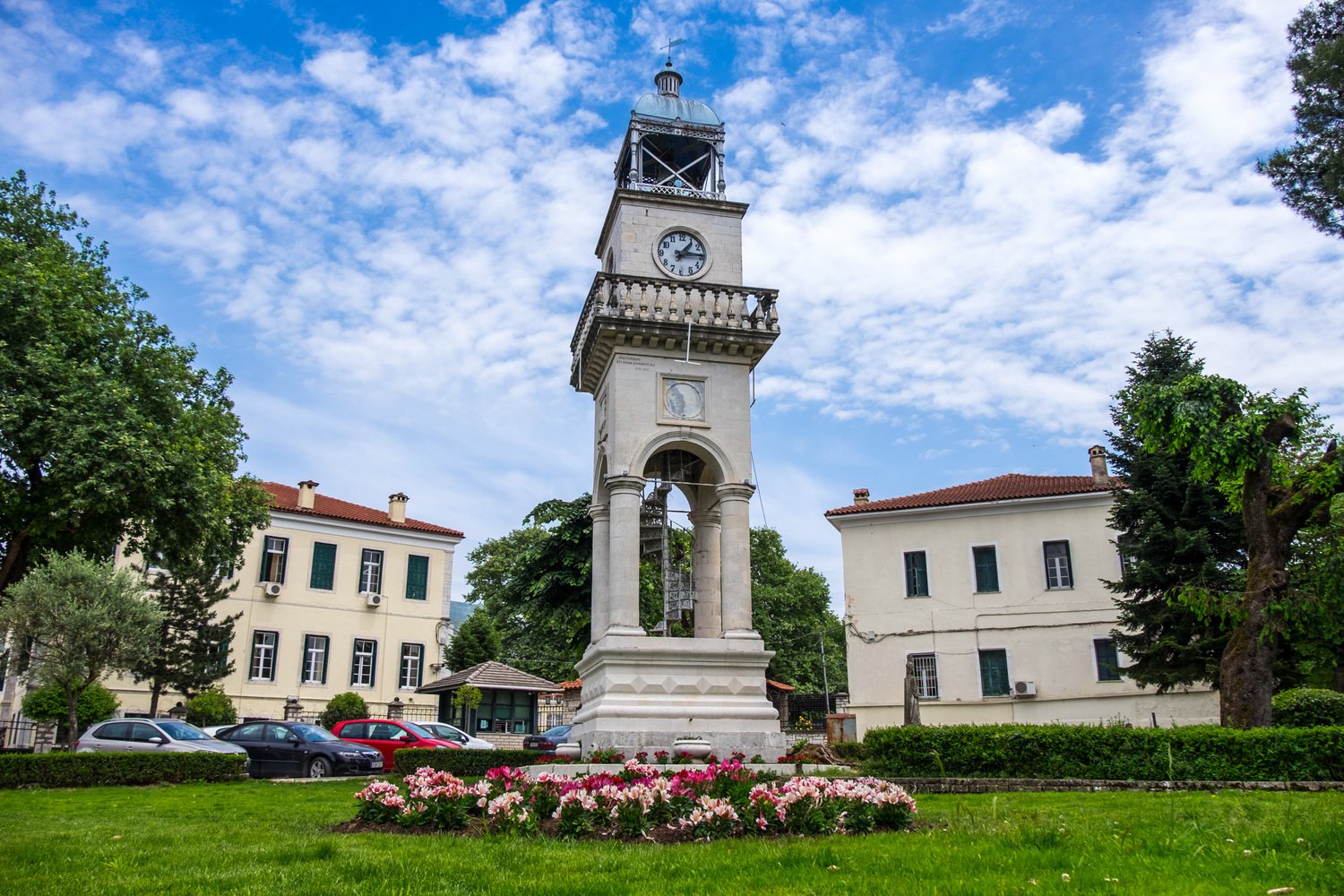
The Clock Tower of Ioannina
Epirote cuisine is one of the great regional cooking traditions of Greece — and Ioannina is its capital. This is a cuisine born of mountains and lakes, of long winters and rich pastures, of shepherds and silversmiths and an Ottoman culinary inheritance that added spice, complexity, and refinement to the already formidable Greek larder. To eat well in Ioannina is to understand something essential about this part of the world.
Frogs’ Legs (Vatrachopodara): Ioannina’s most famous dish and one of its great pleasures — the lake’s frog population has supplied the city’s restaurants for centuries, and the result is a local delicacy of notable refinement: small, tender, and cooked simply in butter, garlic, and lemon. Order them at any of the island or lakeside tavernas.
Kontosouvli: Large skewers of slow-roasted pork — a staple of festivals, street markets, and May Day outdoor feasting. Best eaten simply, with bread and onions.
Manitaropita: A savoury mushroom pie that reflects Epirus’s deep connection to its mountain landscapes — earthy, aromatic, and especially good when made with wild local mushrooms.
Alevropita: One of the region’s simplest and most distinctive pies, made from a thin batter rather than layered pastry, with feta folded through for a delicate, comforting result.
Choriatika Loukanika: Robust village sausages, often seasoned with leek or orange zest depending on the maker, and grilled until smoky and crisp at the edges.
Metsovone Cheese: The semi-smoked cheese of nearby Metsovo, firm yet supple, with a gentle smokiness that makes it excellent grilled, sliced at table, or served alongside local meats and wine.
Zygouri: A deeply traditional Epirus specialty — young lamb, typically slow-cooked until meltingly tender. It’s often prepared in a wood-fired oven or roasted over coals, allowing the meat to develop a rich, slightly smoky flavour while staying succulent inside.
Ioannina-Style Baklava (Gianniotikos Baklavas): Perhaps the most distinctive dessert of Epirus — and widely considered among the finest baklava in Greece — this version departs from the standard layered form. Instead, it combines nuts with shredded kataifi pastry inside phyllo, creating a denser, more textured interior.
Metsovitiki Folia: A go-to taverna for hearty grilled meats and classic Epirotic comfort food done right.
I Dodóni – Paradosiakó Estiatório: Authentic traditional kitchen serving local specialties with a strong homemade feel.
Frontzu Politia: Refined Greek dining paired with panoramic lake views and a modern touch.
Thamon: A cozy spot focused on regional Epirus recipes and high-quality local ingredients.
To Magazaki Pou Legame: A lively, meze-style eatery ideal for sharing plates and experiencing true Greek food culture.
Mpoukia Mpoukia: A no-frills local favorite known for honest, traditional Greek dishes at great value.
Fisa Roufa: A classic family-run taverna serving rustic Epirotic recipes with a homely touch.
For more restaurants in Ioannina, check here!
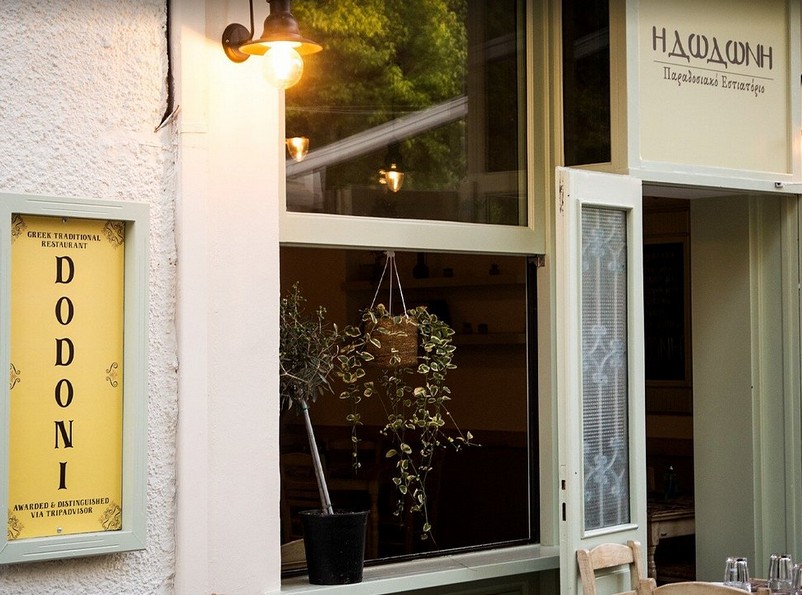
I Dodoni Restaurant
Ioannina is surrounded by some of the most extraordinary natural landscape in Greece — and the outdoor activities available within an hour of the city are among the most varied and rewarding in the entire country.
Hiking the Vikos Gorge: One of the great walks in Europe — a full traverse from Monodendri to the Papingo villages takes a full day (approximately 7–8 hours) and passes through landscape of almost hallucinatory beauty: sheer limestone walls, the clear green pools of the Voidomatis at the gorge bottom, ancient plane trees, eagles overhead. A shorter version — from Kipi to the gorge bottom and back — is manageable in half a day. May is an ideal month: the wildflowers are extraordinary and the river is full.
Kayaking & Rafting on the Voidomatis River: The Voidomatis — fed by the springs at the base of the Vikos Gorge — is one of the clearest rivers in Europe and a protected national park. Kayaking its lower reaches, through still pools under overhanging plane trees, is a magnificent experience. Several operators offer guided kayak tours and white-water rafting on the upper sections in spring.
Rafting on the Aoos River: The Aoos, which flows through its own gorge on the northern edge of the Zagori, offers excellent white-water rafting in spring when the snowmelt has the river running strong. Several operators based in Konitsa and Ioannina offer guided trips.
Mountain Biking in the Zagori: The network of old cobbled paths (kalderimia) and mountain tracks connecting the Zagori villages is excellent mountain biking territory — a number of operators offer guided tours through the villages and along the ridge roads, with dramatic views across the gorge and the Pindus peaks.
Rock Climbing & Via Ferrata at Papingo: The limestone towers of the Astraka massif above the Papingo villages are one of the premier rock climbing destinations in Greece — accessible to beginners on the via ferrata routes and to experienced climbers on the vertical faces above.
Paragliding from the Pindus Ridges: Several operators offer paragliding flights from the ridges above Ioannina and the Zagori — launching from heights of 1,500 metres or more and soaring above the gorge and the lake below. The views on a clear May day are extraordinary.
Birdwatching at Lake Pamvotis: The lake and its surrounding wetlands are an important bird habitat — herons, egrets, cormorants, kingfishers, and various duck species are resident year-round, while spring migration brings waders and passerines in significant numbers. The lake shore between the city and Perama is productive and accessible entirely on foot.
Walking the Kalderimia (Old Cobbled Paths): The network of ancient cobbled paths connecting the Zagori villages — some maintained since the Byzantine period — makes for outstanding walking through landscapes inaccessible by road. The path from Vitsa to Monodendri, the kalderimi between Kipi and Koukouli, and the descent to the Voidomatis from Papingo are among the finest short walks in Epirus.
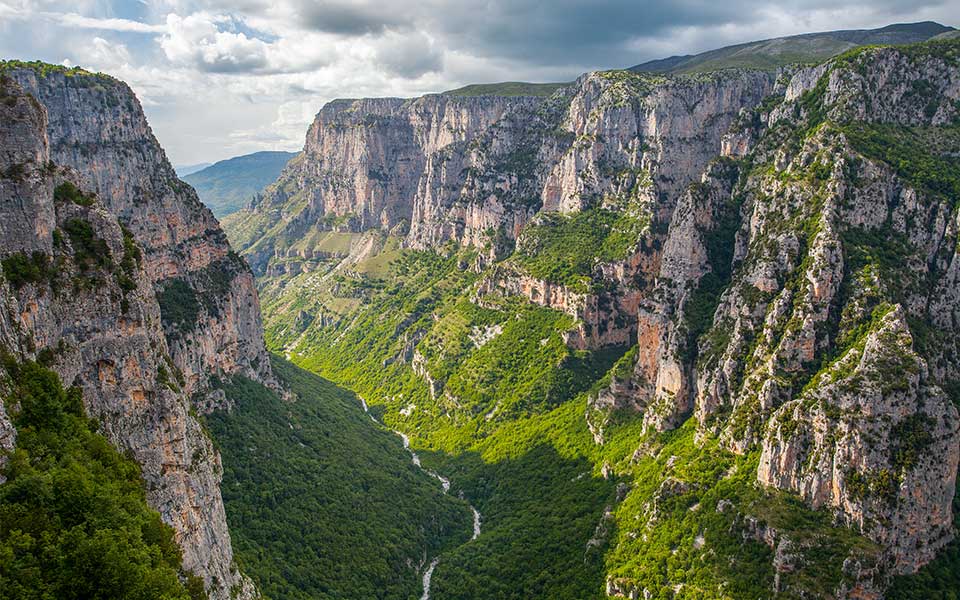
Vikos Gorge
Ioannina’s position in the heart of Epirus makes it an extraordinary base for day trips — to ancient oracles, mountain passes, wild gorges, and some of the finest vernacular architecture in the Mediterranean world.
Dodona (Ancient Oracle of Zeus): The most important day trip from Ioannina — just 22 kilometres south of the city, the ancient sanctuary of Dodona was the oldest oracle in Greece and sacred to Zeus for over two thousand years. The site includes one of the largest ancient theatres in Greece (capacity 18,000) and a beautifully preserved sanctuary. Visit in the late afternoon when the low light catches the theatre’s stone and the site is quiet.
The Zagori Villages & Vikos Gorge: The essential day trip — a full day in the northern Zagori combining the Monodendri viewpoint, a gorge walk, the Voidomatis pools at Papingo, and lunch in a village taverna is one of the finest day trips in Greece.
Metsovo: One hour east on the mountain road to Thessaloniki — the Averoff Gallery, the traditional houses and costumes, the cheese and wine producers, and the mountain setting make it one of the most rewarding small towns in Greece.
The Acheron River & Nekromanteion: South of Ioannina, the legendary Acheron River — the mythological River of the Underworld — flows through a narrow gorge to the Ionian Sea. The Nekromanteion of Acheron, an ancient oracle of the dead where the living consulted the spirits of the departed, stands on a hill above the confluence of three rivers in a setting of eerie, compelling atmosphere. Canoeing the lower Acheron in spring is an experience of extraordinary beauty.
Konitsa & the Aoos Gorge: An hour north of Ioannina, Konitsa and the great Ottoman bridge over the Aoos offer a magnificent day out — combine the bridge with a walk into the Aoos Gorge and, if time allows, the monastery of Stomio, perched on a cliff above the river in a setting of almost theatrical drama.
Igoumenitsa & the Ionian Coast: Less than an hour and a half west by road, the port of Igoumenitsa is the gateway to the coast — and from there, day trips by ferry to Corfu (one hour) are entirely feasible for those who want to combine mountain and island in a single journey.
Megalo & Mikro Papingo: The most dramatically situated villages in Ioannina’s orbit — perched beneath the vertical limestone towers of the Astraka massif in the northern Zagori, with views across a landscape of a severity and beauty that resembles no other part of Greece. Mikro Papingo in particular, with its handful of restored stone guesthouses and the sound of the mountain stream running through it, is one of the most peaceful and beautiful places in the entire country.
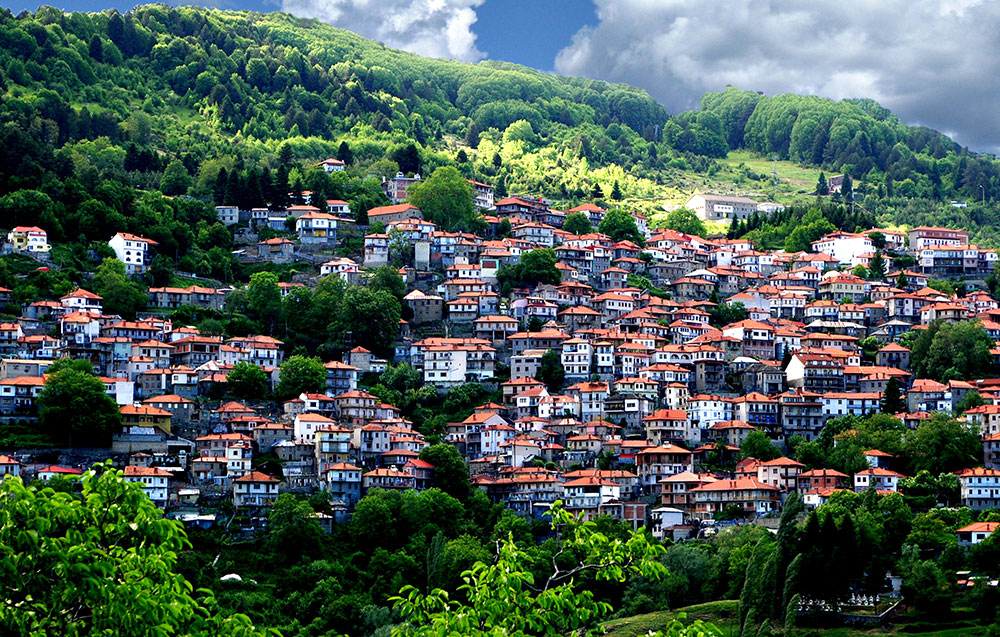
Metsovo
Set on the shores of Lake Pamvotis, with its atmospheric old town enclosed within the historic Castle, Ioannina unfolds as a city where lakeside calm, layered history, and a lively modern centre exist side by side.
Grand Serai Hotel: A landmark five-star hotel in the centre of Ioannina, combining neoclassical grandeur with modern comforts, spacious rooms, and full amenities including a pool, spa, and fine dining.
SAZ City Life Hotel: A sleek, contemporary boutique hotel overlooking the main square, offering stylish rooms, a vibrant atmosphere, and immediate access to shops, cafés, and nightlife.
Kipi Mountain Resort: Set in a serene natural landscape just outside the city, this resort blends traditional stone architecture with cozy interiors, fireplaces, and views of the surrounding mountains.
Kamares Boutique Hotel & Spa: An elegant and intimate boutique stay featuring tastefully designed rooms, a calming spa area, and a focus on comfort and understated luxury.
Stoes Boutique Hotel: A refined boutique stay in the centre of Ioannina, set within a restored 19th-century mansion near the castle, offering elegant, design-led rooms, modern comforts, and an atmosphere that blends historic character with contemporary luxury.
For more hotel offers in Ioannina, check here!
Ioannina is a compact and walkable city for its central areas, but the surrounding mountains and villages require private transport. Getting the most from this region almost certainly means renting a car.
On Foot: The central city — from the Molos lakefront promenade to the Kastro, the central market, and the main restaurants and cultural sites — is entirely walkable. The Kastro in particular is best explored on foot, as its lanes are narrow and the experience of wandering them without a fixed plan is half the pleasure.
Boat to the Lake Island: The boat service to the lake island runs frequently from the landing stage on the Molos — the journey takes approximately five minutes and boats run throughout the day from early morning to late evening. The fare is minimal. Take it at least twice: once during the day and once in the evening, when the lit city reflected in the dark lake is one of the most beautiful views in Greece.
Car Rental: Essential for exploring the Zagori, visiting Dodona, reaching Metsovo, or making day trips to the Aoos Gorge and the coast. Several rental agencies operate in Ioannina city centre and at the airport. Roads in the Zagori are generally well-maintained but narrow and winding — drive carefully and allow more time than the map suggests.
KTEL Buses: The intercity KTEL bus network connects Ioannina with Athens (6 hours), Thessaloniki (4.5 hours), Patras, Igoumenitsa, and other Greek cities. Local services reach some of the nearer Zagori villages, but are infrequent — not suitable for day trip planning without careful timetable research.
Taxi: Available throughout the city and can be booked for day trips to Dodona, the Perama Cave, and some of the nearer villages. Agree the fare in advance for longer journeys.
Bikes: Cycling around Ioannina is one of the most practical and rewarding ways to explore the area at your own pace, especially if you want flexibility beyond the limited reach of local buses. The Municipality of Ioannina offers bikes for free!
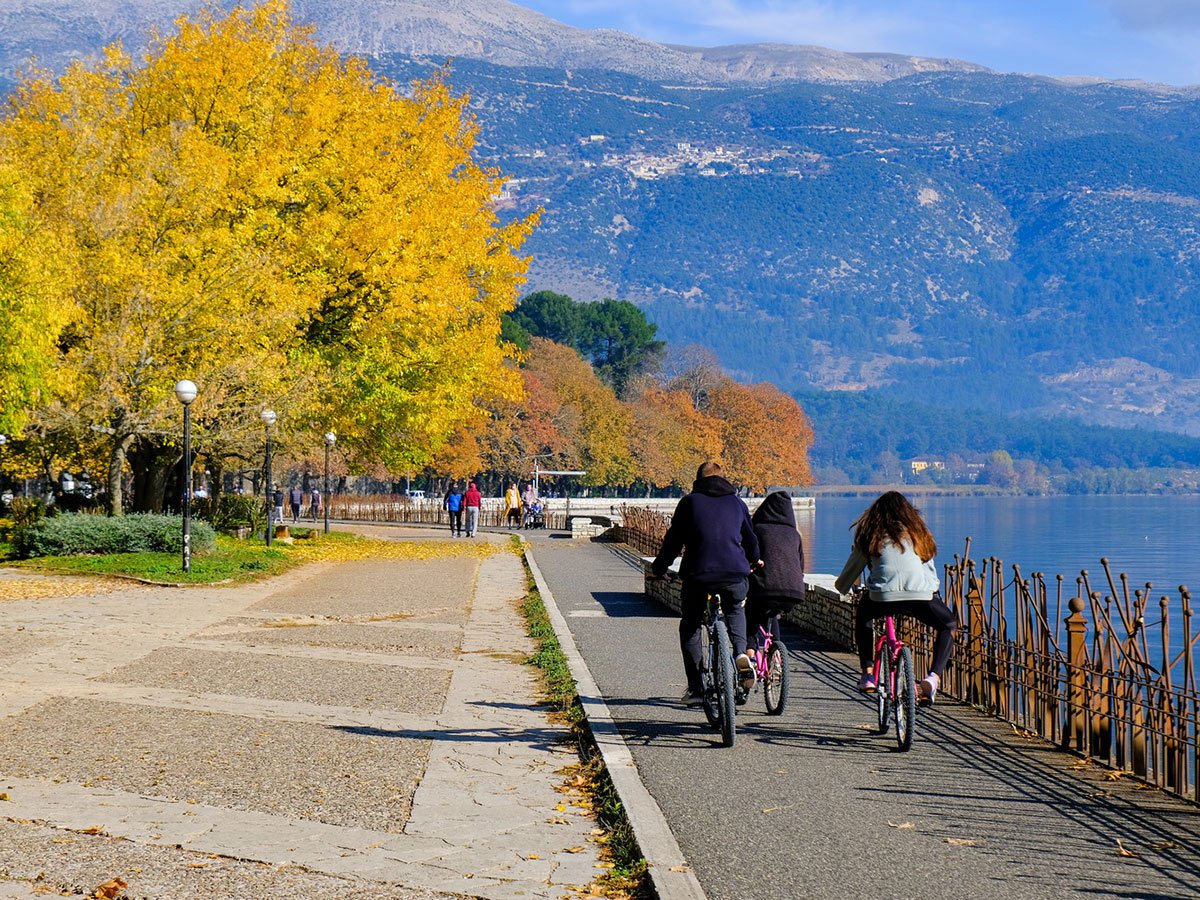
Cycling Across the Lake
Ioannina is a safe, welcoming, and genuinely hospitable city. Crime is very low, the university population gives it a youthful and open energy, and visitors — though not yet as numerous as they deserve to be — are received with warmth and a pride in showing off a city and region that most of the world has not yet discovered.
Weather in May: May in Ioannina is warm and sunny but can bring brief afternoon showers — pack a light waterproof layer if planning mountain walks or gorge hikes. Mornings and evenings are cool (15–18°C); bring a layer for lakeside dinners.
Mountain Safety: If hiking the Vikos Gorge or the Zagori trails, go with a map (the Anavasi 1:25,000 maps of the Zagori are excellent), adequate water, and appropriate footwear. The gorge trail can be slippery after rain. Inform your accommodation of your hiking plans. Mobile signal is limited in the gorge.
May 1st Closures: On May 1st (Labour Day/Protomagia), most shops, banks, and some restaurants will be closed or operate reduced hours. The island boat runs as normal; most traditional tavernas and kafeneions remain open. Stock up on picnic provisions the evening before if planning a Zagori excursion.
Language: English is spoken in hotels, most restaurants, and tourist-oriented businesses. In the mountain villages, older residents may speak limited English — a handful of Greek phrases will open every door and be received with real delight.
Currency: Greece uses the Euro (EUR). ATMs are plentiful in Ioannina city centre. In the Zagori villages, carry cash — card payment is not universal in smaller guesthouses and tavernas.
Tipping: Rounding up the bill or leaving 10% at a restaurant is normal and appreciated. At a kafeneion or bakery, rounding up is sufficient and warmly received.
Electrical Outlets: Greece uses Type C and F plugs. UK travellers need a travel adapter.
Photography: The Kastro, the island, and the lake landscape are extraordinary photographic subjects — go early morning for mist on the lake and the best light on the Kastro walls. Always ask permission before photographing residents.
Cultural Respect: Dress modestly when visiting the monasteries on the island and in the Zagori. The island monasteries are places of active religious devotion; be quiet and respectful. During May 1st celebrations, join the festivities with generosity of spirit — Protomagia is a holiday for everyone, and Greeks share it with warmth.
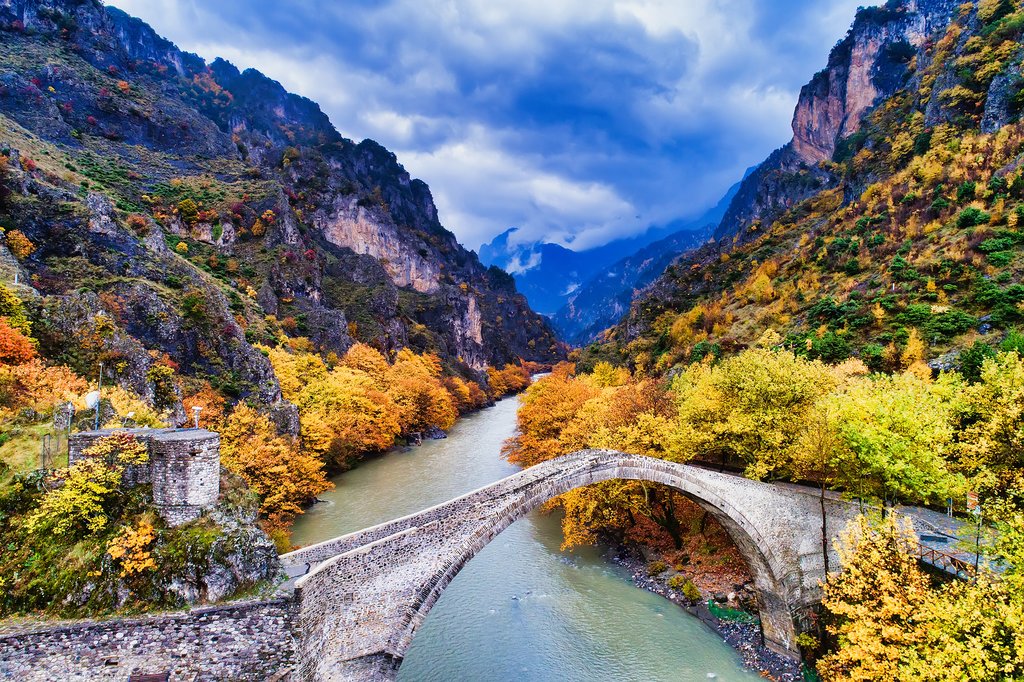
Konitsa Bridge And Aoos River
Ioannina sits in the mountains of northwestern Greece, away from the Aegean island circuit that defines most foreign visitors’ experience of the country. It has no sea, no ancient ruins of Acropolis-level fame, and no direct flight from London for much of the year. But this is changing rapidly. Those who find it tend to return, and word is spreading that this is one of the most beautiful, culturally rich, and gastronomically outstanding cities in Greece. Think of it as a privilege: for now, you have it largely to yourselves.
Ali Pasha of Ioannina (1740–1822) was an Albanian-born Ottoman ruler who carved out a semi-independent domain across Epirus and western Greece, making Ioannina his capital. He was a figure of extraordinary complexity — cultivated and brutal, diplomatically sophisticated and personally ferocious. Lord Byron spent time at his court in 1809, and he corresponded with Napoleon. He ruled for forty years and was finally hunted down and killed on the lake island in 1822. The bullet holes in the monastery floor where he was shot are still there — one of the most viscerally historical sights in Greece.
Protomagia — May Day — is both the Greek Labour Day and an ancient festival of spring, and one of the most joyful celebrations in the Greek calendar. The tradition is to weave a wreath of wildflowers and wheat and hang it on the door, and to spend the day outdoors with family and food. In Ioannina and across Epirus, it is celebrated with enormous warmth. The markets fill with flowers, the tavernas prepare for large parties, and the mountain roads are full of families heading to the Zagori meadows. It is a perfect day to be in this part of Greece.
The full traverse — from Monodendri to Papingo — is a long and demanding day hike (approximately 14 kilometres, 7–8 hours) that requires reasonable fitness, proper footwear, and adequate preparation. However, shorter sections are accessible to less experienced walkers: the viewpoints above the gorge at Monodendri and Oxia are reachable on straightforward paths with no technical difficulty. May is an ideal month for the full traverse — the wildflowers are extraordinary and the day length is sufficient.
Epirote cuisine is shaped by the mountain landscape and the long Ottoman cultural presence. The extraordinary variety of hand-made pies (pites) reaches its highest expression here. The use of dairy products from mountain flocks, the prevalence of lake fish and frogs, the slow-cooked mountain lamb, and the fermented grain dishes of the winter kitchen all distinguish Epirote food from the olive-and-sea cuisine of the islands. It is richer, more warming, more complex — and in Ioannina, extraordinary.
Yes — the boat service runs until late evening, and the island takes on a completely different character after dark: quieter, more atmospheric, the lights of the city reflecting across the water, the monastery walls glowing softly. Several of the island’s tavernas serve dinner, and eating there in the evening — frogs’ legs and grilled eel with a carafe of local wine, with the dark lake all around — is one of the great Ioannina experiences.
Very much so. The city is compact, safe, and manageable with children; the boat to the island is a delight for small travellers; the Perama Cave is fascinating for children of all ages; and the Zagori villages offer gentle walking and swimming in clear river pools. The May 1st celebrations, with their outdoor picnic tradition and festive atmosphere, are particularly well-suited to family visits.
With a car and at least one full day — ideally two. The villages are spread across a large mountain area and public transport is very limited. A suggested circuit from Ioannina: drive north to Vitsa and Monodendri (gorge viewpoint, lunch), continue to Kipi (arched bridges), then north to Megalo and Mikro Papingo (the Voidomatis pools, dramatic mountain scenery), returning via Tsepelovo and Skamneli. Allow a full day and do not rush.
Ioannina’s silversmithing tradition specialises in filigree work — extraordinarily delicate wire work of great intricacy — as well as engraved vessels and jewellery incorporating traditional Epirote motifs. Authentic handmade pieces from the remaining master craftsmen are identifiably different from mass-produced imitations. Buy from the workshops in and around the Kastro rather than from tourist shops in the main streets. A piece of genuine Ioannina silverwork is one of the finest souvenirs in Greece.
The boat to the lake island at dusk, dinner of frogs’ legs and pites at an island taverna, a morning walk through the Kastro, the Monodendri viewpoint over the Vikos Gorge, lunch in a Zagorian village, a swim in the Voidomatis pools at Papingo, a carafe of tsipouro on the Molos promenade as the sun drops behind the mountains — and, if your timing is right, a May 1st afternoon picnic in a mountain meadow with the whole of Epirus in bloom around you.
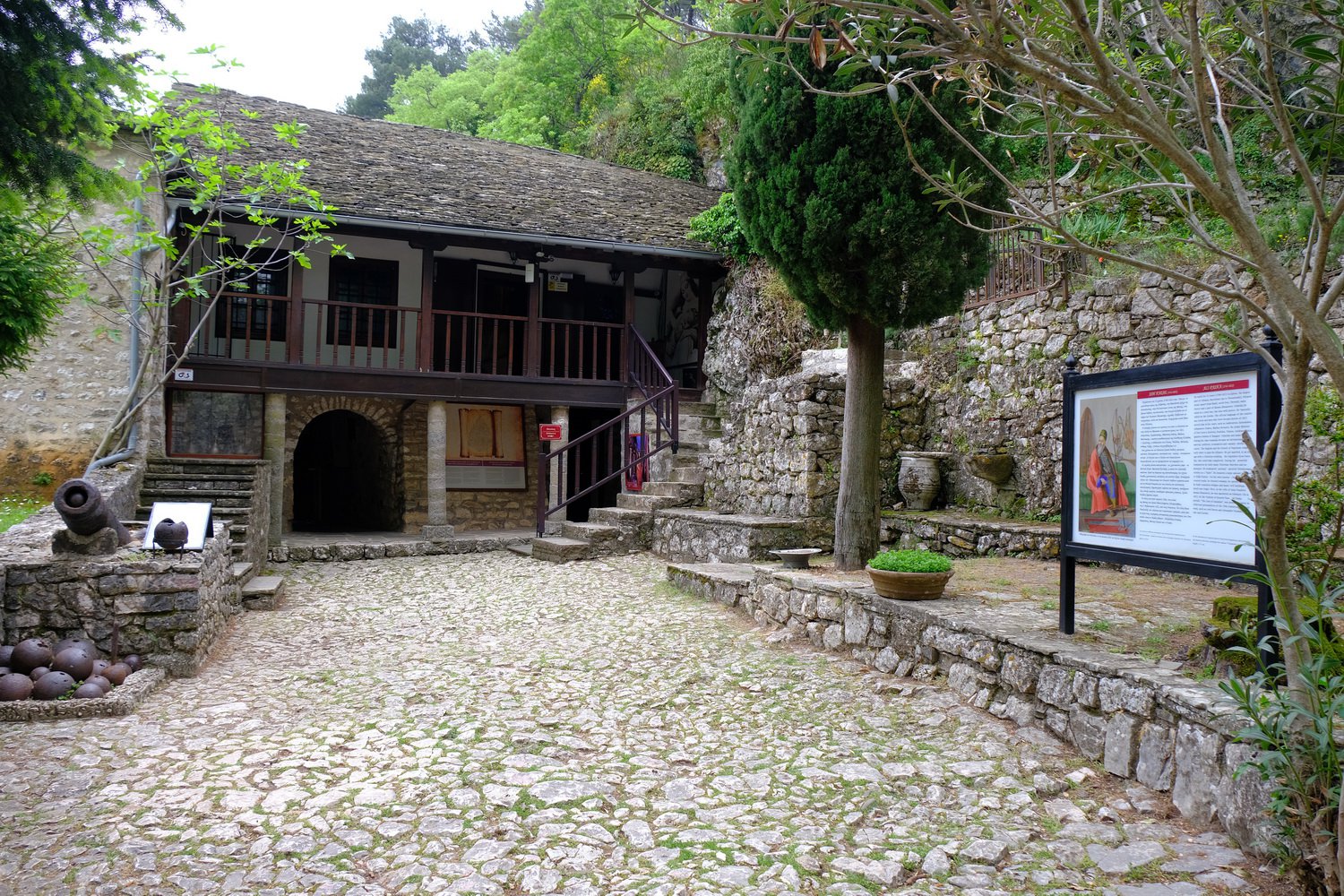
The Museum of Ali Pasha
Ioannina is a city that does not announce itself. It waits. It lets you arrive, find the lake, find the island, find the Kastro — and then, slowly, it begins to reveal what it is: one of the most historically layered, culturally rich, gastronomically extraordinary, and naturally beautiful places in Greece. A city where Byzantine walls meet Ottoman minarets and both are reflected in a mountain lake that has been here since before the first stone was laid. A city from which, within an hour, you can be standing at the edge of one of the deepest gorges on earth, or swimming in a river so clear it seems to be made of glass, or eating lunch in a stone village that has not changed its essential character since the 18th century.
Come for the May 1st weekend and you will understand why Greeks from across the country make the journey here every spring — not because anyone told them to, but because somewhere in the Greek soul, Ioannina and its mountains and its lake represent something essential: the wildness and the beauty and the deep continuity of this country that no island beach, however turquoise, can quite replicate.
This is Greece with its boots on. Come and find it!
Kalo taxidi — happy travels to magnificent Ioannina. 🏔️
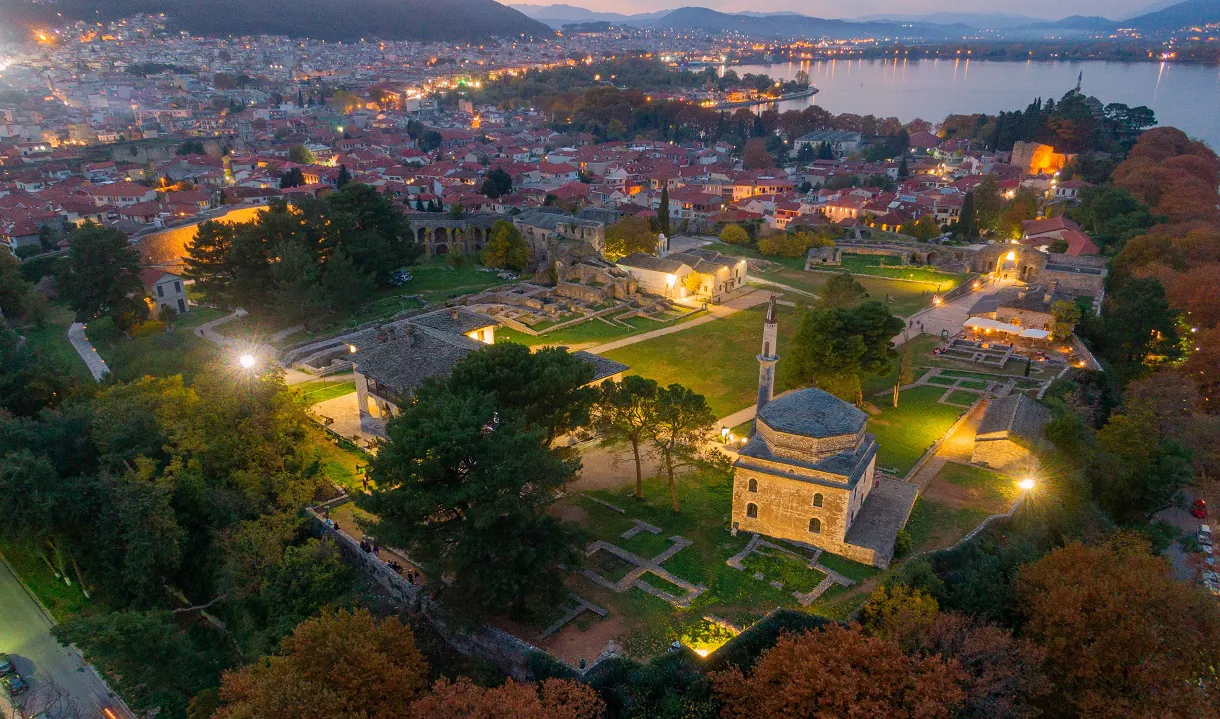
Ioannina and the Kastro