This Santorini travel guide for 2026 covers everything you need — from getting there and finding the best hotels, to the top beaches, restaurants, and activities that make this Greek island truly unforgettable!
1. A Quick Introduction of Santorini
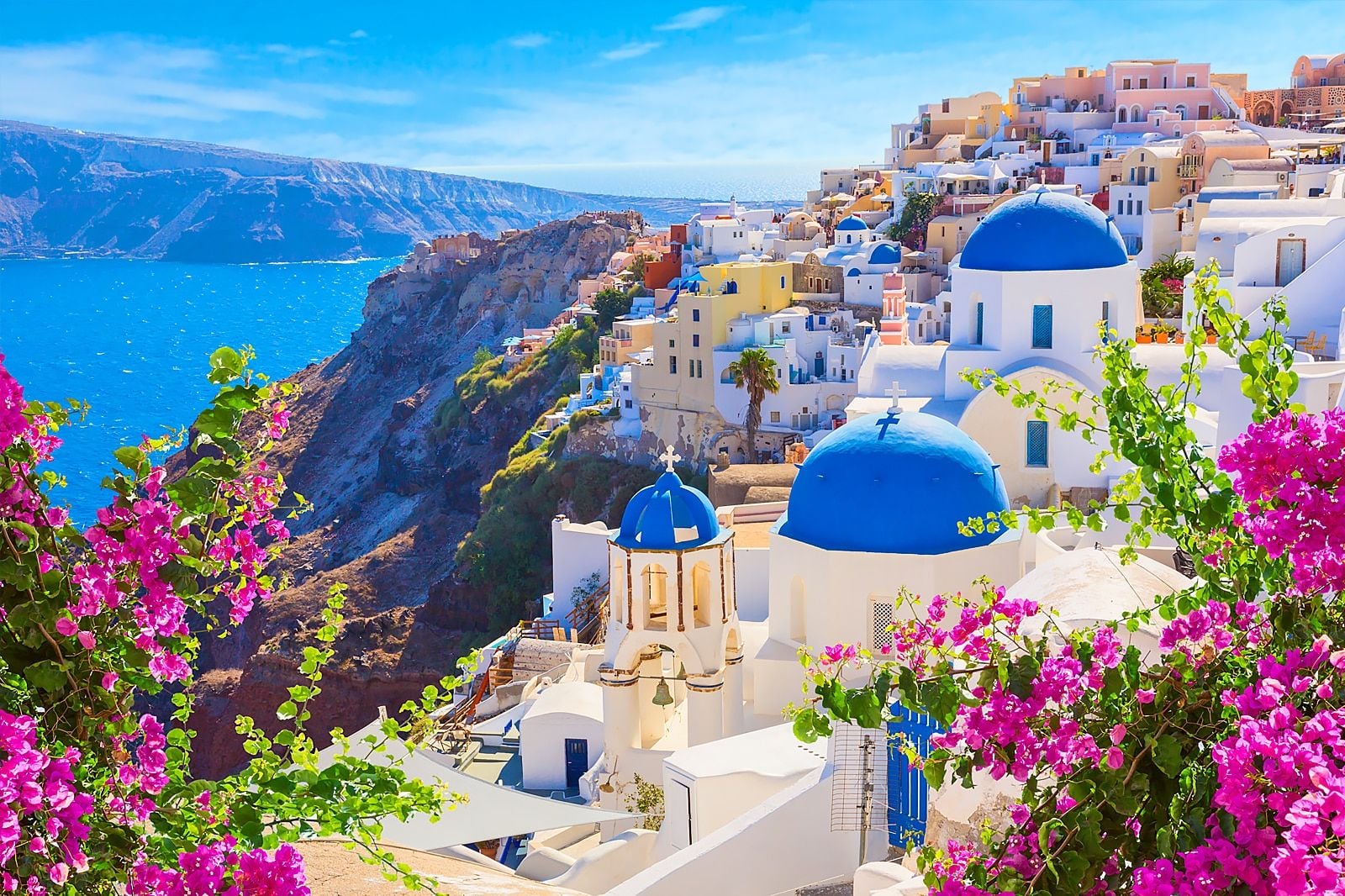
Some places exist in the imagination long before you arrive. Santorini is one of them — that impossible crescent of white and blue perched above a drowned volcano, the caldera stretching out below like a sea that has forgotten its boundaries, the sunsets that turn the whole western sky into something that feels less like weather and more like a personal message from the gods. You have seen the photographs. You think you know what to expect.
You do not!
Because Santorini — the real Santorini, the one that exists beneath and beyond the Instagram-famous clifftop villages — is stranger, deeper, and more extraordinary than any image has ever managed to convey. It is a place born from one of the most violent volcanic eruptions in human history, a catastrophe so total it may have ended an entire civilisation. It is an island of black sand beaches and blood-red cliffs, of ancient vines trained flat against the earth to survive the Aegean wind, of wine unlike anything produced anywhere else on earth. It is dramatic in every sense of the word — geologically, visually, historically, and emotionally.
Come for the sunset over Oia. Stay for everything else. That is when Santorini will really begin.
Santorini awaits — and nothing will quite prepare you for her.
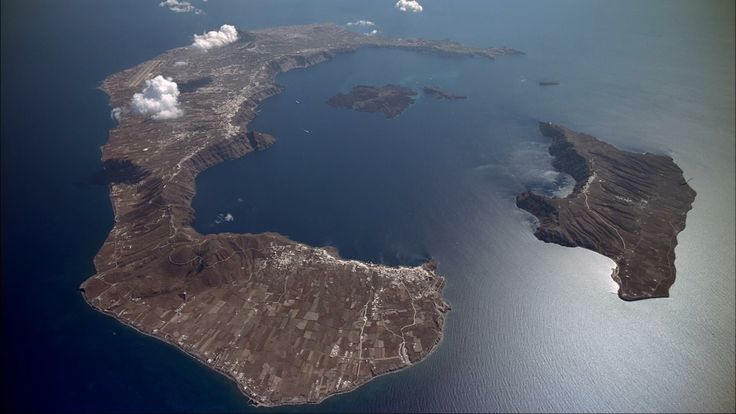
Santorini from above
2. Santorini: A Brief History
To understand Santorini is to understand, first, that the island you are standing on is not really an island at all but the rim of a volcano — or more precisely, what remains of one after an eruption of almost inconceivable force around 1600 BC that tore the original landmass apart and left behind the dramatic caldera and arc of cliffs that define Santorini today. This eruption, one of the largest in geological history, sent a tsunami across the Aegean and a vast column of ash into the atmosphere, possibly darkening skies across the eastern Mediterranean for years and contributing to the collapse of the Minoan civilisation on Crete. The buried city of Akrotiri, discovered beneath volcanic ash in the 1960s, offers an extraordinary window into this lost world, preserving streets, houses, plumbing systems, and vibrant frescoes in remarkable detail.
In the centuries that followed, the island was resettled and renamed — known in antiquity as Thera and later Santorini, a Venetian corruption of Santa Irini (Saint Irene) during the medieval Duchy of the Archipelago, before passing to Ottoman rule and eventually becoming part of modern Greece. The island’s iconic architecture — cave houses carved into volcanic cliffs, whitewashed cubic buildings, and blue-domed churches — evolved as a practical response to the harsh landscape. A devastating earthquake in 1956 destroyed much of Oia and Fira, and the reconstruction that followed created much of the pristine whitewashed appearance seen today, reminding visitors that Santorini has always been a place of destruction and renewal; now welcoming more than two million visitors each year, the true beauty of the island lies in discovering the authentic character that still exists beneath its famous tourist surface.
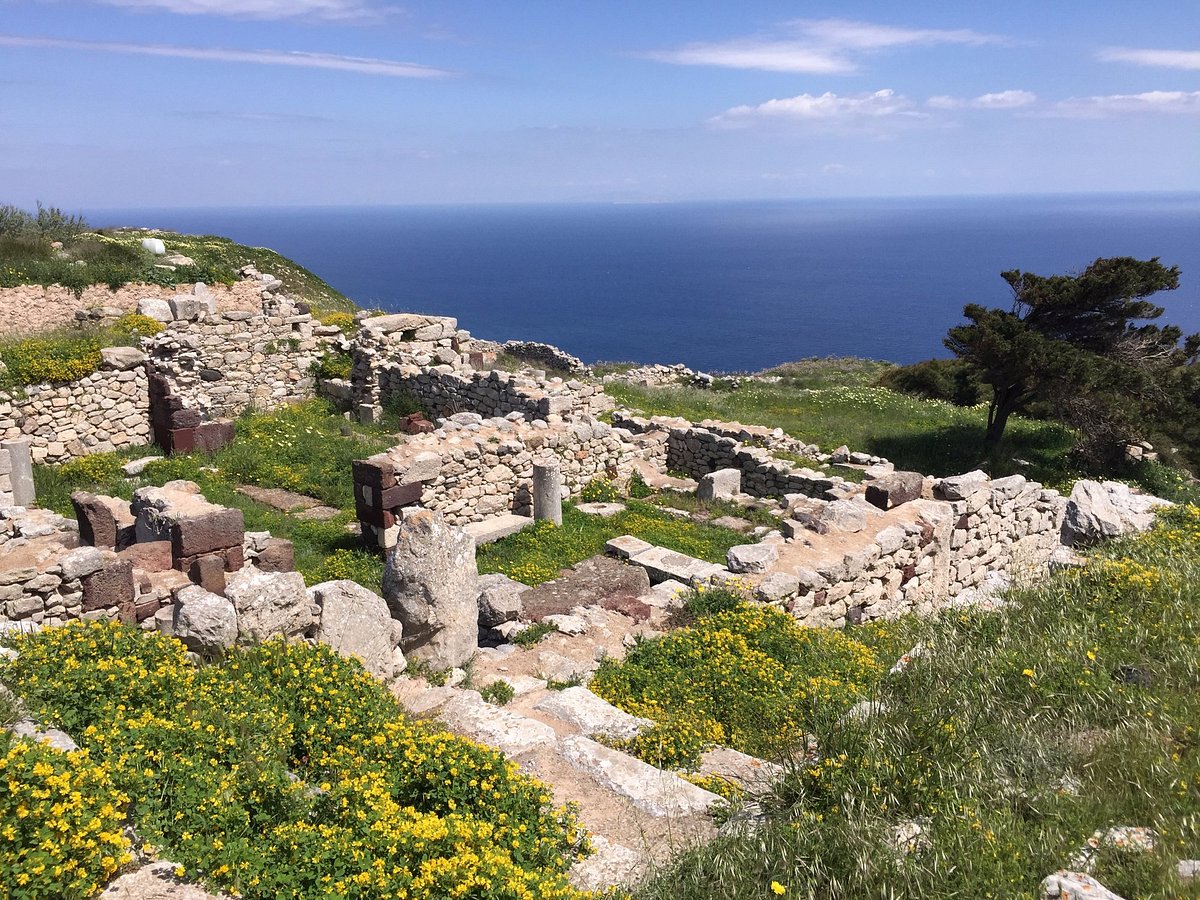
Ancient Thera
3. Getting to Santorini from the United Kingdom
Getting to Santorini from the UK is straightforward, with multiple routes available depending on your budget and travel preferences.
By Air — Direct Flights: Santorini International Airport (JTR), also known as Thira Airport, receives direct seasonal flights from the UK during the summer season — typically from April to October. easyJet, Jet2, TUI, and occasionally British Airways operate direct routes from London Gatwick, London Luton, Manchester, Birmingham, Bristol, and Edinburgh. Flight time is approximately 3.5–4 hours. Direct flights are the fastest and most convenient option — book as early as possible as they sell out quickly, particularly for July and August travel.
Via Athens: Year-round connectivity is available via Athens — fly to Athens International Airport (ATH) and connect onward to Santorini on a domestic flight with Aegean Airlines or Sky Express. The domestic hop takes approximately 45 minutes and offers the bonus of a night or two in Athens as a gateway experience. This is also the most reliable option for travel outside the peak summer season.
By Ferry from Athens (Piraeus): For travellers with time and a spirit of adventure, the overnight ferry from Piraeus to Santorini is one of the great Greek travel experiences — boarding in the evening, waking to the extraordinary spectacle of the caldera entrance in the morning light. Journey time is approximately 8–9 hours on a standard ferry, or around 5 hours on a high-speed catamaran. Book ferry tickets on Ferryhopper.com well in advance for summer travel.
Getting Around the Island on Arrival:
- Car Rental: More comfortable than an ATV and strongly recommended for families or those planning longer excursions. Book in advance for summer.
- Local Bus (KTEL): A surprisingly efficient bus network connects the main villages — Fira, Oia, Perissa, Kamari, Akrotiri — at regular intervals throughout the day. Affordable and perfectly adequate for moving between the major stops.
- Taxi: Available but limited in number and in high demand during peak season. Always book in advance for early morning airport or port transfers.
- Private Tax & Tours: A more leisure solution. Low cost prices, luxury cars and mini buses up to 20 seats.
- ATV / Quad Bike Rental: The most popular option on the island — available everywhere and ideal for navigating Santorini’s compact but hilly roads.
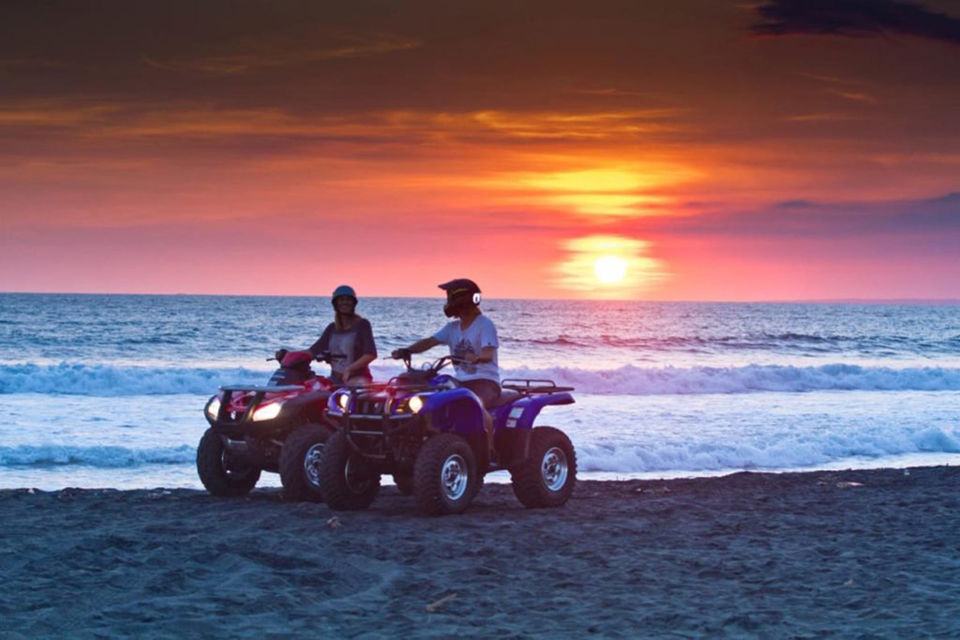
Exploring Santorini with an ATV Quad Bike
4. The Weather in Santorini During Spring and Summer
Santorini enjoys a classic Cycladic Mediterranean climate — hot, dry summers, mild winters, and two glorious shoulder seasons that offer the island at its most balanced and beautiful. One additional weather factor shapes the Santorini experience in a way that visitors should understand before they arrive: the Meltemi (Etesian Wind).
The meltemi is the powerful northerly wind that sweeps across the Aegean from July through to early September — cooling in the worst of the summer heat, but capable of making the island’s more exposed beaches uncomfortable and the sea distinctly choppy. The spring and early autumn windows are largely meltemi-free and far superior for a comfortable, well-rounded visit.
| Month |
Avg. Temp
(°C) |
Sea Temp
(°C) |
Sunshine
(hrs/day) |
Crowd Level |
| April |
16–21°C |
16°C |
8 |
Low ✓ Best |
| May |
20–25°C |
18°C |
10 |
Low–Medium ✓ Best |
| June |
24–29°C |
22°C |
12 |
Medium |
| July |
27–33°C |
25°C |
13 |
Very High – Peak Season |
| August |
27–34°C |
26°C |
13 |
Extreme – Windy Period |
| September |
24–29°C |
24°C |
11 |
Medium ✓ Also Excellent |
| October |
19–24°C |
22°C |
8 |
Low ✓ Excellent |
Best Season to Visit Santorini: Santorini is at its finest in late April through June, and again in September and early October. The famous villages are magical, the light is extraordinary, the sea is warm enough to swim, and the island has not yet surrendered entirely to the peak-season crowds of July and August. Spring in particular offers a quieter, more intimate Santorini — the caldera views unobstructed, the taverna tables unhurried, and the volcanic landscape carpeted in wildflowers that most summer visitors never see.
For a comprehensive weather forecast, check meteo.gr.
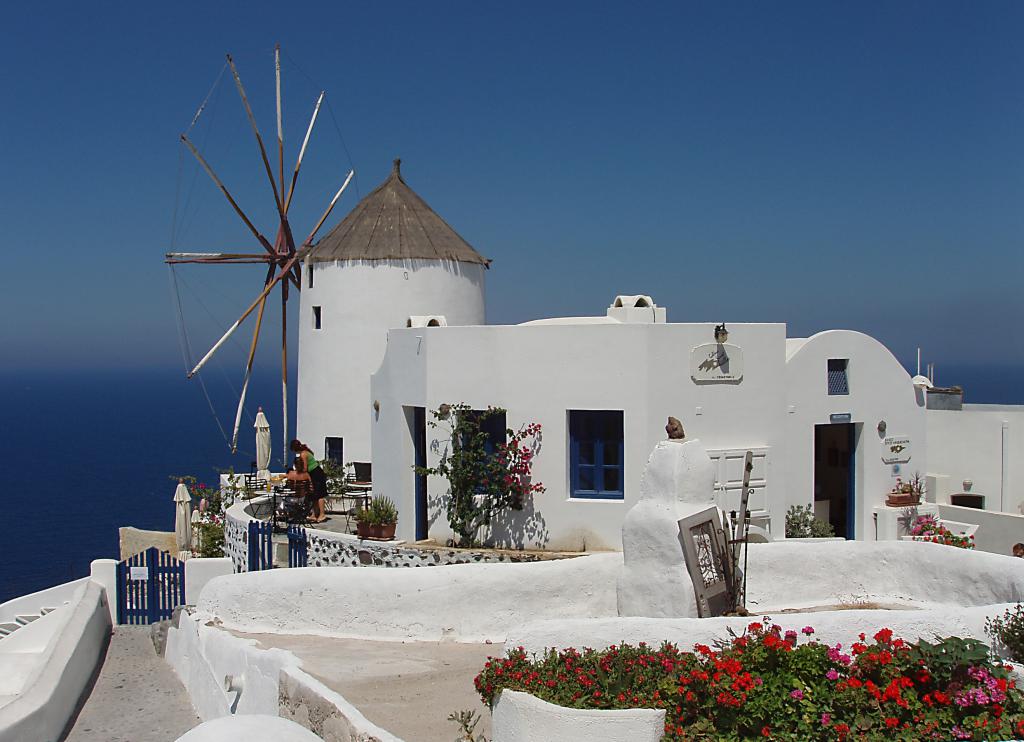
Windmill in Santorini
5. Top Destinations and Attractions in Santorini
Santorini is an island of extraordinary concentrated beauty — compact enough to explore thoroughly in a few days, yet layered enough to reveal new wonders on every visit. Beyond the iconic clifftop villages, the island offers ancient ruins of world significance, a volcanic landscape unlike anything else in the Aegean, and a wine culture rooted in some of the oldest continuously cultivated vines on earth.
Here are the essential destinations no visitor should miss:
- Oia: The village at the northern tip of the caldera rim — impossibly beautiful, impossibly photographed, and still, even at the height of summer, capable of taking the breath away. Wander the blue-domed lanes in the early morning before the day-trippers arrive, explore the clifftop castle ruins, browse the galleries and jewellery shops, and position yourself for the sunset at least an hour before it happens. Oia’s sunset is one of the great natural spectacles of the Mediterranean — it earns every superlative.
- Fira Town (Thira): The island’s capital and beating heart — a dense, lively clifftop town of whitewashed buildings cascading down toward the caldera, connected to the old port below by a switchback path and a cable car. Fira is the island’s commercial and social centre — where you come for the museums, the shopping, the rooftop bars, and the most dramatic caldera views on the island.
- Akrotiri Archaeological Site: The buried Minoan city preserved beneath volcanic ash — often called the Pompeii of the Aegean, though it predates Pompeii by over a millennium. The excavations reveal an astonishingly sophisticated Bronze Age city with multi-storey buildings, running water, and frescoes of extraordinary delicacy. One of the most important and moving archaeological sites in the entire Greek world. Do not miss it.
- Museum of Prehistoric Thera (Fira): Houses the finest artefacts from the Akrotiri excavations, including the celebrated gold ibex figurine and the spectacular Minoan frescoes. A visit here before or after the archaeological site provides essential context and is genuinely unmissable.
- Ancient Thera: The ruins of the ancient city of Thera, perched dramatically on the ridge of Mesa Vouno above the island’s east coast — Greek, Roman, and Byzantine remains spread across a clifftop with vertiginous views to both sides of the island. Far less visited than Akrotiri and wonderfully atmospheric.
- Tomato Industrial Museum: Located in Vlychada showcases the island’s 19th-century tomato processing industry through restored machinery and audiovisual exhibits. It offers a compact, immersive look at Santorini’s agricultural heritage and traditional cherry tomato production.
- The Caldera: The flooded volcanic crater at the centre of Santorini’s geography is not just a view — it is a living geological feature. Boat tours of the caldera take visitors to the still-active volcanic islets of Nea Kameni (where you can walk across hardened lava and swim in naturally warm, sulphurous waters) and the thermal springs of Palea Kameni. One of the most extraordinary natural experiences available in the Aegean.
- Imerovigli: The highest point on the caldera rim and the least touristy of the three main clifftop villages — quieter than Fira, more authentic than Oia, with arguably the finest caldera views of all and the dramatic Skaros Rock rising from the cliff below, accessible on a short but vertigo-inducing trail.
- Pyrgos: The medieval village in the interior of the island, climbing steeply to a Venetian castle at its crown — one of the least-visited and most authentically beautiful villages on Santorini. The view from the castle at sunset, with the entire island spread out below and the caldera shimmering in the distance, rivals anything Oia can offer.
- Emporio: The island’s largest medieval village in the south — a labyrinth of vaulted lanes, Venetian towers, and Byzantine churches that most tourists never find. Wander here on a warm evening and you will feel, for once, entirely alone with the island.
- Prophet Elias Monastery: Perched on the highest point of Santorini at 567 meters above sea level near Pyrgos, Prophet Elias Monastery (built in 1711) offers panoramic views across the island and stands as one of its most important historical and religious landmarks.
- Megalochori: A quiet traditional village with bell towers, vineyards, and neoclassical mansions.
- Santo Wines Winery: Perched on the caldera rim above Pyrgos, this is Santorini’s most celebrated winery and the finest introduction to the island’s extraordinary wine culture — tasting the native Assyrtiko grape in its home landscape, with the caldera as backdrop, is an experience that belongs in a category all its own.
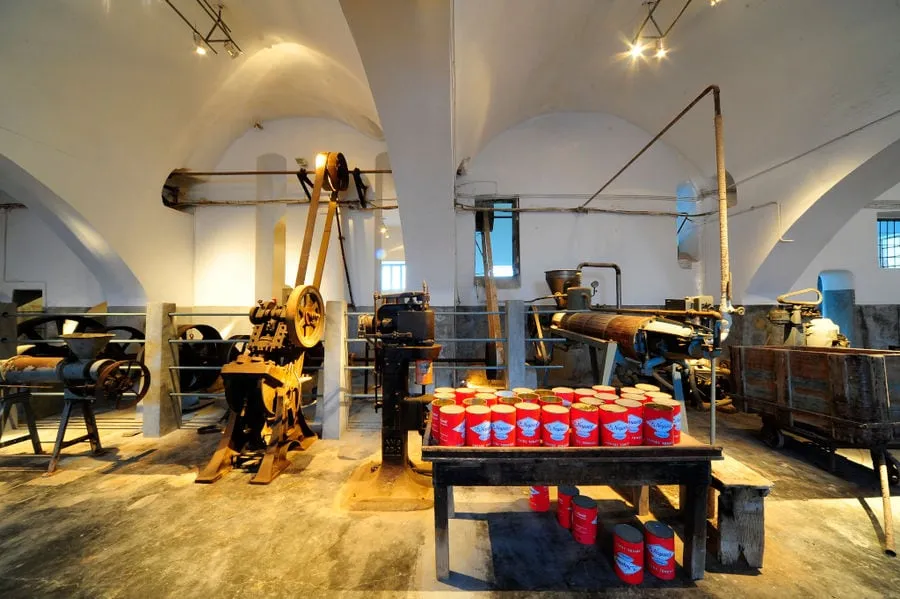
Tomato Industrial Museum
6. The Best Beaches in Santorini
Santorini’s beaches are unlike any others in the Cyclades — formed from volcanic rock and ash rather than limestone or granite, they come in shades of black, red, and deep grey that give the island’s coastline a dramatic, otherworldly quality. The water is clear and deeply blue, the volcanic sand holds the heat of the sun long into the evening, and the landscape surrounding each beach is unlike anything the more conventionally beautiful islands can offer.
- Perissa Beach: The longest black sand beach on the island, stretching for several kilometres along the south-eastern coast beneath the volcanic cliff of Mesa Vouno. Well-organised with sunbeds, tavernas, and water sports facilities — perfect for a full day by the sea.
- Perivolos Beach: The continuation of Perissa, slightly more relaxed and with a growing reputation for excellent beachside restaurants and bars. The black sand is extraordinary and the swimming is superb.
- Kamari Beach: The main resort beach on the eastern coast — black volcanic sand, crystal clear water, and a long promenade of tavernas, cafés, and shops. More organised and lively than the southern beaches, with an open-air cinema that operates during the summer season.
- Red Beach (Kokkini Paralia): One of the most visually dramatic beaches in the entire Mediterranean — a small cove of deep red volcanic sand beneath towering rust-red cliffs near Akrotiri. Accessible by a short coastal path or by boat, and utterly extraordinary. Go early — it is small and fills quickly.
- White Beach (Aspri Paralia): Accessible only by boat from Red Beach or Akrotiri — a tiny, remote cove of white and pale grey volcanic rock with exceptionally clear water. One of those places that feels genuinely discovered.
- Vlychada Beach: A surreal, lunar landscape of white pumice cliffs sculpted by wind and rain into extraordinary formations, with a long grey sand beach below — one of the most otherworldly coastal landscapes in the Aegean and largely unknown to casual visitors.
- Katharos Beach: One of the very few real beaches on the caldera side of the island, located just below Oia. A quiet stretch of dark volcanic pebbles and deep blue water, it feels far removed from the crowds above and is especially beautiful at sunset.
- Ammoudi Bay: A charming little port rather than a typical beach, but it’s the island’s top destination for cliff jumping and adventurous swimming. Accessible via the famous 300-step path or by boat, this hidden gem offers thrilling jumps into the deep sea and some of the freshest seafood tavernas right on the waterfront — an experience that makes the descent totally worth it.
- Therassia: The small island across the caldera, offers quiet swimming spots like Riva Beach or Korfos Bay.
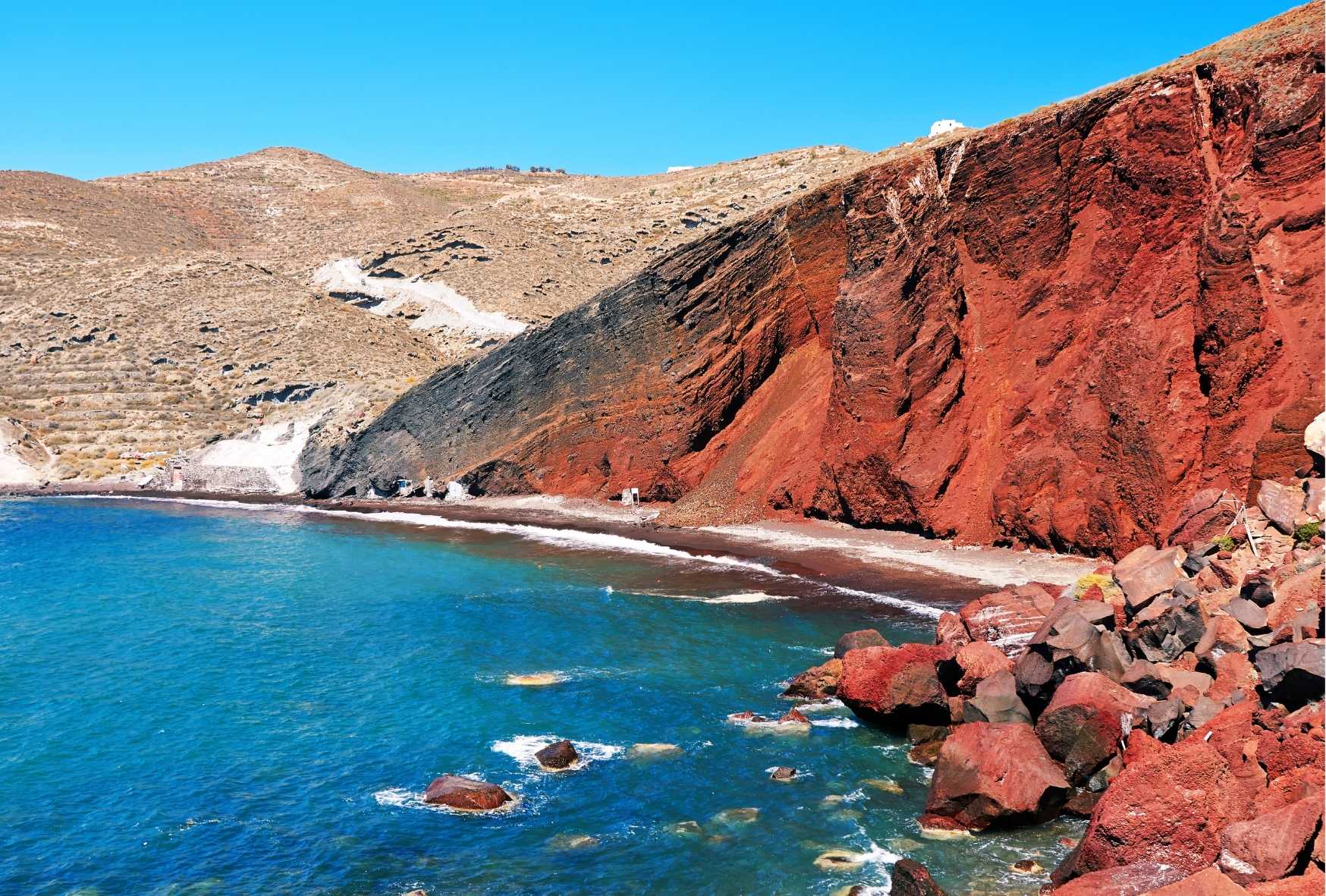
The Red Beach
7. The Best Places to Eat in Santorini
Santorini’s food and wine scene is one of the finest in the Greek islands — rooted in volcanic soil, shaped by the sea, and elevated in recent years by a generation of chefs and winemakers who understand exactly what this extraordinary landscape has to offer. The island’s cuisine draws on the unique produce of its volcanic terroir: cherry tomatoes of concentrated sweetness, white aubergines, fava from Santorini’s famous yellow split peas, and the capers that grow wild across the island’s dry stone walls.
The best restaurants in Santorini
Here are some must-go restaurants!
- Tholoto Brunch & Restaurant – Highly rated for creative Mediterranean and Greek dishes with beautiful views and fresh local ingredients; known for its relaxed atmosphere and quality cuisine.
- Ta Tertipia Santorini – A top-ranked spot in Kamari offering authentic Greek and Mediterranean flavors with attentive service and consistently excellent reviews.
- Five Senses Restaurant – Fine dining restaurant serving modern Greek cuisine with a refined culinary experience and elegant presentation.
- Almira Restaurant – Popular seafood and Mediterranean restaurant known for generous portions, fresh ingredients, and welcoming service.
- Santo Athiri Restaurant – Well-known for delicious traditional Greek dishes, friendly staff, and a warm local atmosphere.
- Above – Upscale Mediterranean seafood restaurant offering romantic views and a high-end dining experience, ideal for special occasions.
- Captain’s Corner Taverna – Traditional Greek taverna famous for authentic seafood dishes and homemade local specialties.
- Katsaboo Restaurant – Highly rated Mediterranean restaurant offering fresh Greek dishes and a relaxed atmosphere, popular for brunch and seafood.
- The Wine Bar – Mediterranean dining with spectacular sunset views and an excellent selection of Santorini wines and Greek cuisine.
- Le Moustache Restaurant – Stylish Mediterranean restaurant praised for flavorful seafood, cocktails, and relaxed poolside dining experience.
Find more restaurants in Santorini here!
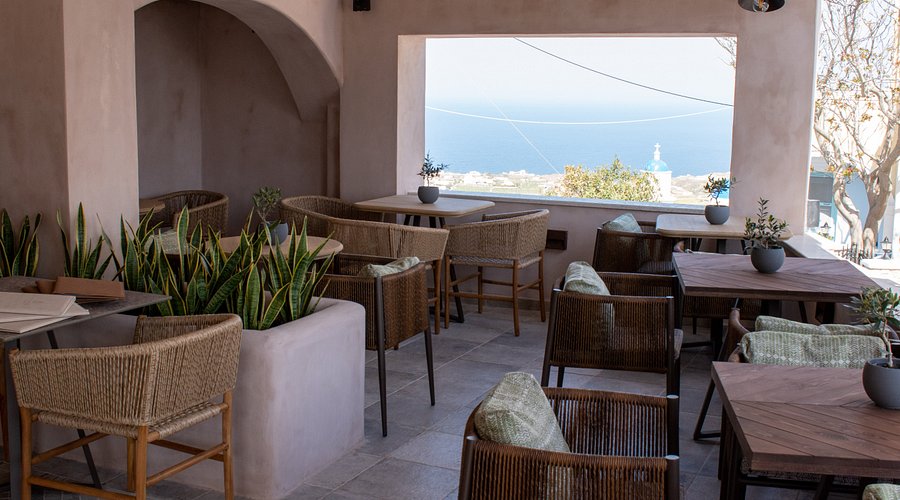
Tholoto Brunch & Restaurant
Must-Try Dishes in Santorini
Don’t miss these!!
- Fava Santorinis: The island’s most celebrated dish — a silky, golden purée of Santorini’s native yellow split peas, dressed with olive oil, capers, and raw onion. Sweeter and more delicate than standard fava, it is grown in the island’s volcanic soil and carries a flavour entirely its own. Found on every serious menu and best eaten with warm bread and a glass of Assyrtiko.
- Santorini Tomato Fritters (Tomatokeftedes): Crispy, herb-flecked fritters made from the island’s legendary cherry tomatoes — small, intensely sweet, and concentrated by the volcanic soil and lack of rain. One of the defining tastes of Santorini and utterly addictive.
- Chlorotyri: A fresh, tangy local cheese made from goat’s or sheep’s milk — soft, creamy, and slightly sour. Served drizzled with honey and thyme or alongside fava as part of a meze spread.
- White Aubergine (Melitzana Lefki): A variety of aubergine unique to Santorini — smaller, sweeter, and less bitter than the standard variety, grown in the island’s mineral-rich volcanic soil. Grilled, stuffed, or pureed into a dip of remarkable delicacy.
- Santorini Salad – Fresh cherry tomatoes, capers, cucumber, and local cheese dressed with olive oil; simple but intensely flavorful.
- Apochti – Traditional cured pork marinated in vinegar and spices, then air-dried; usually served as meze with fava and wine.
- Assyrtiko Wine: Not a dish but non-negotiable — Santorini’s native white grape, producing wines of extraordinary minerality and citrus brightness. Try it at Santo Wines on the caldera rim, at Venetsanos Winery above Megalochori, or simply by the glass at any clifftop taverna as the sun goes down.
- Loukoumades with Santorini Honey: Fried honey puffs drizzled with the island’s celebrated thyme honey — darker, more complex, and more aromatic than standard Greek honey, produced by bees that forage exclusively on Santorini’s wild thyme and herbs.
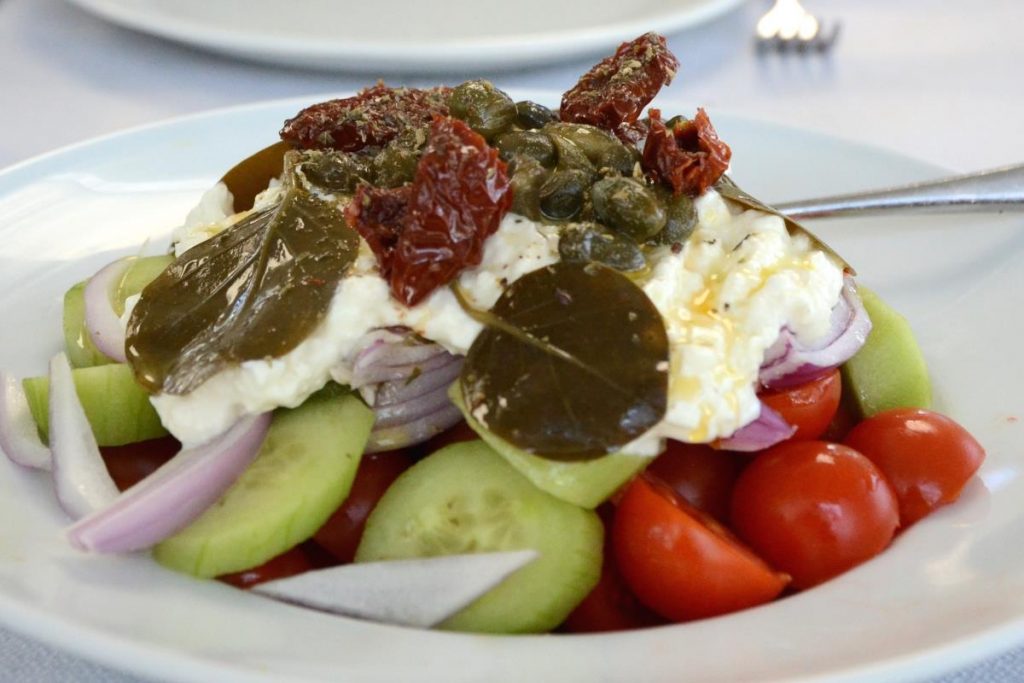
Santorini Salad
8. Outdoor Activities in Santorini
Santorini’s dramatic volcanic landscape — cliffs, calderas, ancient paths, volcanic beaches, and the extraordinary sea that surrounds it all — makes it a more active destination than its glamorous reputation might suggest. Beyond the sunsets and the wine tastings, the island rewards those who want to explore it physically.
- Hiking the Caldera Trail (Fira to Oia): The most spectacular walk in the Cyclades — a 10-kilometre trail along the caldera rim from Fira through Firostefani and Imerovigli to Oia, with the caldera dropping away on one side and the volcanic landscape of the island stretching out on the other. Allow 3–4 hours, go in the morning, carry plenty of water, and arrive in Oia in time for lunch and the sunset. One of the great walks of the Aegean.
- Volcano Boat Tours: A boat excursion to the still-active volcanic islet at the centre of the caldera — walk across fields of hardened black lava, peer into steaming vents, and swim in the naturally warm, sulphur-tinged waters of the surrounding sea. Extraordinary, strange, and utterly unlike anything else in the Greek islands.
- Sea Kayaking the Caldera: Paddle through the caldera on a guided sea kayaking tour — the perspective from water level, looking up at the sheer volcanic cliffs, is completely different from any view available on land and genuinely breathtaking. Several operators offer sunrise and sunset tours for a particularly magical experience.
- Scuba Diving: The volcanic seabed around Santorini offers unusual and fascinating diving — ancient lava formations, hot springs on the sea floor, extraordinary marine life, and excellent visibility. Several dive centres operate from Kamari and Perissa.
- Snorkelling around the island: The clear, deep water around Akrotiri’s volcanic coastline offers outstanding snorkelling — particularly around the base of the Red Beach cliffs, where the underwater volcanic formations are as dramatic as the landscape above.
- Wine Tasting Tours: A guided winery tour taking in two or three of the island’s finest estates — Santo Wines, Venetsanos, Hatzidakis, or Estate Argyros — with a deep dive into the unique viticulture of the kouloura vine-training system. The combination of extraordinary wine, volcanic landscape, and caldera views makes this one of the most civilised outdoor activities available anywhere.
- Sailing the Caldera: A private or shared sailing catamaran tour of the caldera — stopping at the volcano, the hot springs, and the Red and White beaches — is one of the most popular and rewarding activities on the island. Book a sunset sailing tour and watch Oia’s famous sunset from the water for a view that beats any clifftop vantage point.
- Hike to Skaros Rock (Imerovigli): A dramatic trail along the caldera cliffs leading to breathtaking panoramic views of the volcanic islets and the deep blue Aegean below. Quiet, atmospheric, and far from the crowds, it is one of the finest scenic hikes in Santorini and a must for visitors seeking a more immersive connection with the island’s landscape.
- Horseback Riding Through the Vineyards: Several operators offer guided horseback riding tours through Santorini’s interior — through the vineyard landscape, past ancient vines and whitewashed chapels, with views across the island to the caldera. One of the most beautiful and unexpected ways to experience the island’s agricultural heart.
- Cycling the Island: E-bike rental is available across the island and the relatively flat roads of the interior — through the vine-growing villages of Megalochori, Vothonas, and Emporio — offer wonderful cycling routes through Santorini’s less-visited landscape.
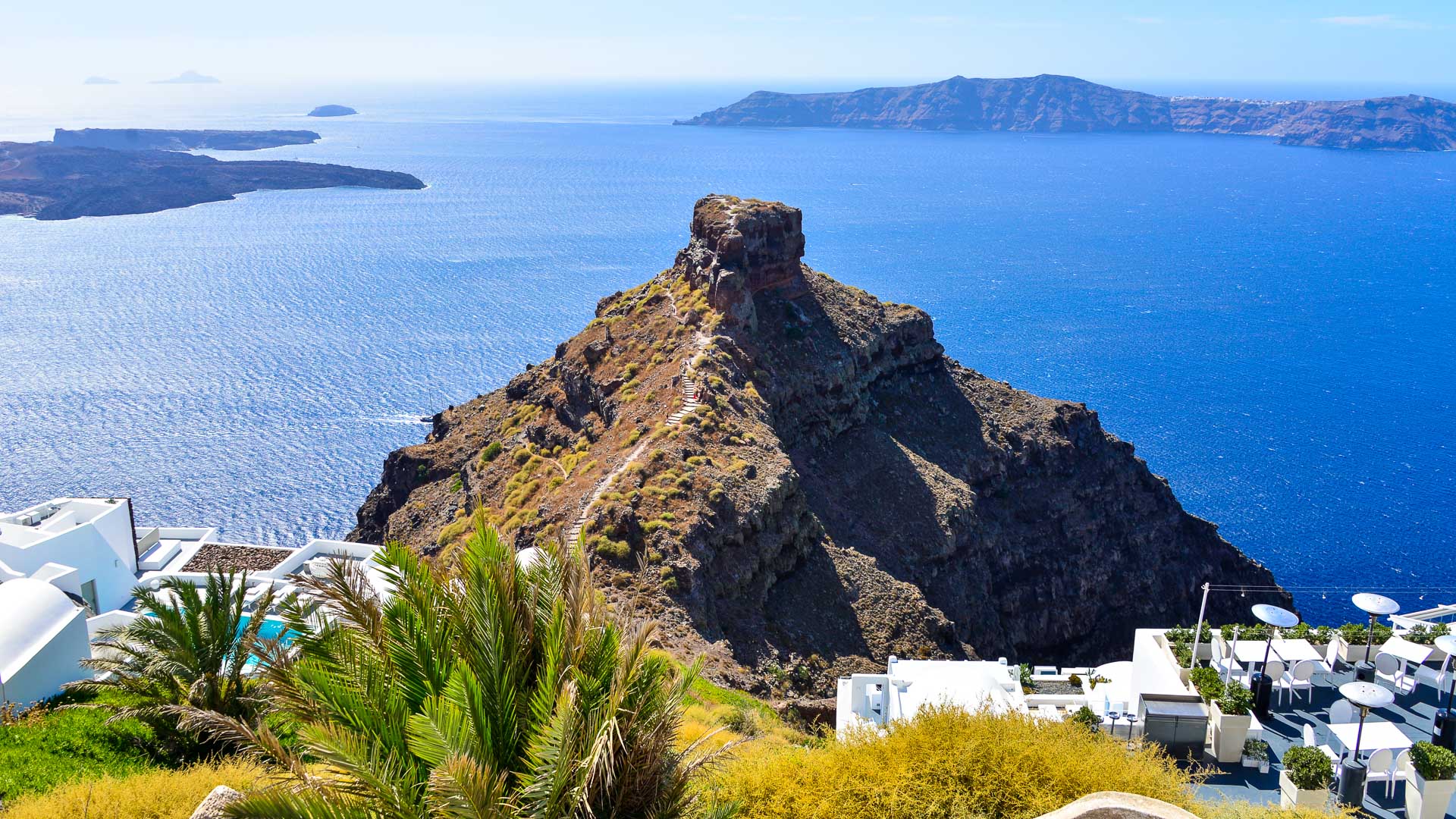
The breathtaking view from Skaros Rock
9. Day Trips from Santorini
Santorini’s position in the southern Cyclades makes it an excellent base for exploring the surrounding island group — and several nearby destinations are well worth a day away from the caldera.
- Thirassia: The small, quiet island directly across the caldera from Santorini — a world away from the tourist intensity of the main island, with a tiny fishing village, excellent seafood, and views back across the water to the Santorini cliffs that are among the finest in the Aegean. Reached by boat in around 20 minutes and offering a glimpse of what Santorini itself might have felt like fifty years ago.
- Ios: Just 45 minutes by ferry — a beautiful island of golden sand beaches, a charming Cycladic chora, and a lively atmosphere that balances relaxed seaside life with well-known nightlife. A wonderful day trip for those who want a classic beach experience alongside Santorini’s volcanic drama.
- Folegandros: One of the most beautiful and unspoilt islands in the Cyclades — a dramatic limestone cliff rising from the sea, a perfectly preserved medieval chora, and a tranquillity that feels like a different world from Santorini’s crowds. Reachable in about 1–1.5 hours by ferry and ideal for a peaceful cultural escape.
- Milos: A volcanic island of extraordinary geological beauty — lunar landscapes of coloured rock, the famous Sarakiniko Beach, sea caves, and crystal waters that make it one of the most visually striking islands in the Aegean. Around 2 hours by high-speed ferry and perfect for an adventurous day on the coast.
- Anafi: A tiny and remote island east of Santorini, known for its wild landscapes, quiet beaches, and authentic Greek island atmosphere. About 1.5 hours by ferry and ideal for travellers seeking solitude and untouched Cycladic scenery.
- Sikinos: A peaceful, traditional Cycladic island with whitewashed villages, vineyards, and slow island rhythms — offering a gentle contrast to Santorini’s energy. Reachable in roughly 1–2 hours and perfect for a relaxed cultural excursion.
- Akrotiri Lighthouse: Not an island but worth treating as a separate excursion — the southernmost tip of Santorini, where a 19th-century lighthouse stands above sheer volcanic cliffs and the views across the open Aegean are among the most dramatic on the island. Particularly magnificent at sunset and far removed from the crowds.
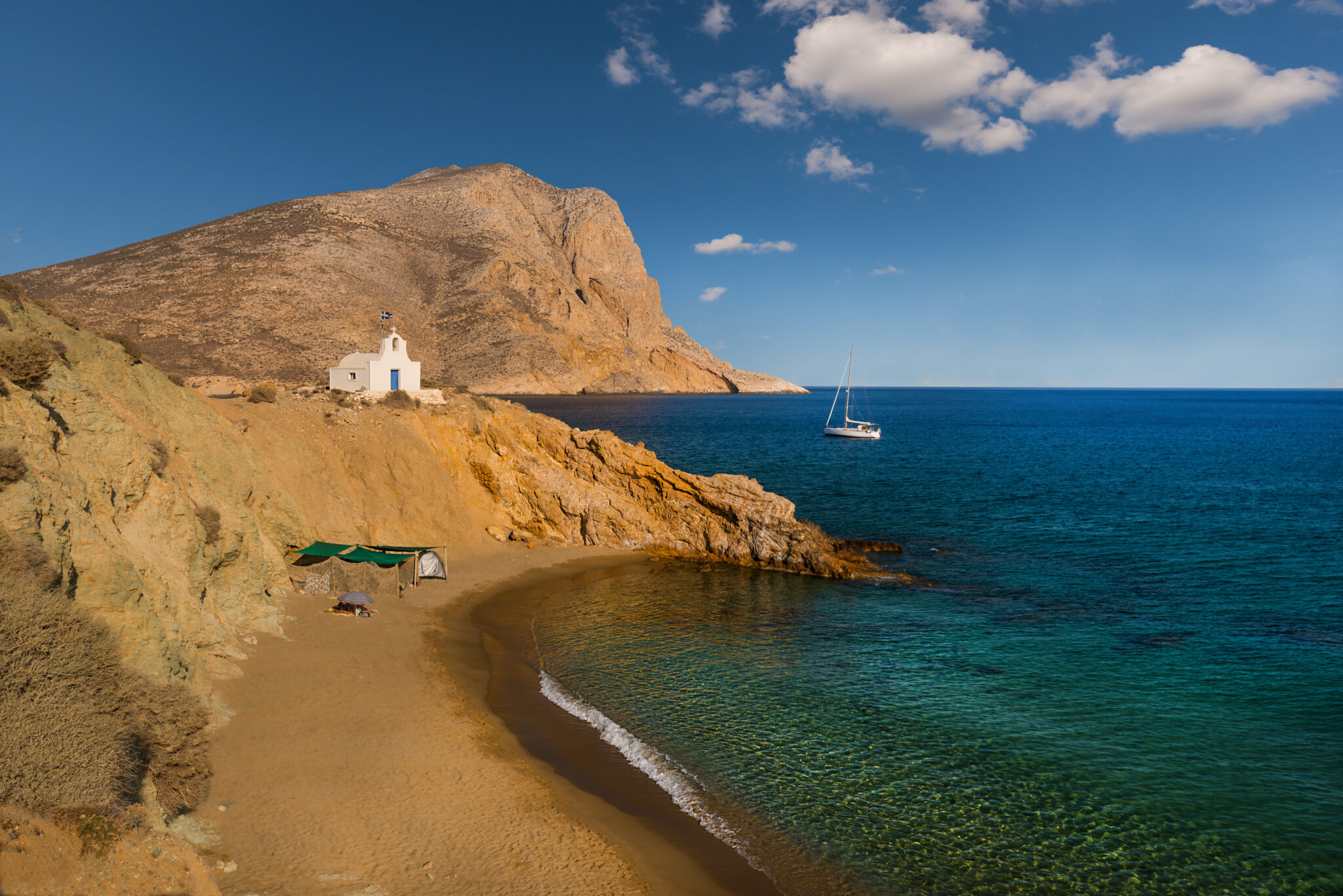
Anafi Island. the tiny neighbor of Santorini
10. Accommodation Options in Santorini
Santorini offers some of the most spectacular hotel experiences in the world — cave suites carved into the caldera cliff, infinity pools hovering above the volcano, and sunset views from private terraces that justify every penny of the considerable expense. The island also offers a growing range of excellent mid-range and boutique options, particularly in the less-visited villages of the interior. Book as far in advance as possible — the best properties on the caldera rim sell out months ahead for the summer season.
Book a minimum of 3–4 months in advance for spring travel and 6 months ahead for July and August. The caldera-view properties fill extraordinarily quickly.
The best hotels in Santorini
- Anamar Santorini Hotel: 4★ hotel near the beach in Monolithos, offering comfortable rooms and breakfast, ideal for relaxed and affordable stays.
- Maistros Village Hotel: 5★ adults-friendly hotel in a great location with pool and traditional Cycladic style, close to Fira.
- Meroviglia Boutique Hotel: Boutique accommodation with beautiful views and peaceful atmosphere, perfect for couples and quiet stays.
- Above Blue Suites: Elegant caldera-view suites with private pools and romantic setting, one of the most popular premium stays.
- Alta Vista Suites: Stylish 4★ suites with panoramic caldera views and excellent location near Fira.
- Aplai Dome: Traditional Cycladic hotel in Oia offering quiet surroundings, sea views, and authentic island character.
- Art Hotel Santorini: Boutique hotel with artistic design and scenic views over the island and vineyards.
- En Plo Boutique Suites: Seaside boutique suites combining privacy, sea views, and modern Mediterranean design.
- Rocabella Santorini Hotel & SPA: Luxury hotel with spa, infinity pool, and spectacular caldera views, ideal for romantic holidays.
- Mr & Mrs White Santorini: Modern 4★ hotel with clean Cycladic aesthetics and a peaceful location near Oia village.
Find more hotel offers in Santorini, here!
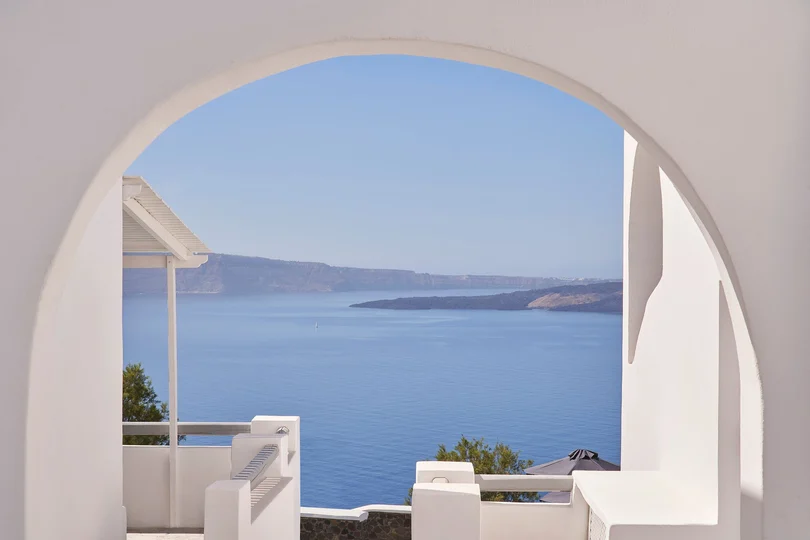
Mr and Mrs White Santorini Hotel
11. Local Transportation and Getting Around Santorini
Santorini is a compact island — approximately 18 kilometres long and 6 kilometres wide at its broadest point — but its hilly terrain, winding roads, and the distances between the main villages make having a plan for getting around important.
Car Rental: Comfortable and strongly recommended for families, older travellers, or those planning extensive exploration. Book well in advance for summer — vehicles are limited and demand is high.
Local Bus (KTEL): A remarkably efficient and affordable bus network connects Fira with Oia, Perissa, Kamari, Akrotiri, and the airport. The central bus station is in Fira and timetables are available online. For budget-conscious travellers covering the main routes, the bus is excellent.
ATV / Quad Bike Rental: The classic Santorini transport solution — fun, flexible, and ideal for navigating the island’s roads and reaching the beaches. Available from rental shops across the island at reasonable daily rates. Drive carefully — the roads are narrow and winding, and the traffic in summer can be heavier than expected.
Cable Car (Fira): The cable car connecting Fira town to the old port (Fira Skala) below is a Santorini institution — a short but dramatic descent with sweeping caldera views. Alternatively, descend (and ascend) the 588 zigzagging steps on foot or by donkey, as travellers have done for centuries.
Taxi: Available across the island but very limited in number and extremely difficult to find during peak season without a pre-booking. Always arrange airport and port transfers the day before through your accommodation.
Boat: In summer, boat services connect Fira, Oia, Akrotiri, and the beaches — a wonderful way to experience the island from the water and reach otherwise inaccessible coves.
Walking: The caldera trail from Fira to Oia is the finest walk on the island and requires no transport at all. The villages of Oia, Fira, Imerovigli, and Firostefani are all best explored entirely on foot — their marble-paved lanes are too narrow for vehicles and too beautiful to rush through in a taxi.
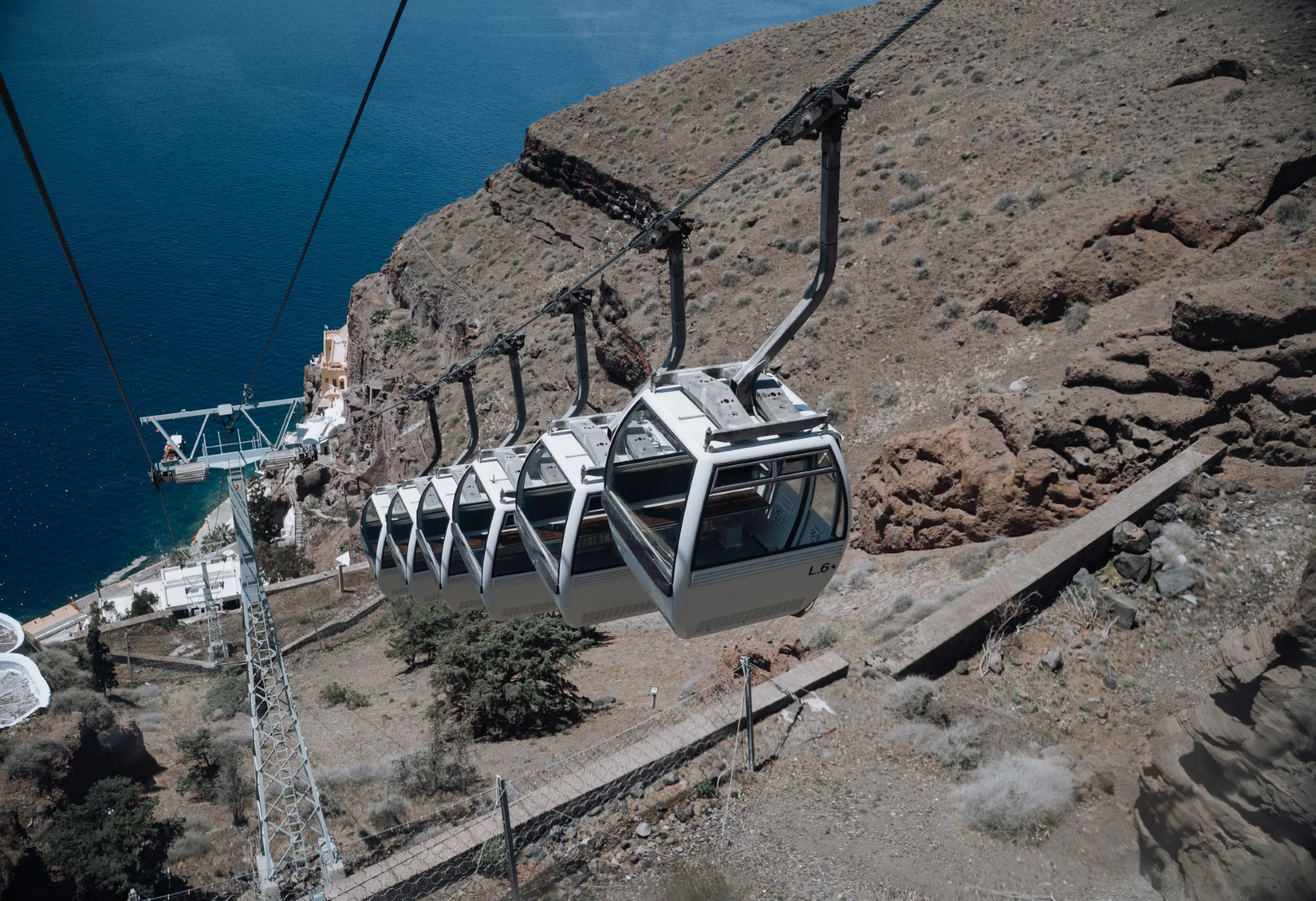
The Cable Car of Santorini
12. Safety and Travel Tips for Santorini
Every Santorini travel guide UK 2026 should include key safety information — and the good news is that Santorini is one of Europe’s safest holiday destinations for UK travellers.
Santorini is an extremely safe island with very low crime rates and a well-developed tourist infrastructure. The main considerations for visitors are environmental and logistical rather than safety-related — the heat, the terrain, and the sheer volume of visitors in peak season require a degree of planning that will make the difference between a magical experience and a frustrating one.
- Nightlife and Evening Safety: Santorini stays lively late into the night, especially in Fira and Oia. The island is generally safe, but take care on narrow streets, cliffside paths, and poorly lit steps when walking after dark.
- Heat and Sun Exposure: Summer temperatures can be intense, particularly in July and August. Plan sightseeing early or late in the day, wear sunscreen, and always carry water.
- Medical Facilities: Santorini has a main hospital in Fira and several private clinics. Travel insurance with emergency and evacuation coverage is strongly recommended.
- Pharmacies (Farmakeio): Pharmacies are well-stocked and easy to find in main villages. Pharmacists can assist with minor health issues and basic medications.
- Photography: Photography is allowed in most public areas and sites for personal use. Respect private property and drone restrictions in archaeological or caldera areas.
- Language: English is widely spoken across the island. Learning a few Greek phrases like Kalimera and Efcharisto is always appreciated.
- Currency and Payments: The Euro (EUR) is used throughout Santorini. Cards are widely accepted, but small cash amounts are useful for taxis, cafés, and small shops.
- Dining and Reservations: Restaurants fill quickly during sunset hours and peak season. Booking in advance is recommended, especially for caldera-view dining.
- Tipping: Tipping is not mandatory but appreciated. Around 5–10% in restaurants or rounding up the bill is common practice.
- Electrical Outlets: Santorini uses Type C and F plugs with 230V voltage. A travel adapter is needed for non-European devices.
- Cultural Respect: Dress modestly when visiting churches and religious sites. Respect local customs and quiet residential areas.
- Tap Water: Tap water is safe for washing and brushing teeth, but bottled water is usually preferred for drinking due to mineral taste.
Emergency Numbers — Save These just in case!
- Police: 100
- European Emergency Number: 112
- Medical Emergency: 166
- Fire Department: 199
- Santorini Port Authority: +30 22860 22239
- Santorini General Hospital: +30 22860 22237
- British Embassy in Athens: +30 210 727 2600
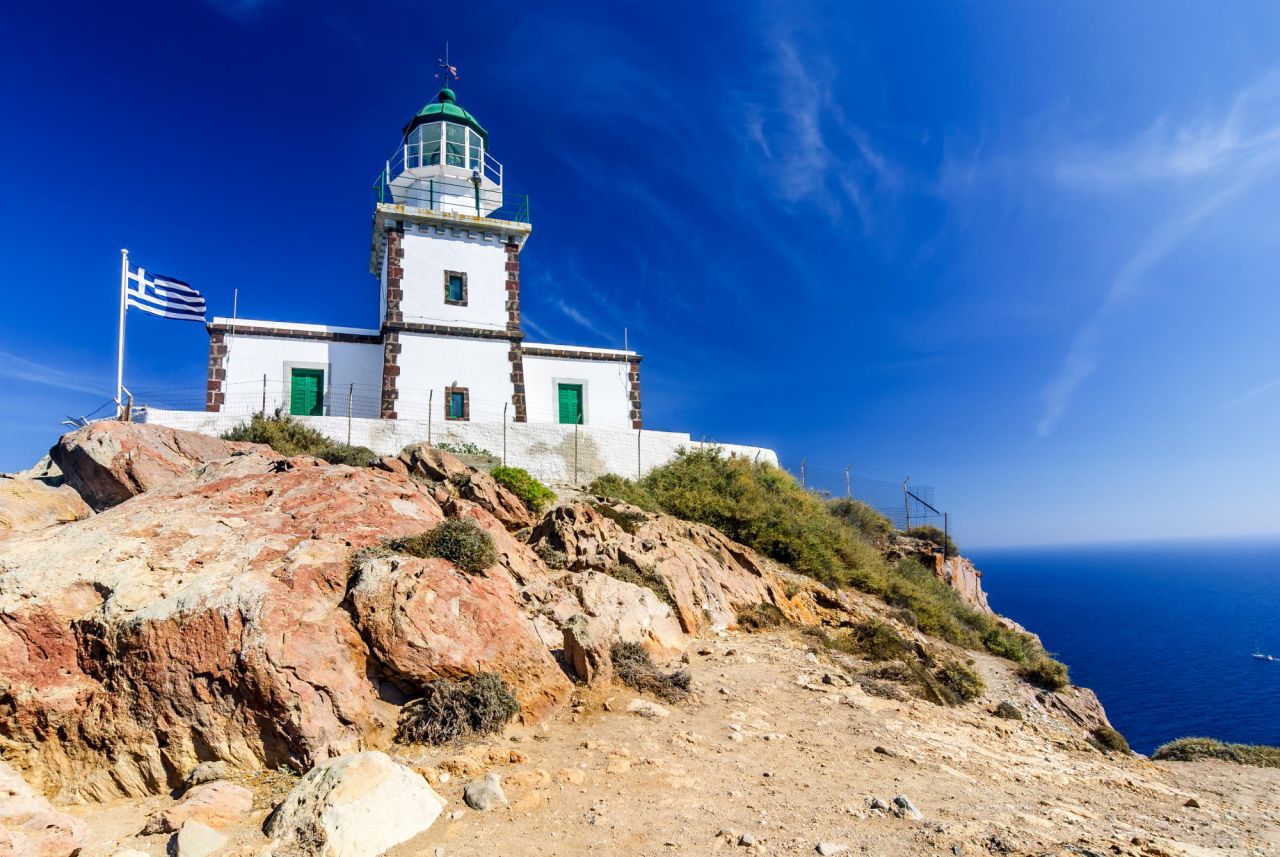
Akrotiri Lighthouse
This Santorini travel guide UK 2026 would not be complete without answering some of the most frequently asked questions from travellers planning their trip.
13. Interesting FAQs About Santorini
Santorini isn’t just a postcard-perfect island—it’s a place shaped by dramatic geology, ingenious architecture, and centuries of adaptation to a challenging environment.
Here are 10 fascinating questions and answers that reveal what makes it truly unique!
Why is Santorini shaped like a crescent?
Is Santorini connected to the lost city of Atlantis?
Some historians believe the advanced civilization destroyed by Santorini’s eruption may have inspired the legend of Atlantis described by Plato, but there is no definitive evidence to confirm this theory.
Why are Santorini’s beaches different colors?
The island’s volcanic history created beaches with black, red, and white sands, formed from lava, ash, and mineral-rich rock rather than typical sand.
What makes Santorini wine unique?
Santorini’s Assyrtiko wine is shaped by volcanic soil and extreme winds. Vines are grown in low, basket-shaped coils (kouloura) to protect grapes and retain moisture in the dry climate.
What is the “tomato industry” of Santorini?
Is Santorini still an active volcano?
Yes, the volcanic system is still active, particularly around Nea Kameni, though activity is closely monitored and eruptions are infrequent.
What makes Akrotiri different from other ancient ruins?
Akrotiri reveals an advanced city with multi-story buildings, indoor plumbing, and drainage systems. Notably, no human remains have been found, suggesting residents evacuated before the eruption.
Why are many paths and rooftops in Santorini curved rather than flat?
The island’s architecture evolved to handle strong winds and earthquakes. Curved edges and organic shapes help distribute stress more evenly, making buildings more resilient while also reflecting traditional hand-built construction methods.
Why are Santorini sunsets considered some of the best in the world?
The combination of caldera views, reflective white architecture, and the sun setting over the Aegean Sea creates intense colors and dramatic lighting, especially in Oia.
Why are many Santorini homes built into the cliffs?
Traditional cave houses (yposkafa) were carved into volcanic rock to provide natural insulation, keeping interiors cool in summer and warm in winter, while also protecting residents from strong winds and past pirate raids.
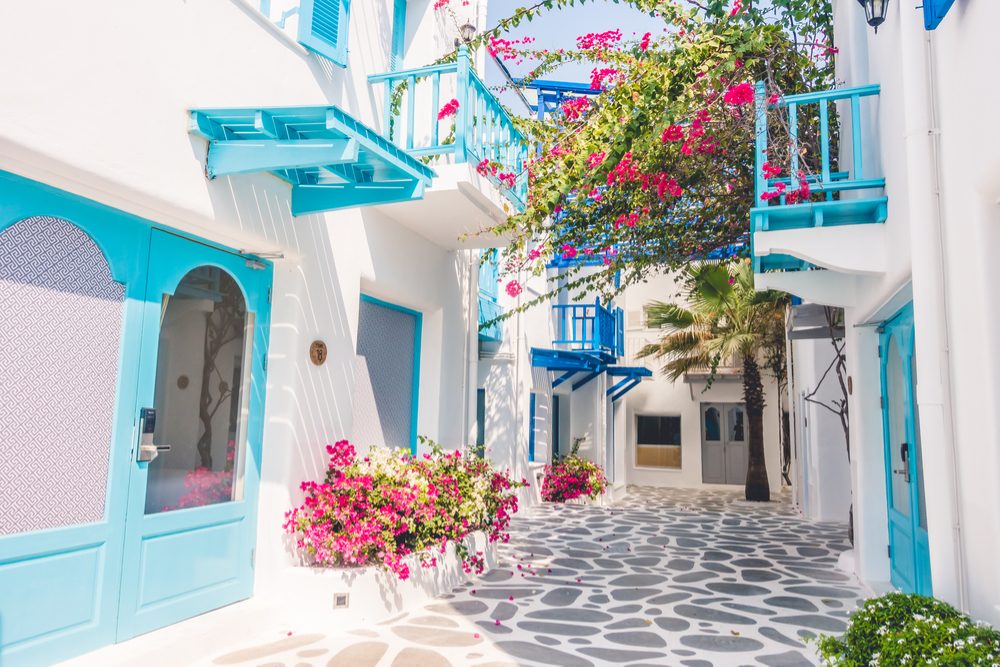
The narrow streets of Fira in Santorini
14. Santorini: Where the Earth Reminds You Who Is in Charge
Santorini is not a gentle island. It was born from catastrophe, shaped by fire, and it carries that history in every cliff face, every black sand beach, every vine trained low against the volcanic earth. It is dramatic in the way that only places forged by genuine geological violence can be — and that drama, that sense of standing on something that is still, quietly, alive beneath your feet, is what separates Santorini from every other beautiful island in the Mediterranean.
Come for the sunset over the caldera, by all means. Come for the cave hotels and the Assyrtiko and the white lanes of Oia in the early morning light. But stay long enough to walk to Akrotiri and stand in a city that was buried for three thousand years. Long enough to sail across the caldera and set foot on the volcano. Long enough to drink wine from vines that have grown in this soil since the Bronze Age and taste, in a single glass, everything the island has survived.
That is when Santorini stops being a postcard and becomes something you carry with you forever.
We hope this Santorini travel guide UK 2026 has everything you need to plan an unforgettable visit. Santorini truly is one of the world’s most spectacular destinations, and the island is waiting to surprise you.
Kalo taxidi — happy travels to extraordinary Santorini. 🌋🍷
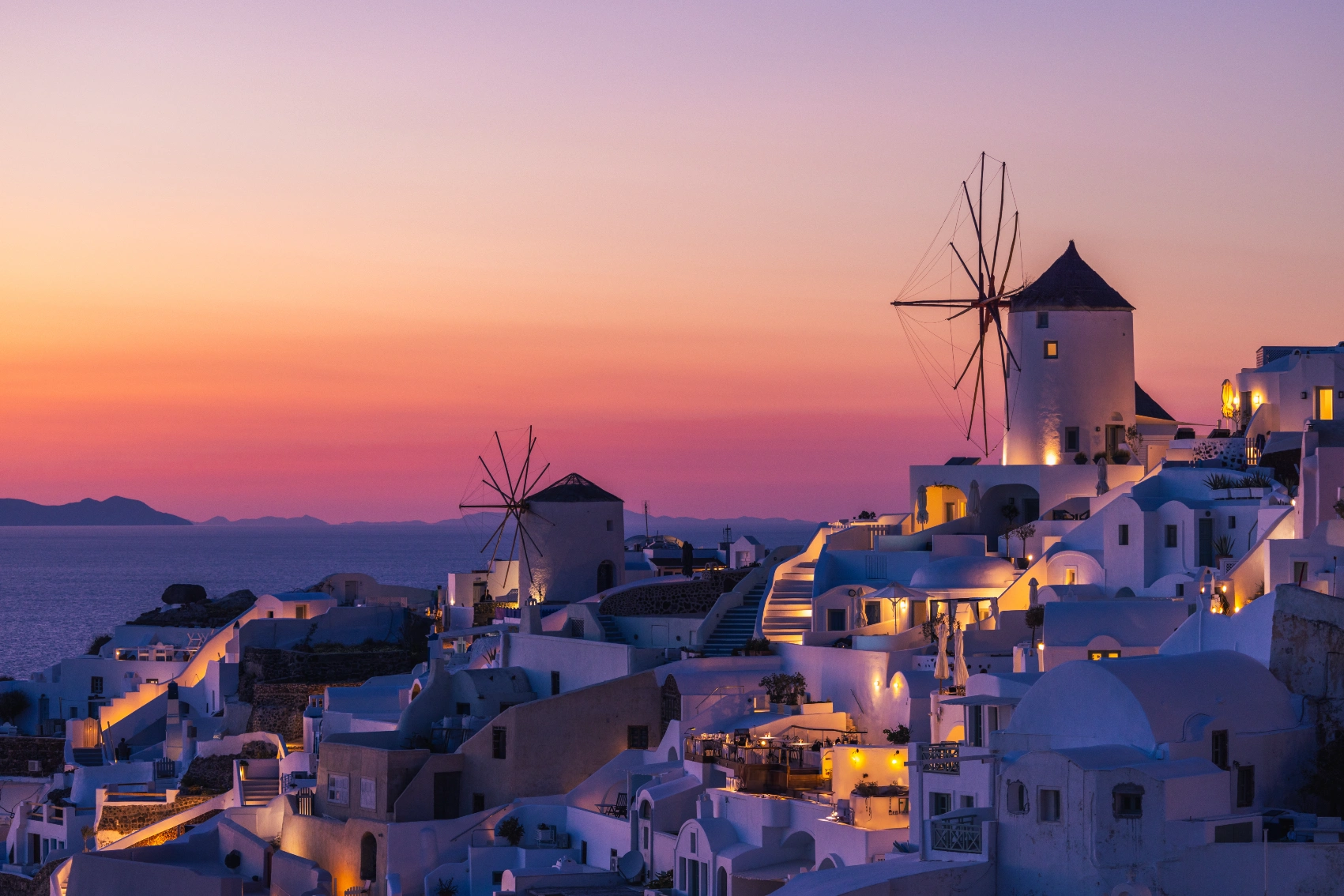
The one of a kind sunset of Santorini
If you’re also considering other destinations, we have more travel guides to discover. Don’t miss our guide for Athens!