

Rhodes is sun, sea, and stone: a Greek island where medieval walls rise above the Aegean and ancient alleyways still echo with knights and merchants. Greece’s fourth-largest island and the capital of the Dodecanese, it offers beaches, fortresses, mountain villages, wild capes, excellent wine, and a lively cosmopolitan town.
Welcome to this comprehensive Rhodes travel guide — everything you need to plan your trip to one of Greece’s most extraordinary islands. Whether you’re exploring for the first time or returning, this guide covers the best attractions, beaches, food, hotels, and practical travel tips.
A UNESCO-listed medieval city, ancient acropolises, a legendary lost Colossus, and some of the most beautiful beaches in Greece — all on one extraordinary island in the Dodecanese!
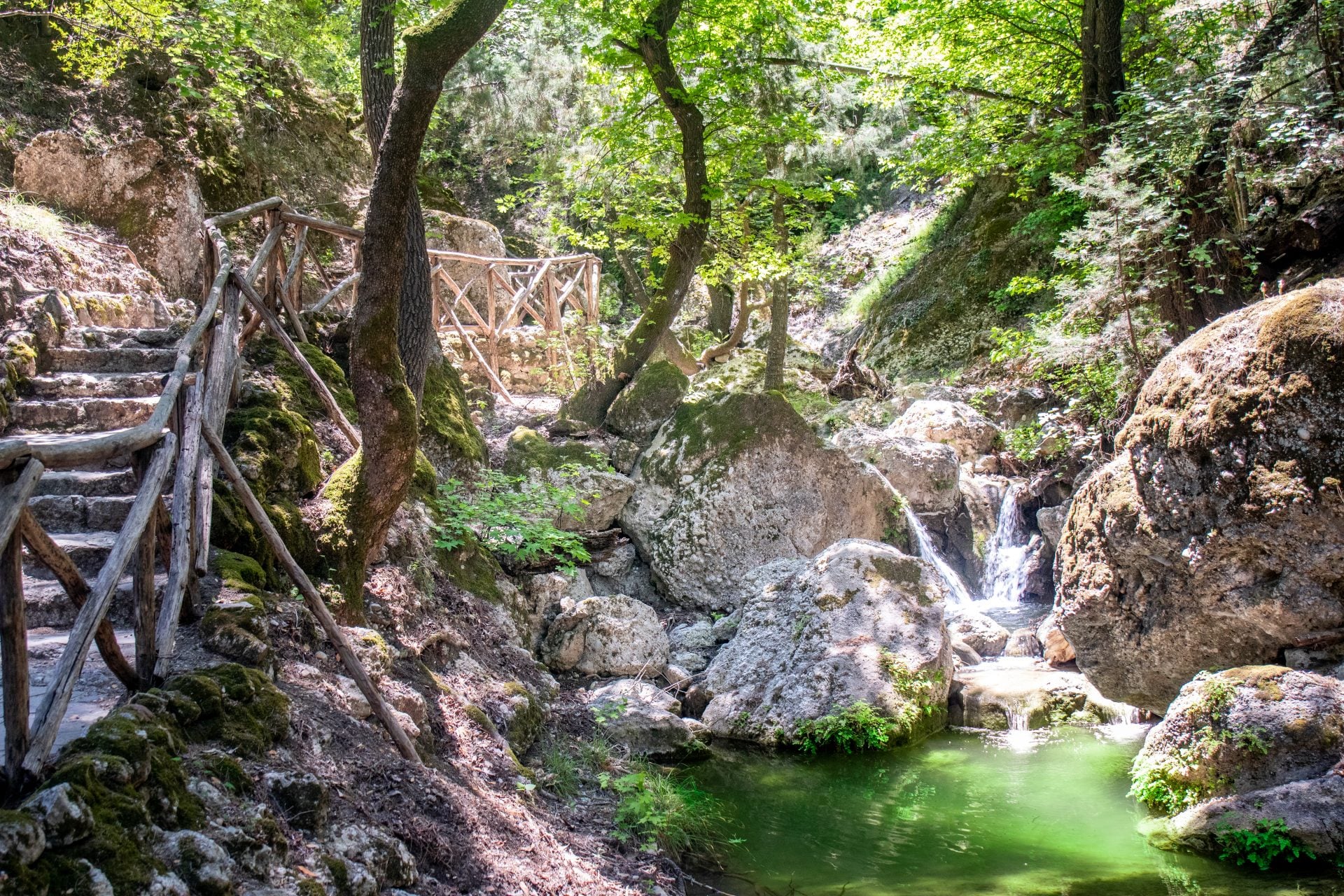
The Valley of Butterflies
Rhodes International Airport “Diagoras” (RHO) sits approximately 14 kilometres southwest of Rhodes Town — a relatively compact airport with a single terminal handling both domestic and international flights. Getting there from the UK is easier than you might imagine.
Direct Flights Direct flights from the UK to Rhodes (RHO) are plentiful during the main season (roughly April to October), with a flight time of approximately 4 hours 10 minutes from London.
Via Athens Year-round, you can fly to Athens International Airport (ATH) with British Airways, easyJet, or Ryanair, then connect to Rhodes with Aegean Airlines or Olympic Air on a domestic flight of around 45 minutes. This is the best option for winter travel when direct UK-Rhodes routes are limited.
By Ferry For the adventurous — or those already island-hopping — Rhodes is well connected by ferry from Piraeus (Athens) (approx. 15–18 hours, overnight sailings available), and from neighbouring islands including Kos, Symi, Santorini, and Crete.
From the Airport to Rhodes Town
Practical tip: book direct flights 6–8 weeks in advance for the best fares in peak season. Budget airlines fill up quickly for July and August.
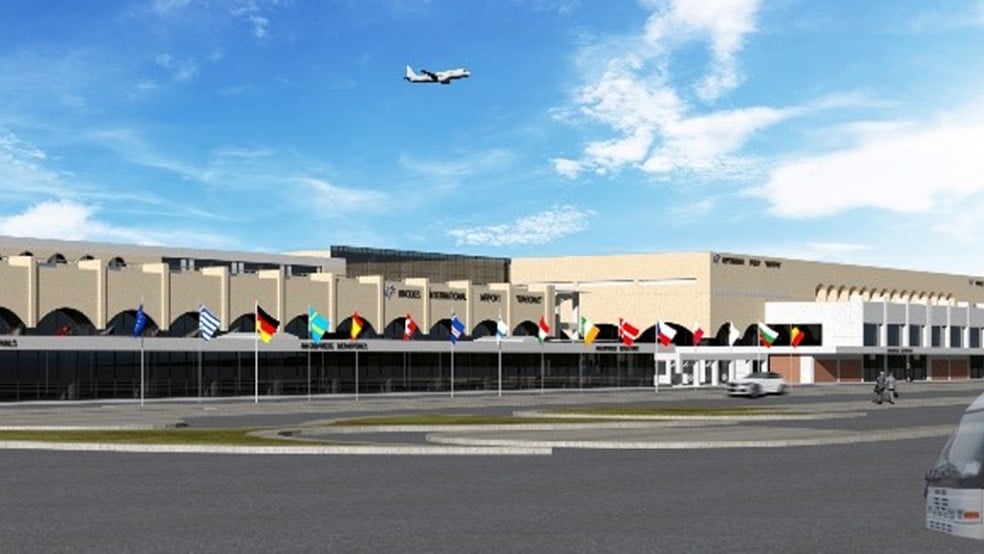
Rhodes International Airport “Diagoras”
Rhodes enjoys one of the sunniest climates in all of Europe — the island claims some 300 days of sunshine per year, a boast supported by anyone who has visited in summer and found themselves melting contentedly on a beach by 10am. The climate is classic eastern Mediterranean: hot and dry in summer, mild and occasionally rainy in winter, with the most benign conditions in spring and early autumn. Check the daily forecast here.
| Month | Avg Temp
(°C) |
Rainfall | Sunshine
(hrs/day) |
Crowd
Level |
|---|---|---|---|---|
| January | 12°C | Moderate | 5 | Very Low |
| February | 13°C | Moderate | 6 | Very Low |
| March | 15°C | Light | 7 | Low |
| April | 19°C | Light | 8 | Low |
| May ✓ | 23°C | Minimal | 10 | Medium |
| June | 28°C | Minimal | 12 | High |
| July | 31°C | None | 13 | Very High |
| August | 31°C | None | 13 | Very High |
| September ✓ | 27°C | Minimal | 11 | Medium |
| October ✓ | 23°C | Light | 9 | Low-Medium |
| November | 18°C | Moderate | 6 | Very Low |
| December | 14°C | Moderate | 5 | Very Low |
Best Season to Visit: May is, without question, one of the finest months to come to Rhodes. The sea is warm enough for swimming, the wildflowers are still out on the hillsides, the medieval Old Town has not yet been engulfed by the summer crowds, and the light — that particular golden quality of late-spring Aegean light — is simply extraordinary. September and October are equally compelling, as the sea retains its summer warmth, prices drop, and the pace of the island slows to something genuinely civilised.
In May you also catch the Medieval Rose Festival, which brings the Old Town to spectacular life. July and August are glorious but stiflingly hot — often exceeding 35°C — and extremely busy; go if you love the full-throttle energy of a Mediterranean summer, but book everything months in advance.
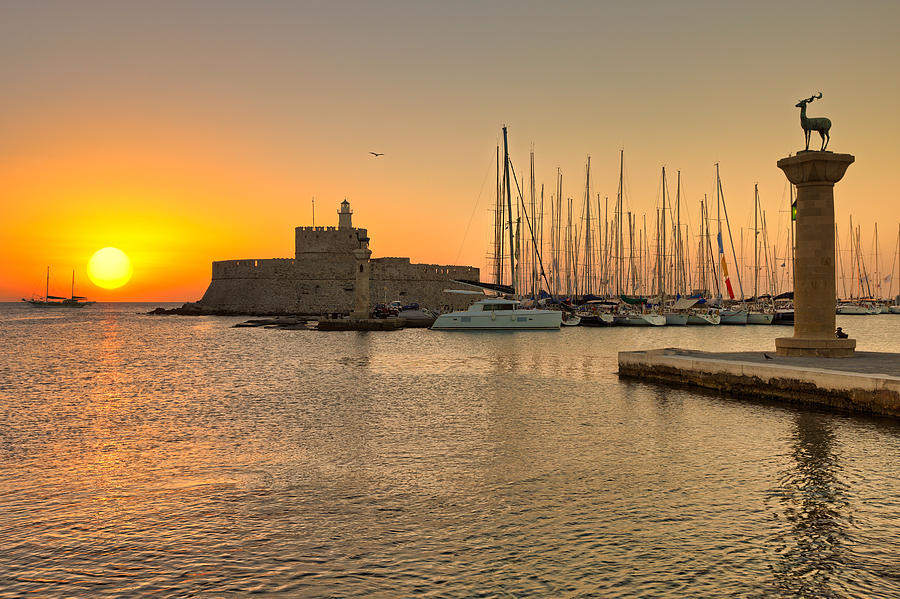
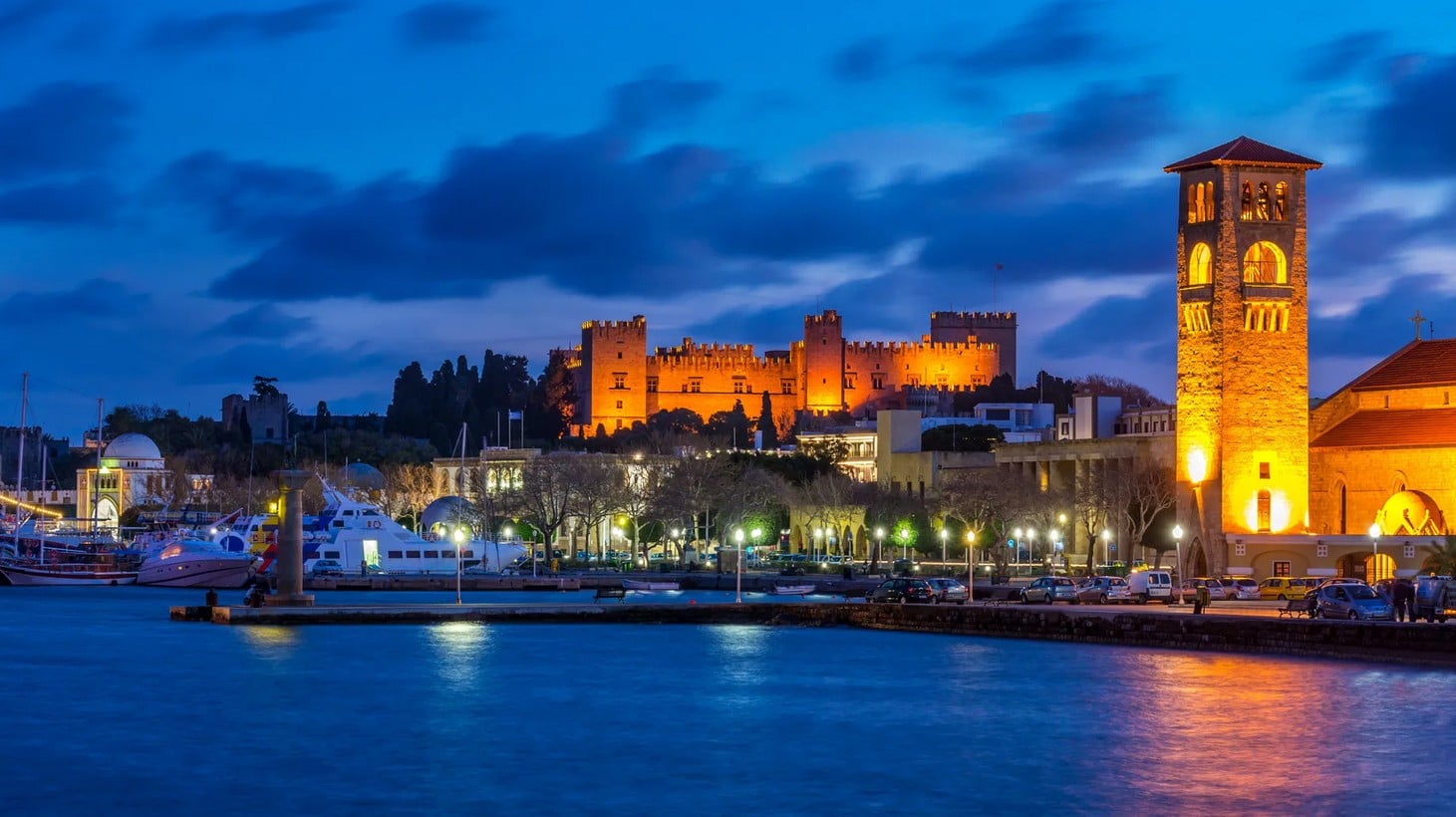
Sunset at Mandraki Port
Rhodes Old Town: The medieval Old Town is the reason many people come to Rhodes, and it delivers everything the anticipation promises — and more. Enclosed within walls up to twelve metres thick, this UNESCO World Heritage Site is home to some 6,000 permanent residents who somehow manage to live inside a functioning 14th-century city. Wander the cobbled streets at dawn, when the light slants across the stone and the cats have the alleys to themselves, and you will understand why this is considered one of the most evocative medieval urban environments anywhere in Europe.
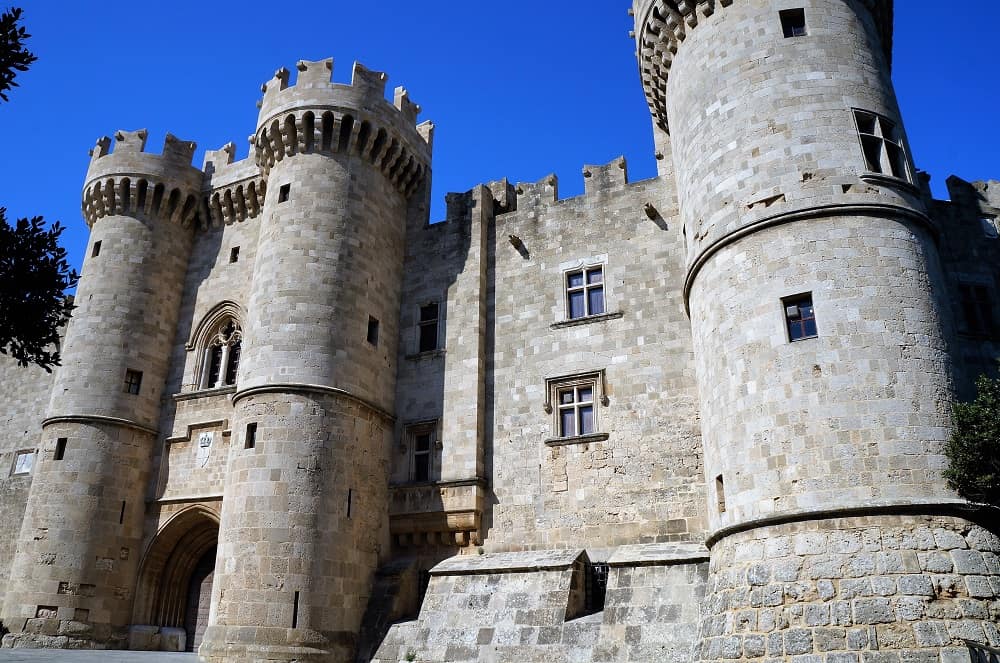
Palace of the Grand Master of the Knights: The Palace of the Grand Master is a medieval fortress of theatrical grandeur — turreted, crenellated, built on the foundations of an ancient temple to Helios where the Colossus may once have stood. After decades of dilapidation, it was extensively restored by the Italians in the 1930s and used as a holiday retreat by Mussolini. Today it houses a museum with remarkable floor mosaics from the island of Kos, medieval weaponry, and exhibits on the island’s long history. The scale of the place — its vast halls, its dry moat — remains genuinely impressive.
Street of the Knights (Ippoton): Running straight as an arrow from the Palace of the Grand Master down to the Hospital of the Knights, this is one of the best-preserved medieval streets in the world. Each “Inn” along its length was built by a different national contingent of the order — you can trace England, France, Provence, Aragon — their doorways carved with heraldic shields, the stone worn smooth by five centuries of feet. Walk it in the early morning before the tour groups arrive and the past feels very close.
Acropolis of Lindos: Forty-five kilometres south of Rhodes Town, the village of Lindos clusters white-washed and improbable beneath a rocky promontory on which sit the ruins of one of the most dramatic ancient acropolises in Greece. The Temple of Athena Lindia, dating from the 4th century BCE, crowns a cliff face that drops almost vertically to the impossibly blue St. Paul’s Bay below — tradition holds that the apostle himself sheltered here. The climb is steep and merits an early start; the view from the top is among the finest things you will see in the Aegean.
Mandraki Harbour: The ancient harbour of Rhodes is guarded today by two bronze deer — a stag and a doe — standing on columns at the harbour mouth where, legend insists, the feet of the Colossus once straddled the sea. The harbour is lined with windmills, the elegant St. Nicholas Fortress guards its entrance, and the Italian-era buildings along the promenade give the whole scene an unexpectedly graceful, civic atmosphere. Sit at a waterfront café in the late afternoon and watch the yachts and excursion boats come and go.
Valley of the Butterflies (Petaloudes): Inland from the west coast, a narrow, shaded gorge fills each summer with hundreds of thousands of Jersey tiger moths — locally and lovingly mislabelled “butterflies” — drawn by the resin of the sweet-gum trees lining the stream. Wooden walkways wind through the dappled green light between June and September, the moths resting on trunks and leaves in extraordinary coppery congregations. It is one of the more quietly magical natural spectacles in Greece.
Kallithea Springs (Kallithea Therme): A Moorish-Italianate fantasy of domes and archways built in the 1920s over natural thermal springs, Kallithea was for decades left to gentle ruin before being magnificently restored. It now functions as a cultural centre, open-air event space, and — most pleasurably — a place to swim in the clearest water, from terraced platforms that step down into a small bay of breathtaking blue-green clarity. The architecture alone is worth the trip.
Archaeological Museum of Rhodes: Housed in the medieval Hospital of the Knights in the Old Town — a beautiful Gothic building in itself — the Archaeological Museum holds an outstanding collection from ancient Rhodes and the surrounding Dodecanese islands. The star exhibit is the Aphrodite of Rhodes, a marble statue of the goddess emerging from the sea, her gaze distant and unhurried, which has been drawing visitors’ breath for centuries.
Ancient Kameiros: On the northwestern coast, the ruins of one of Rhodes’ three original city-states lie spread across a hillside above the sea — largely unrestored and all the more affecting for it. Kameiros was abandoned in antiquity and remained buried until excavation in the 19th century, meaning its streets, water cisterns, and temple foundations have a quiet authenticity that more famous sites can rarely match.
Tsambika Beach and Monastery: Midway down the eastern coast, Tsambika is one of the finest beaches on the island — a wide arc of golden sand with shallow, warm water, backed by a steep hill topped by a tiny Byzantine monastery. The beach attracts crowds in summer; the monastery, reached by 350 steps, is visited by women who climb barefoot hoping to be blessed with a child, and any baby born of the miracle is named Tsambikos or Tsambika. Few places in Greece so effortlessly interweave the ancient and the living.
Prasonisi Cape: At the island’s southernmost tip, a narrow sand bar connects the main island to a small peninsula — a geographical curiosity that places the windy Aegean on one side and the calmer Mediterranean on the other. The result is a wind-surfer’s paradise and one of the most dramatic coastal landscapes in the Dodecanese. Come here for the spectacle even if you have no intention of getting on a board.
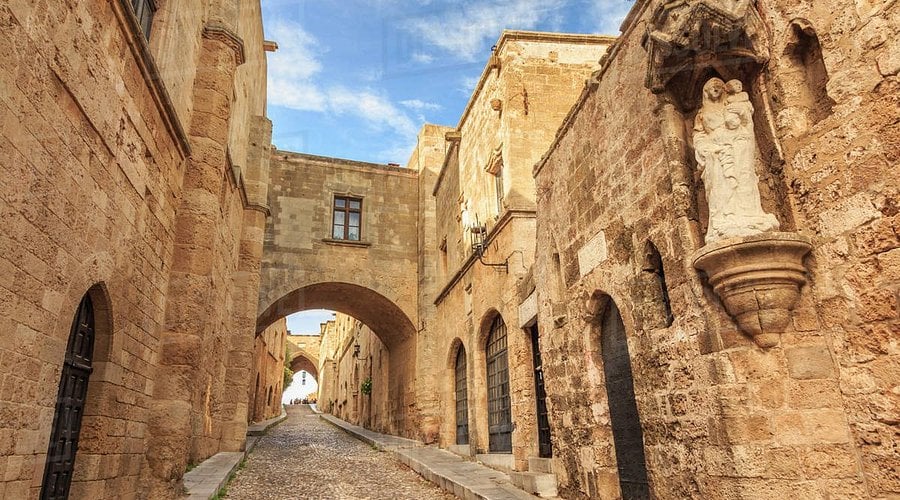
Street of the Knights
Rhodes has one of the most distinctive and layered food cultures of any Greek island, shaped by every civilisation that has passed through — ancient Greek, Roman, Ottoman, Italian, Sephardic Jewish — each leaving aromatic traces in the local kitchen. Olive oil is produced here with fervid local pride; wine has been made on the island since antiquity; and the spice routes that once ran through the Aegean brought flavours to Rhodian cooking that you won’t easily find elsewhere in Greece.
Pitaroudi: A savoury fried chickpea fritter unique to Rhodes — crunchy, golden, and best eaten as a meze with local wine.
Melekouni: The island’s signature sweet: sesame seeds and honey pressed into a dense, sticky confection traditionally given at weddings.
Makarounes: Handmade pasta squares tossed with caramelised onions and local cheese, a rustic village dish now returning to modern Rhodian menus.
Cuttlefish ink risotto: Made famous by Mavrikos in Lindos, this jet-black seafood risotto shows Rhodes at its most distinctive and coastal.
Rabbit stifado: A slow-braised rabbit stew with pearl onions, cinnamon, cloves, and red wine — earthy, aromatic, and deeply Eastern Mediterranean.

Pitaroudia
Mavrikos, Lindos: A family restaurant founded in 1933 and mentioned in the New York Times — the gold standard for Rhodian cuisine, built on local ingredients and decades of culinary authority.
Nomad Mediterranean Gastronomy, Rhodes Town: A restaurant inside a magnificent Medieval-era mansion with a courtyard; sophisticated Mediterranean-Eastern fusion and legendary desserts.
Mama Sofia, Old Town: A warm, family-run spot tucked in the medieval labyrinth, beloved for its generous, unfussy traditional Greek dishes served with genuine hospitality.
Tamam, Old Town: A buzzing corner restaurant offering Greek and Middle Eastern flavours in generous tapas-style portions — excellent shrimp saganaki and honey-glazed lamb.
Paraga, Apollona village: A rustic open-air space in an inland village run by a legendary local chef — some of the best mezze in all of Greece, served at long shared tables with wood-fired bread.
Barbarossa Seaside, Rhodes Town: Timed for sunset, this waterfront spot transforms into one of the island’s most atmospheric dining experiences.
Stegna Kozas, Stegna Bay: A fish taverna right on the beach — fresh fish and baby octopus served with sea views and no pretension whatsoever.
For more restaurants in Rhodes, check here!
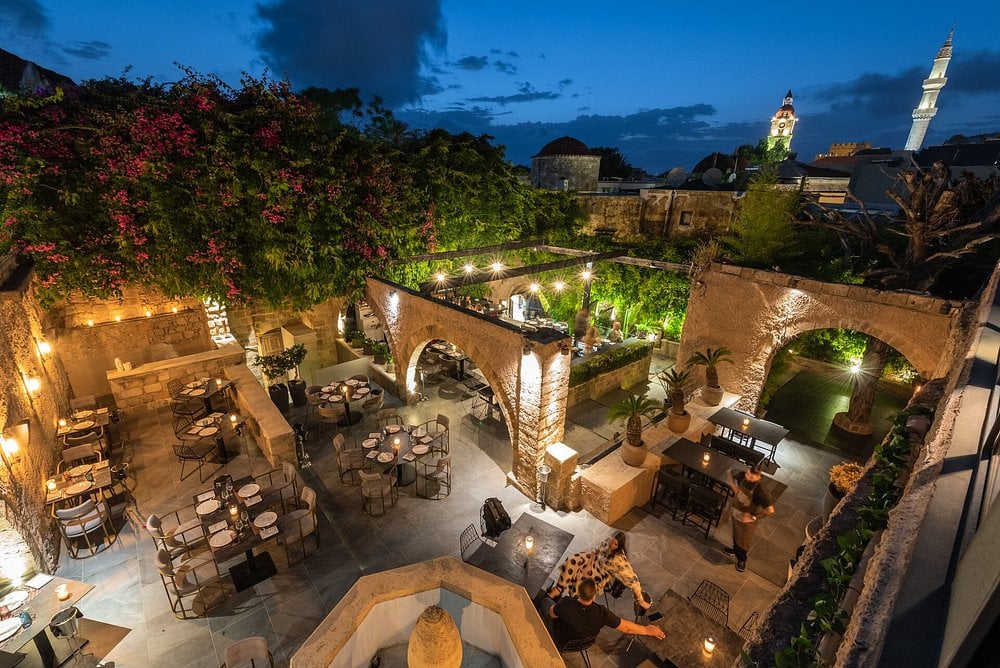
Nomad Restaurant
Windsurfing and Kitesurfing at Prasonisi: At Rhodes’ southernmost cape, the confluence of two seas creates conditions that attract serious windsurfers and kitesurfers from across Europe. Several operators offer lessons for beginners and equipment hire for the experienced. The spectacle of dozens of brightly coloured sails above the double beach is impressive even if you never get in the water.
Hiking the Lindos Acropolis Path: The walk up through Lindos village to the ancient acropolis is short but steep, rewarding you with panoramic views over St. Paul’s Bay and the Aegean. Go at opening time (8am) in summer to beat the heat and the crowds. Comfortable shoes are essential; the path is flagged stone and uneven.
Diving and Snorkelling: The clear Aegean waters around Rhodes offer exceptional underwater visibility. Several certified dive centres — including around Anthony Quinn Bay and Kallithea — offer both guided dives for beginners and more advanced reef and wreck dives. The famous emerald bay at Anthony Quinn was named for the Mexican-American actor who bought the cove while filming Guns of the Navarone on the island in the 1960s.
Valley of the Butterflies Walk (Petaloudes): The shaded woodland walk through the Valley of the Butterflies is one of the most pleasant easy hikes on the island — wooden walkways, a stream, the occasional waterfall, and from June to September the extraordinary sight of hundreds of thousands of moths resting on every surface. Allow 1–2 hours and go quietly; loud noises disturb the moths and can actually harm them.
Cycling and Mountain Biking: Cycling is increasingly popular across Rhodes, with quiet roads threading through the island’s interior villages — Embonas, Sianna, Laerma — past olive groves and medieval chapels. For the more adventurous, off-road mountain biking trails wind through the forested hills of the island’s interior; several operators in Rhodes Town offer guided tours.
Sea Kayaking: Sea kayaking tours depart from various points along the eastern and western coasts, exploring sea caves, hidden coves, and rocky headlands inaccessible from the land. Guided half-day and full-day tours are available for all ability levels throughout the summer season.
Wine Tasting in Embonas: The mountain village of Embonas, high on the slopes of Mount Attavyros (Rhodes’ highest peak at 1,215m), is the wine capital of the island. Several family wineries offer tastings of the local Mandilaria, Athiri, and Assyrtiko varieties — including the acclaimed CAIR and Emery estates. The drive up through the pine forests is beautiful in its own right.
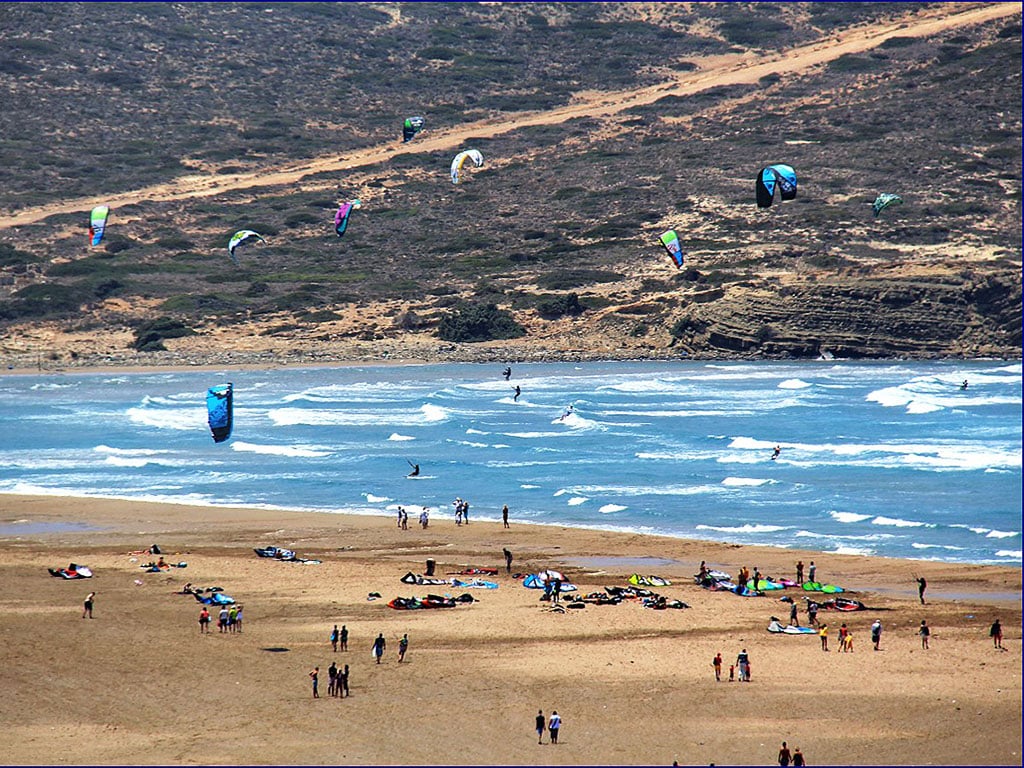
Kitesurfing in Prasonisi
Introducing the enchanting nearby islands of Chalki, Symi, and Tilos, each offering a unique blend of beauty, history, and tranquillity, perfect for unforgettable day trips from Rhodes.
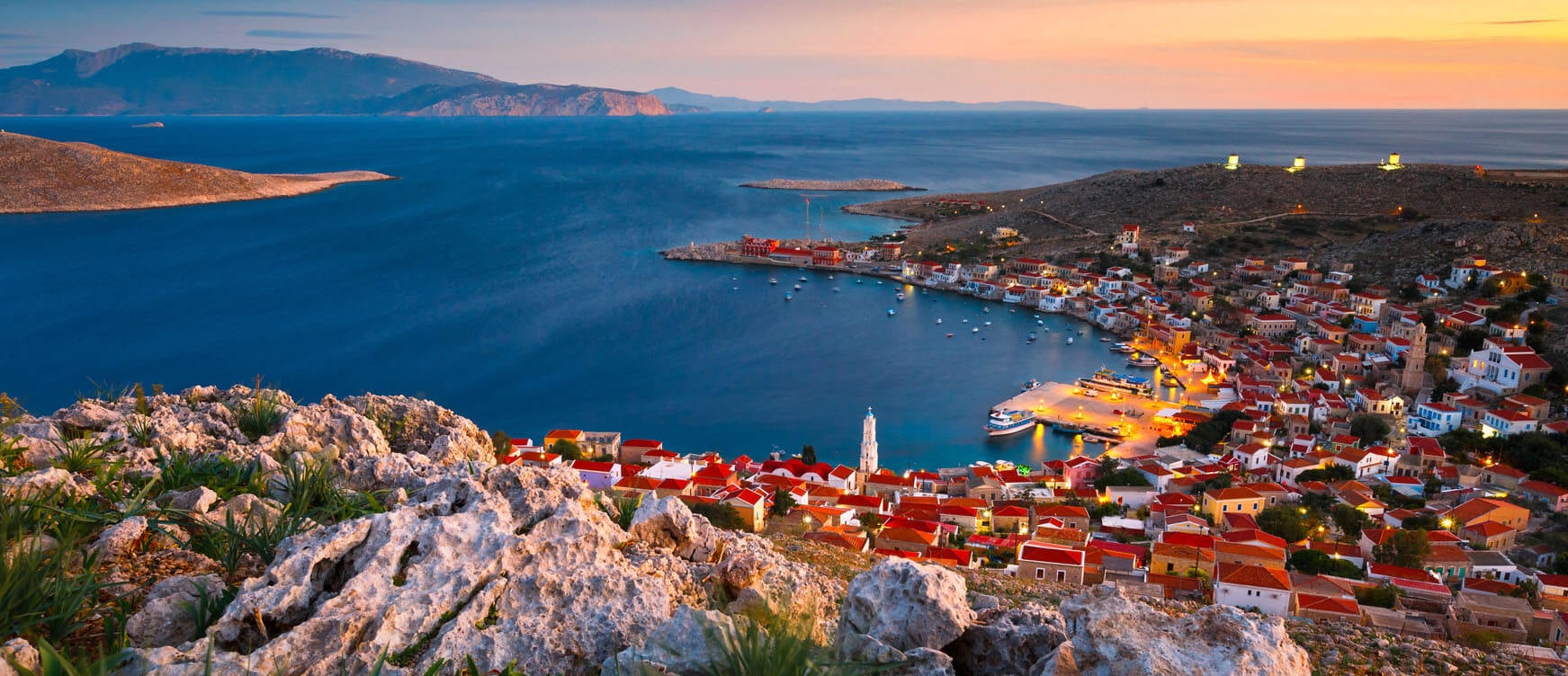
Chalki Island
Accommodation in Rhodes spans an enormous range — from boutique hotels tucked inside the medieval walls of the Old Town to sprawling all-inclusive resorts along the eastern coast at Faliraki and Ialyssos, village guesthouses in Lindos, and adults-only escapes at the island’s quieter southern beaches. Whatever your style of travel, you will find something here that suits it.
All Senses Ocean Blue Sea Side Resort & Spa — A 4-star all-inclusive seaside resort in Kremasti, ideal for a beach-focused stay.
Ano Kampos Hotel — A simple hotel in Faliraki with breakfast included and a convenient location.
Cathrin Hotel — A 4-star all-inclusive hotel in Faliraki, promoted for its standout location.
Amus Hotel & Spa — A 5-star beachfront spa hotel in Ixia with breakfast, half-board, and all-inclusive options.
Rodos Princess Beach Hotel — A 4-star all-inclusive beachfront hotel in Kiotari with water slides.
Asterias Bay Hotel — An all-inclusive hotel in Theologos, located close to the beach.
Mitsis Rodos Maris — A 5-star all-inclusive beachfront hotel in Kiotari with water slides and children’s activities
For more hotel offers in Rhodes, check here!
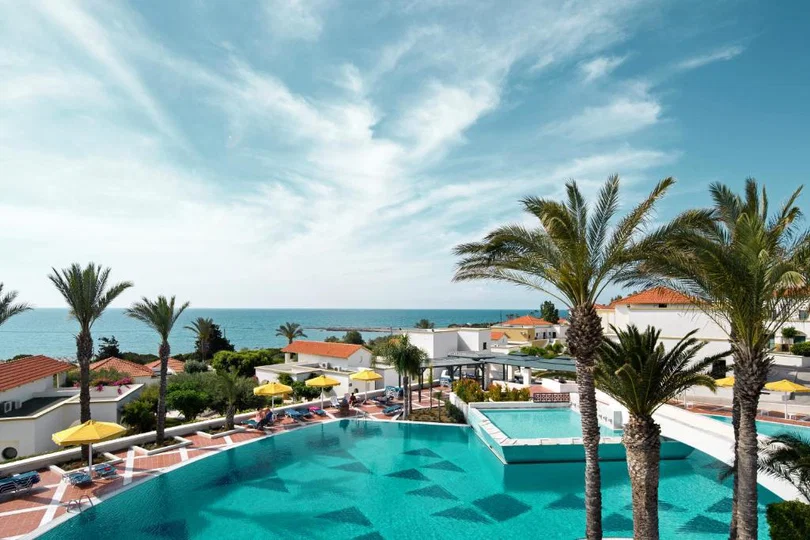
Mitsis Rodos Maris
Rhodes is a large island, and while Rhodes Town is easy to explore on foot, reaching beaches, villages, and historic sites is much easier with planned transport. Here are the main ways to get around.
On Foot: The Old Town of Rhodes is entirely pedestrianised within the walls, and best explored entirely on foot — indeed, a car is a hindrance here. Rhodes Town (New Town) is also walkable, with the harbour promenade and main streets easily covered on foot. For the island as a whole, however, you will need transport.
Car Rental: Renting a car is, without question, the best way to explore Rhodes at your own pace. The road network is good, the island is well signposted, and many of the finest beaches and inland villages are essentially inaccessible without your own wheels. Rental desks are available at the airport and throughout Rhodes Town; expect to pay from around €22–€40 per day depending on the season.
Public Bus (KTEL): Rhodes has two bus systems — the East Side (KTEL terminal on Averof Street) serving the eastern coast resorts, and the West Side terminal in the New Market area serving the western coast and inland villages. Buses run regularly to major destinations including Lindos (around €5, 1.5 hours) but become less frequent in evenings and scarce in winter. For a budget-conscious visitor, the bus network covers the essentials.
Taxi: Taxis are widely available in Rhodes Town and from the main resorts. The main taxi rank is at Rimini Square in the New Town. Fares are metered; for longer island journeys, negotiate a fixed price in advance. A taxi to Lindos costs approximately €50–€60 each way.
Motorbike and Quad Hire: Widely available throughout the island’s resorts, motorbikes and quads are popular for shorter journeys. Ride cautiously — the mountain roads can be treacherous for the inexperienced — and always wear a helmet.
Boat and Water Taxi: Several tourist boats operate daily from Mandraki Harbour to beaches along the eastern coast (including Anthony Quinn Bay and Kalithea), to nearby islands (Symi, Halki), and on various half-day and sunset cruises. Water taxis operate along the resort coast in summer.
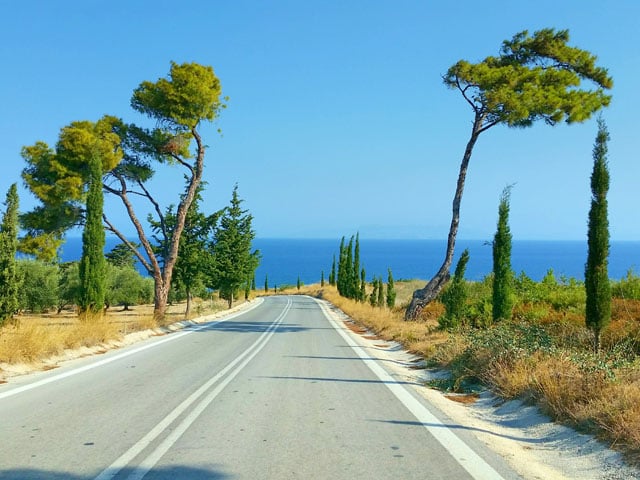
Driving to the West Coast of Rhodes Island
Rhodes is one of the safest destinations in the Mediterranean, with a gentle, welcoming atmosphere that makes even solo travellers feel at ease. The Old Town’s medieval complexity can disorient newcomers — losing yourself in the labyrinthine alleys is part of the pleasure — but nothing here is dangerous. Petty theft is rare; violent crime almost unheard of in tourist areas.
Dress for the Heat: From June to September, Rhodes can be extremely hot — regularly exceeding 35°C in July and August. Pack light, breathable clothing, a good sun hat, and high-factor sunscreen. Even in spring and autumn, the midday sun is fierce. Drink water constantly.
Visit Monuments Early: The Palace of the Grand Master, the Lindos Acropolis, and other major sites fill rapidly with visitors by mid-morning in summer. Be there at opening time — typically 8am — and you’ll experience them in relative peace, with better light for photographs and manageable heat.
Language: English is widely spoken throughout the tourist areas. A few words of Greek — kalimera (good morning), efharisto (thank you), parakaló (please/you’re welcome) — will be warmly received and go a long way.
Currency: Greece uses the Euro (€). ATMs are plentiful throughout Rhodes Town, Lindos, and the main resorts. Inform your bank before travelling. Cards are accepted in most hotels and restaurants, but carry cash for smaller tavernas, markets, and village shops.
Tipping: Tipping is appreciated but not obligatory. Rounding up the bill or leaving 10% for good restaurant service is the norm. For taxis, rounding up to the nearest euro is standard.
Photography in the Old Town: The medieval streets are extremely photogenic, but be mindful of residents going about their daily lives. When visiting mosques and churches, dress respectfully — shoulders and knees covered.
Power Sockets: Greece uses the Type C and Type F Plugs (European two-pin, 230V). Bring an adaptor if you’re travelling from the UK.
Hiring a Car: Rhodes drives on the right. The mountain roads in the island’s interior — particularly around Mount Attavyros — can be steep, narrow, and winding. Drive carefully, especially after rain.
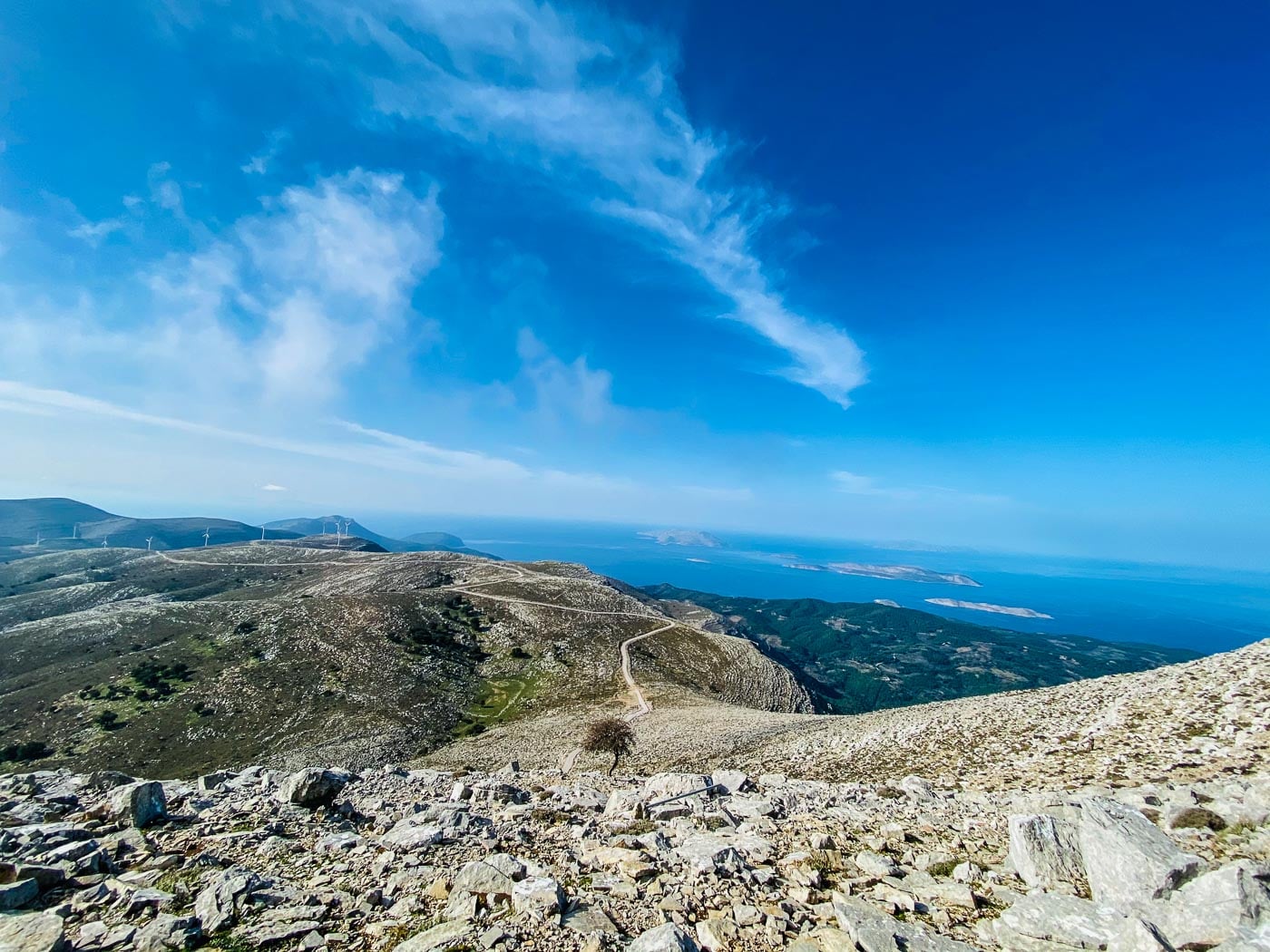
Attavyros Mountain
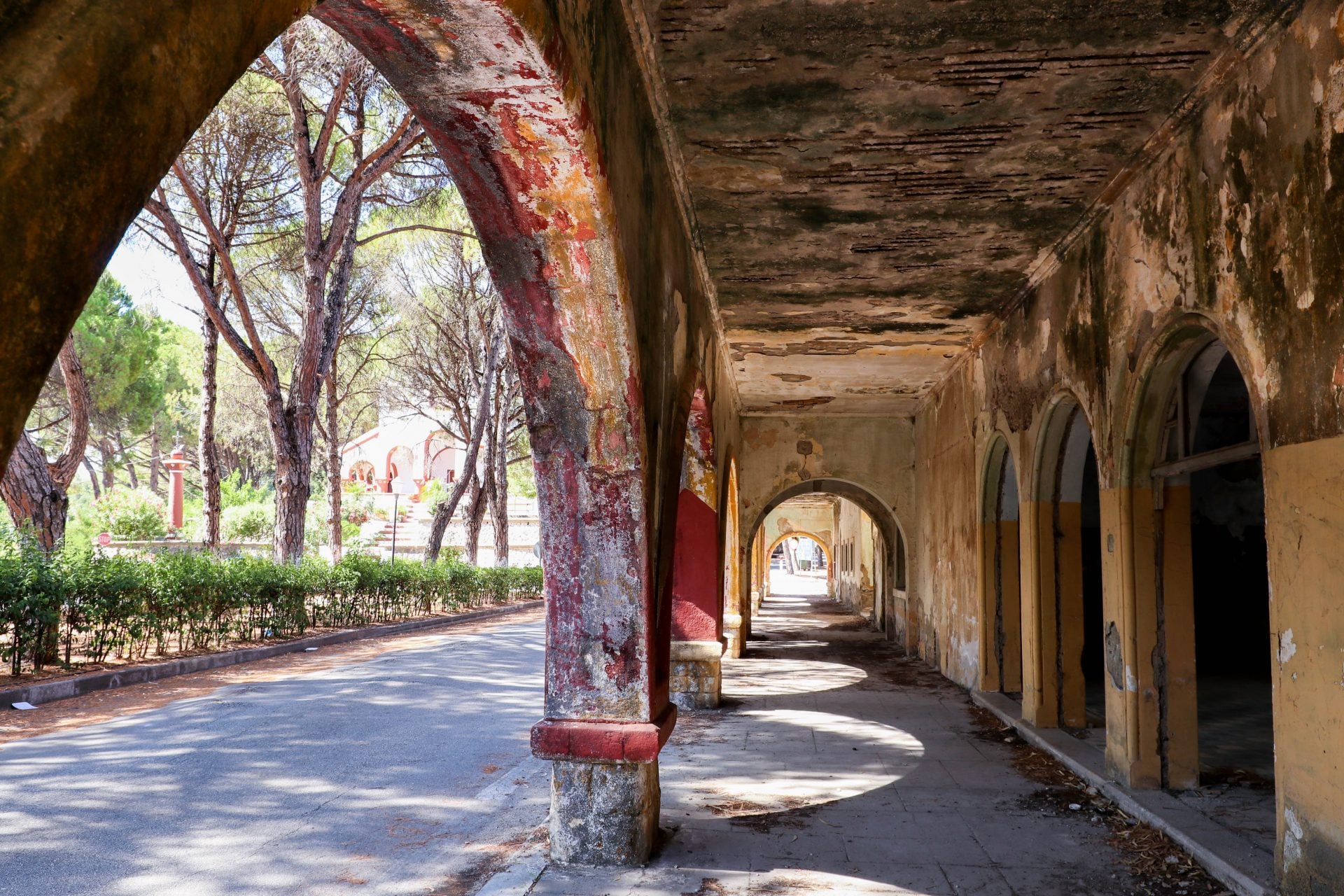
Eleousa Village
Rhodes is not quite like anywhere else in Greece, and not quite like anywhere else in Europe. It carries its history in layers rather than chapters — the ancient acropolis on the hill, the crusading knights in the streets below, the Ottoman fountain in the square, the Italian archway over the harbour gate, the Greek flags snapping in the Aegean wind — and it wears all of it simultaneously, without apparent contradiction, the way a city only can when it has had three thousand years to make its peace with the past.
There is a temptation, when thinking about Rhodes, to reduce it to its most famous asset — the Old Town, the medieval walls, the Grand Master’s Palace — and these are, of course, magnificent. But the island is so much more than a monument. It is the taverna in the village of Laerma where the bread comes warm from a wood-fired oven and the wine is local and the evening stretches out unhurried under a plane tree. It is the moment at Prasonisi when you realise you are standing at the precise point where two seas touch. It is Lindos from above, the white geometry of the village below you and the impossibly blue bay curving out toward the horizon.
Generations of travellers have come to Rhodes for the beach and left understanding something they hadn’t expected — about the Crusades, about the Ottoman Empire, about what it means to stand at a crossroads of civilisations for three millennia and survive with such grace and warmth intact. Go, wander, eat, swim, climb, and let the island show you what it is.
Kalo taxidi — happy travels to magnificent Rhodes. 🏝️
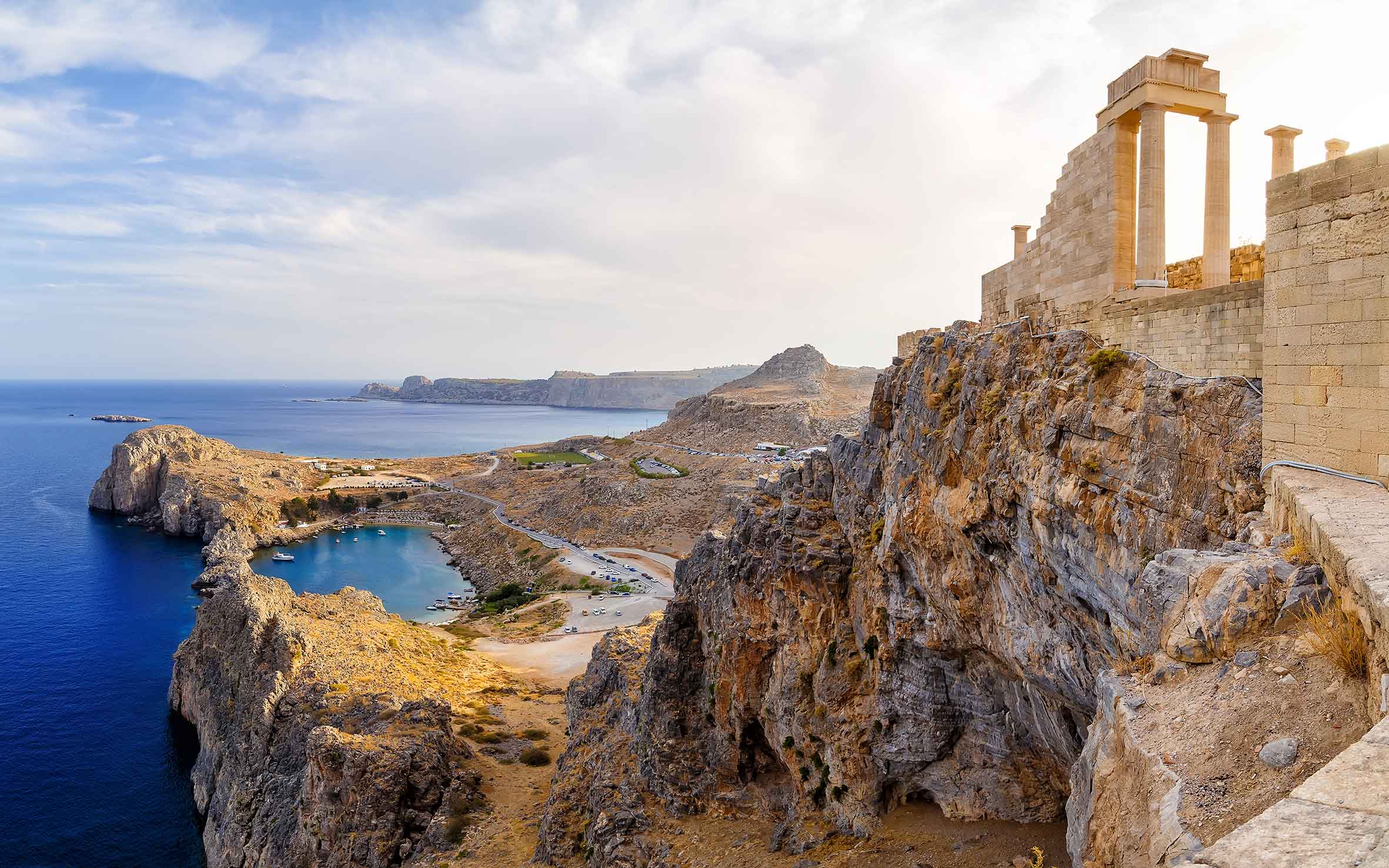
Ancient Lindos